by Emma Parker | Jul 20, 2023 | BOM
Birthday Block of the Month #4: Sheri Cifaldi-Morrill
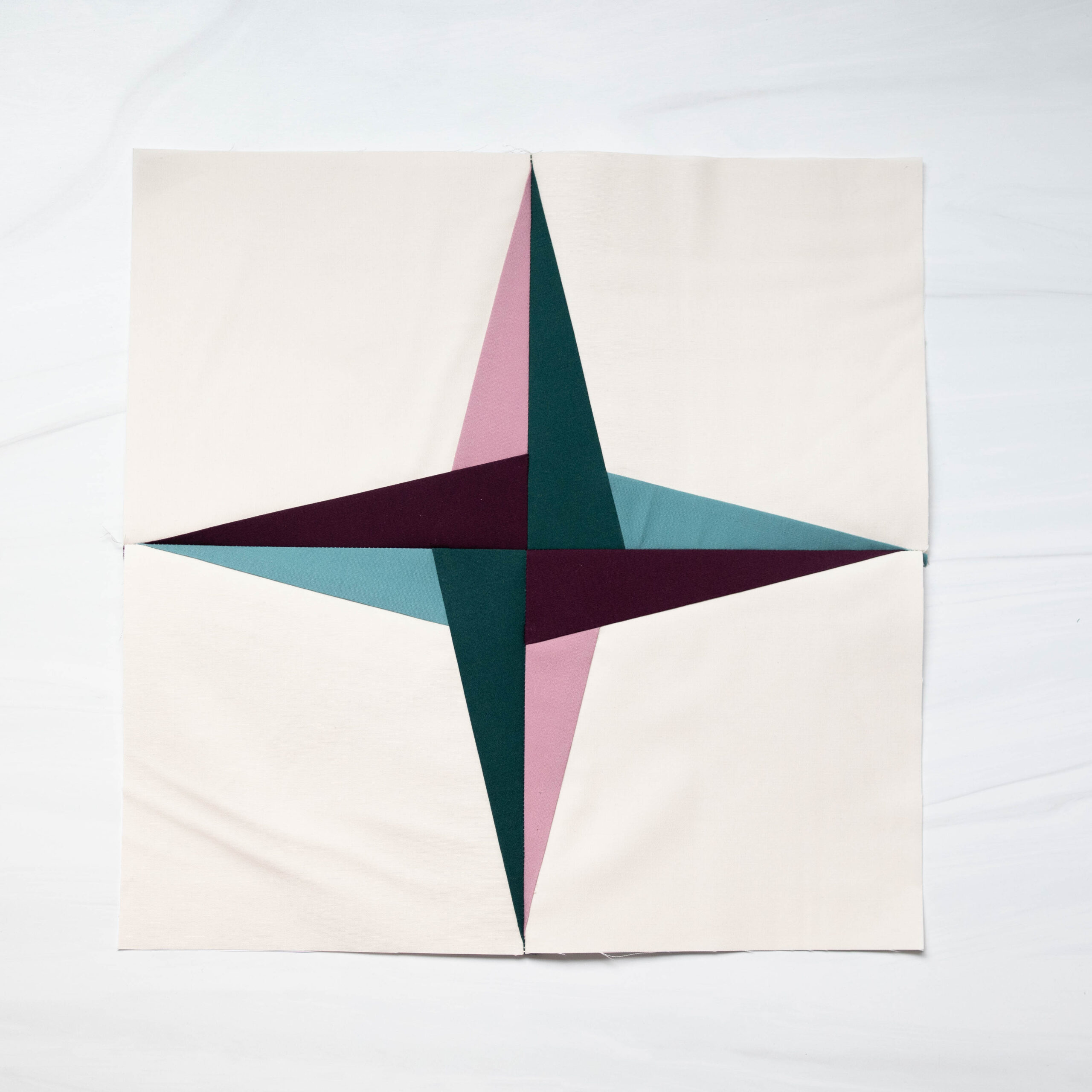
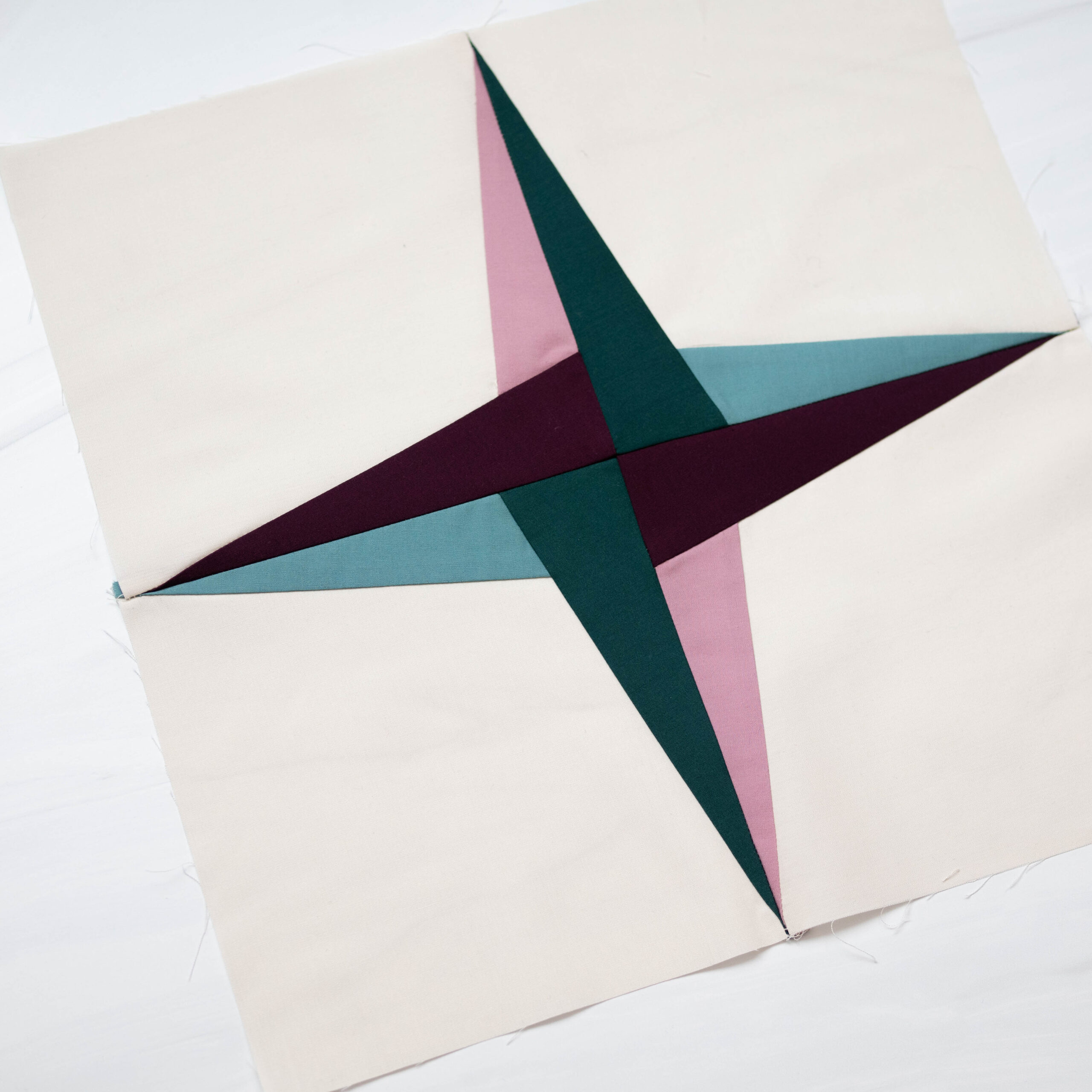
Learning a new quilting skill can seem intimidating at first. But with a great teacher, you’ll feel supported and flourish! That’s where this month’s Quilt Alliance Birthday Block of the Month designer comes in. Sheri Cifaldi-Morrill, known for her growing and beloved pattern company Whole Circle Studio, is one of the most comprehensive and patient quilt teachers you can find — and that’s perfect for foundation paper piecing (FPP), which we’ll be doing this month! We’ve focused on piecing fabric together for all of our previous months. This month, we’re adding paper as a foundation to create an astonishingly accurate quilt block. But if you’ve never done FPP before, you’re in the right place. Sheri has been a Quilt Alliance supporter for years and she’s here to teach you everything you need to know to succeed!
Meet Sheri Sheri Cifaldi-Morrill of Whole Circle Studio is a designer who creates quilts that are both decorative and functional, blurring the divisions between art, design, and craft. After working in graphic design for over 20 years, she taught herself how to sew and discovered a passion for designing and making modern quilts. This exploration led her to pursue new opportunities and work with her hands to start her own studio business, specializing in the design of custom modern quilts, patterns, surface design illustration, and products. You can follow her on Instagram, find her patterns on her website, and be sure to sign up for her excellent newsletter! One of the Quilt Alliance’s signature projects is the Go Tell It video documentation project, which anyone can do. Watch the video below to see Sheri talk about her block, and keep reading this blog post to learn a tip for how to document your own quilts!
Sheri’s Top BOM Tips Each month, our Birthday Block of the Month Designers will share their top tips for making the block they designed. Here are three great tips for making this block straight from Sheri herself. Sheri’s Tip 1: Learn from the best! If you’re an FPP beginner or need a refresher on the technique, Sheri has an extensive 40-minute free class for foundation paper piecing on her website. I’d recommend everyone who does this block watches the class! While she isn’t making the same block as our Quilt Alliance Birthday Block of the Month, you will learn valuable tips even if you’ve done FPP before. The best thing about this video class is that you’re able to see each and every step of the FPP process on a fairly similar block to the one you’re making this month. Because you are basically sewing upside down with FPP, it can feel confusing at times. The process has never been more clear to me (Laura Hopper, BOM host) after viewing her video and seeing her walk through making 1 FPP template! I’ve done my fair share of foundation paper piecing in the past, but I still decided to watch Sheri’s full video before making my test block. I learned so much and my block turned out better because of it! You’ll see this video referenced in this month’s PDF download as well because it is invaluable to the process of making this month’s block — or making any other FPP blocks in the future! Sheri’s Tip 2: Shorter is Better When foundation paper piecing, reduce your stitch length to 1.5. This shortened stitch length will make it easier to remove paper at the end. It also helps your seams stay strong while the paper is being pulled out. Sheri’s Tip 3: Don’t Be Afraid of your Seam Ripper Have your seam ripper handy and be prepared to use it! Even the most experienced paper piecers will need one at times — including me! One of the things that can be hard to get used to with foundation paper piecing is making sure that your fabric doesn’t move once it’s under the paper you are using as a foundation. As you can see in the picture here, my fabric slipped as I was sewing the mauve fabric to the neutral fabric. Here’s a closer look: Whoops! You can see that things started out well and part of the seam is on the mauve fabric. But as I sewed on, the fabric slipped off of the seam I was sewing. No problem — seam ripper to the rescue! I redid this seam and it looked perfect in the end.
Quilt Alliance BOM Tips Each month, we share our best tips for making the Birthday Block of the Month as well, and this one is funny because our best tip is the same as Sheri’s first tip — make sure to watch her video tutorial on foundation paper piecing! But don’t worry, we have even more tips to help you along the way. Our tips this month are entirely about the neat tools that can help make foundation paper piecing easier!
Extra Tools Aren’t Required — But They Help! If you don’t want to invest in extra tools for this block because you don’t know if you’ll enjoy foundation paper piecing yet, that’s completely understandable! You can make foundation paper piecing work with tools you already have. However, it is a very specific technique that is made easier with the help of a few affordable notions. Here are some that I enjoy. Add-A-Quarter ruler: This ruler has a raised line along one long edge that measures exactly one quarter inch. It is designed to bump up again the edge of a folded piece of paper as you’re making a foundation paper piecing block. It allows you to know that you’re trimming your fabric to an accurate quarter inch. Seam roller: You can press your fabric as you’re working on your block, but if you’d rather not go back and forth to your iron so much, a seam roller will be your best friend. I use mine so much that I splurged on a very nice on from Modern American Vintage. Fabric glue pen: This is a helpful way to secure the first piece of fabric for a foundation paper pieced block to the paper, as Sheri demonstrates in her video. My personal favorite is made by Bohin. Tweezers: Removing paper at the end of creating an FPP block is so satisfying! What a wonderful way to celebrate being finished with a block. However, sometimes tiny bits of the paper can get stuck in the seams. Tweezers can help remove these papers — just be sure not to accidentally pull out any stitches. Tracing wheel: Pulling the paper out at the end of making a foundation paper pieced block can be challenging. Reducing your stitch length is the biggest help, but I also like going over all of the lines on the paper for an FPP block with a tracking wheel which makes little perforations in the paper. This not only makes it a little easier to rip the paper out, but it also makes it very easy to fold the paper while making the block! Note: This will leave little marks on your cutting mat, so use an old one or the back of yours. Check out what that looks like below!
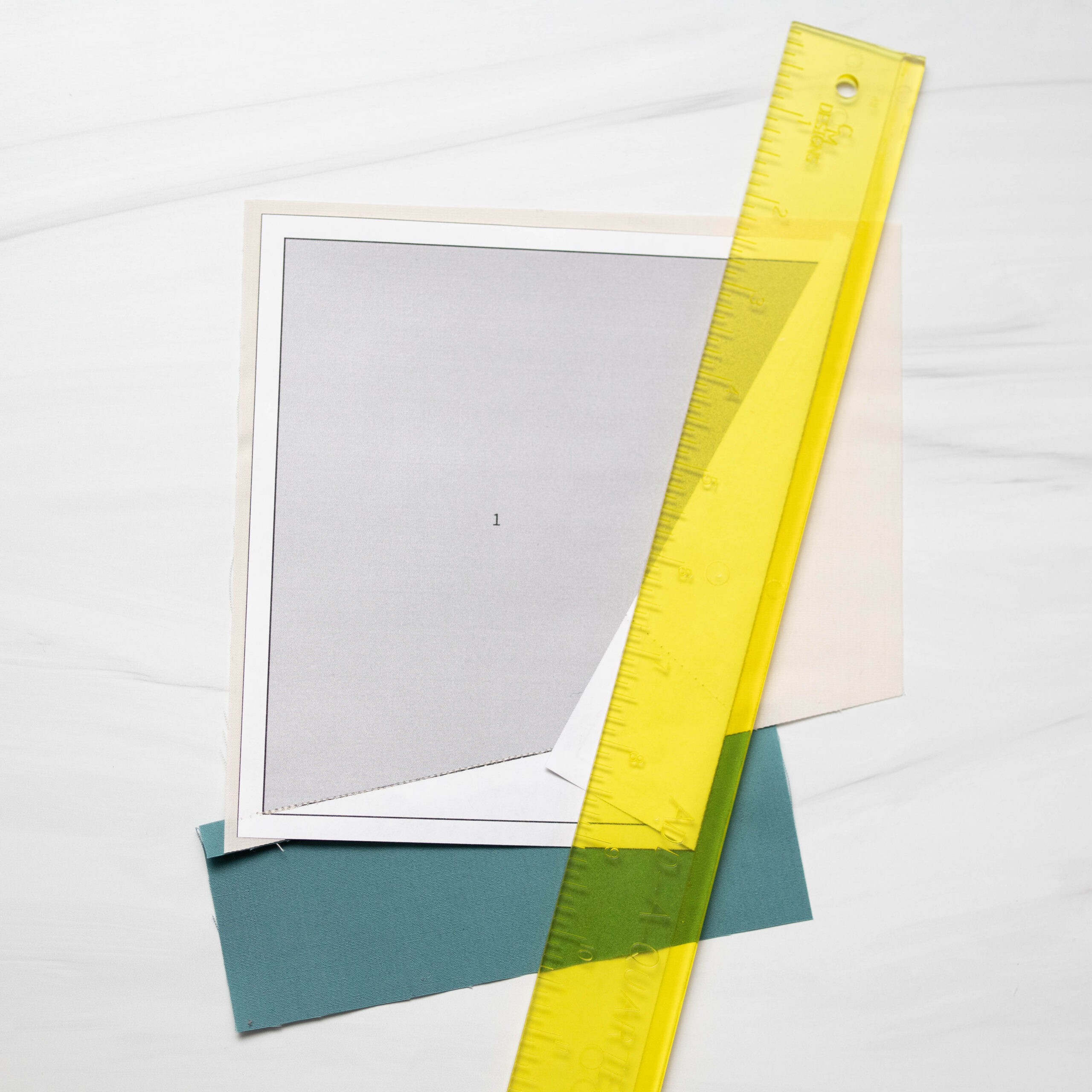
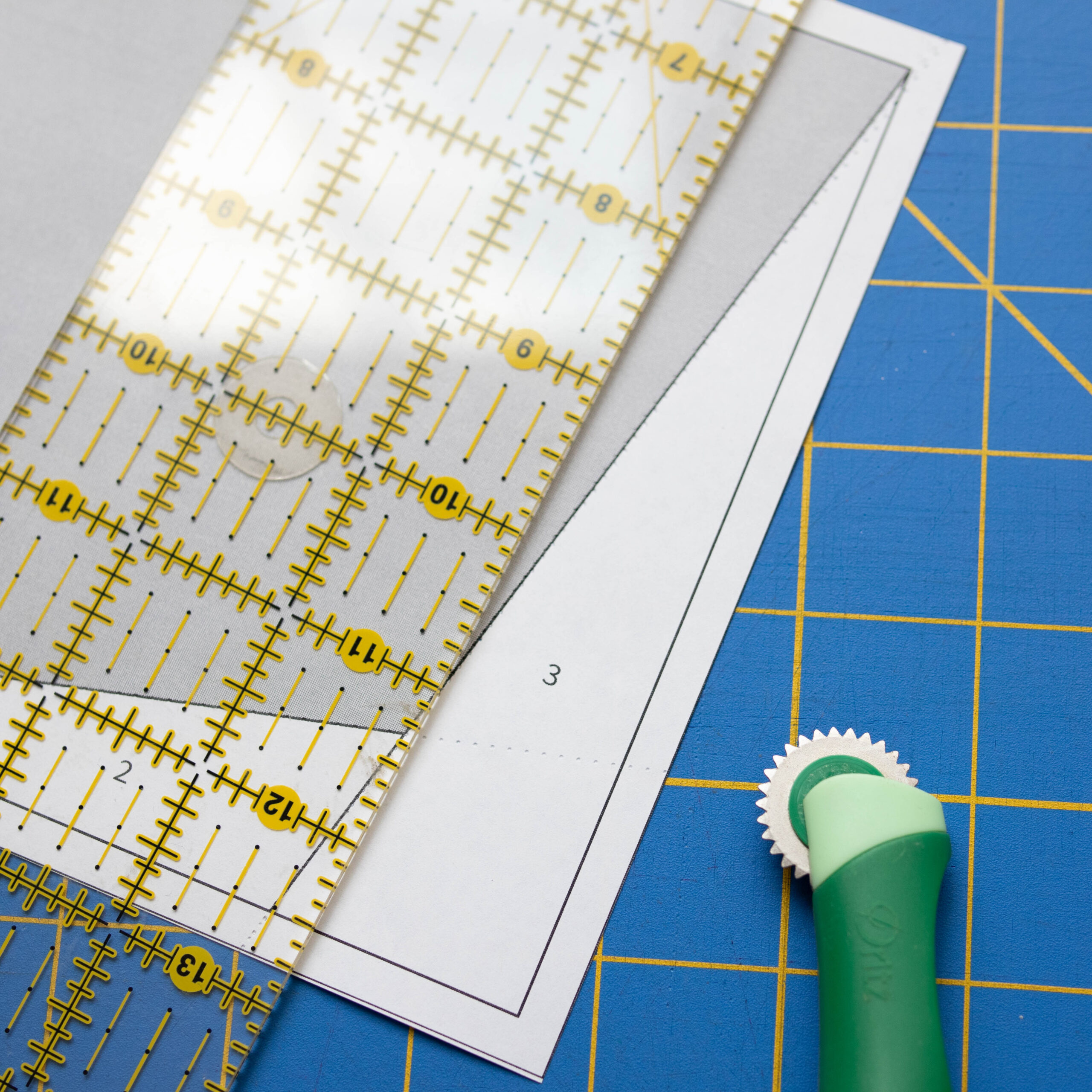
And here’s the Add-A-Quarter ruler giving me that perfect quarter inch. You can see the ridge on the right hand side and how it lines up with the folded edge of the paper. Now all I have to do is trim the fabric to the right of the ruler! Easy breezy! As we mentioned, it’s absolutely ok to skip the extra tools. Instead of an Add-A-Quarter, you can use a regular acrylic ruler. Instead of a new seam roller, try your iron out. Instead of a glue pen, try using a pin to hold fabric in place. And instead of a tracing wheel, try pre-folding the paper. That’s absolutely ok! But these tools which may be new to you will take you far if you enjoy foundation paper piecing.
Quilt Documentation Tip Have you ever tried a new technique? It can be a little scary at first — what if it doesn’t work or doesn’t make sense? What if it doesn’t look just like the designer’s picture? Ack! One thing that might help you work through the anxieties of learning something new, while also documenting your process and personal quilting experiences, is to journal or write about your quilts. Check out the Quilt Alliance’s Textile Talk that focuses on writing about quilts! And don’t miss the announcement for our upcoming virtual Quilters Take a Moment event…there may be a workshop you’ll enjoy!
Quilt Documentation Tip: Each month, we’ll bring you a quilt documentation tip in these blog posts. These tips will help you not only learn more about the Quilt Alliance but also learn how to preserve your own quilt stories. Your quilts matter and we want to help you preserve and share their stories! Ricky’s block is focused on beginner quilters, and since this month is the first in our Block of the Month, we want to encourage you to document your very first quilt. The journeys we all take towards becoming quilters are all unique. Share yours in a DIY Go Tell It Video, just like the video Ricky made about this block. To learn how to make your own Go Tell It video, head to the Go Tell It DIY page here. You’ll see that documenting your own quilts is much easier than you might…
by Emma Parker | Jun 15, 2023 | BOM
Birthday Block of the Month #3: Pat Sloan
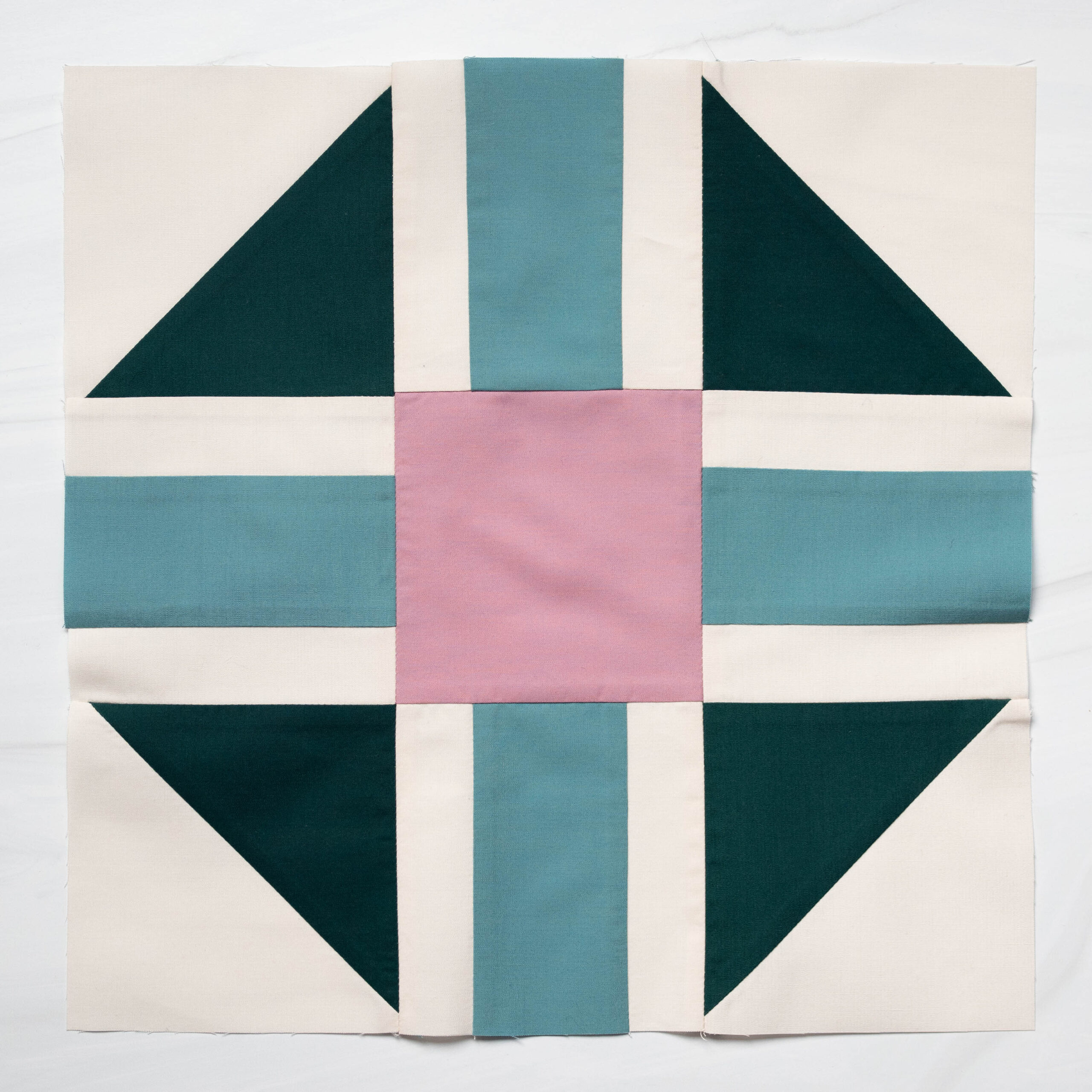
Are you ready to have some fun with this month’s Quilt Alliance Birthday Block of the Month? Our designer of the month, Pat Sloan, knew you needed a smile, so she designed this block she calls “A Dash of Fun,” inspired by the classic Churn Dash block. The Quilt Alliance is an organization that celebrates all quilters. And what better way to demonstrate that than by going from last month’s improvisational block designed by Zak Foster to this month’s block from Pat Sloan which is rooted in quilt history?
Meet Pat Sloan Known as “The Voice of Quilting,” Pat Sloan is a quilt designer, author, fabric designer, and popular podcast host. Her passion is hosting sew alongs and YouTube videos. For 10 years, Pat produced and hosted a podcast for American Patchwork & Quilting Magazine. She’s also the host of Aurifil’s Designer of the Month program and has published patterns independently and through magazines including McCall’s Quilting, Quilters World, and Quilting Arts. With her daily YouTube videos and large internet community, join Pat to be inspired to make quilts that you love! You can follow Pat on her website, Facebook, or popular YouTube channel. One of the Quilt Alliance’s signature projects is the Go Tell It video documentation project which anyone can do. Watch the video below to see Pat talk about her block, and keep reading this blog post to learn a tip for how to document your own quilts!
Pat’s Top BOM Tips Each month, our Birthday Block of the Month Designers will share their top tips for making the block they designed. Here are three great tips for making this block straight from Pat herself. Pat’s Tip 1: Try a Specialty Ruler When making half square triangles 2 at a time I love using the Quilt In a Day Triangle Square Up Ruler, it makes them so easy and ‘fun’ to do! Pat’s Tip 2: Follow Your Own Creativity This month’s pattern uses the same color for the stripe unit, but you can also let your creativity run wild! Audition a few color combinations for the center stripe in the unit. Pat’s Tip 3: Highlight a Fun Print Try fussy-cutting the center block to showcase a favorite print.
Quilt Alliance BOM Tips I had so much fun making this block, and I know you will too! Pat designed a block that is not just fun, but it’s also fast and easy enough for even a first-time quilter to make. Trust me when I say that you’ll be done with this block before you can say Churn Dash! But if you want a little extra help, keep reading for tips that will help your block go smoothly.
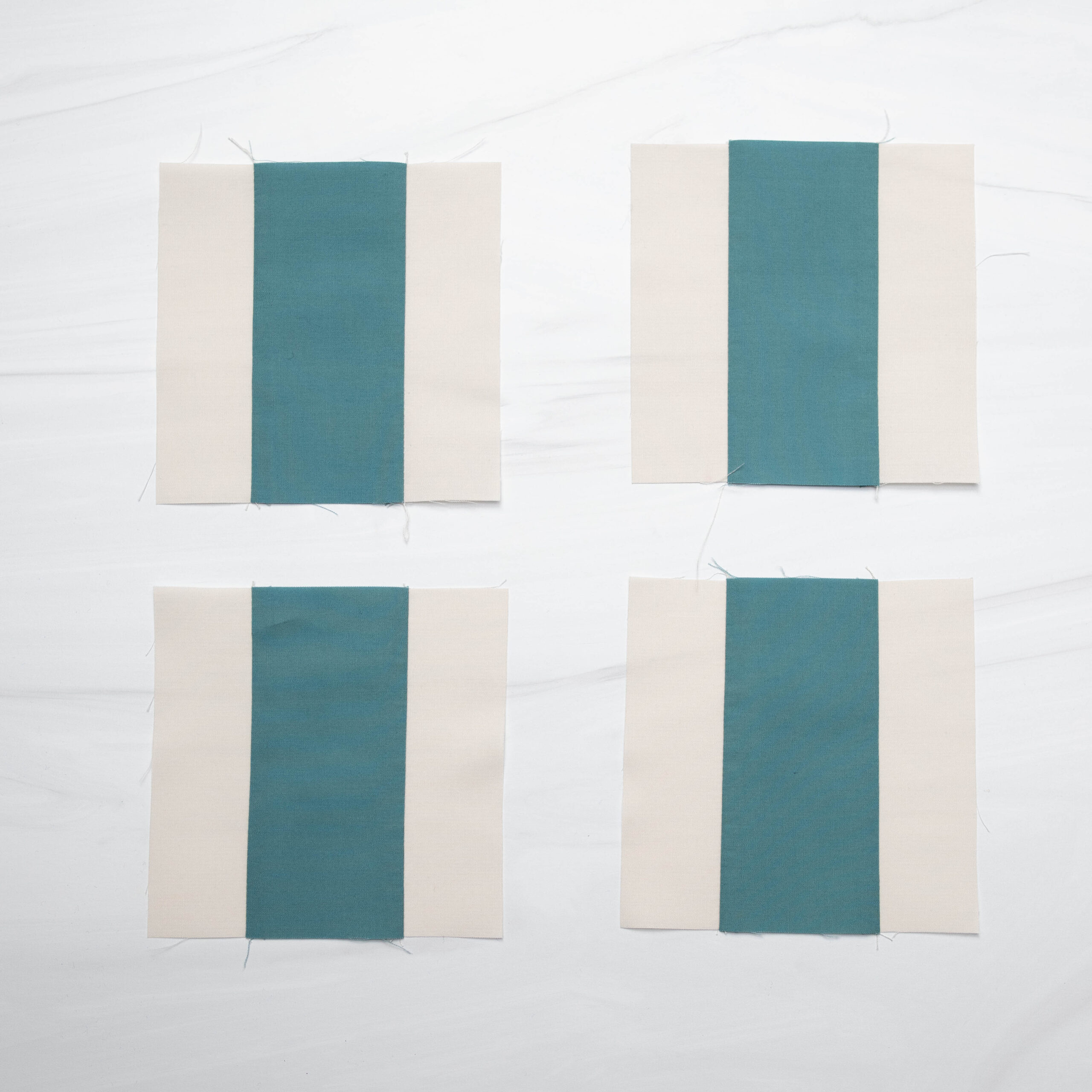
Experiment With Fabric Selection You’ll notice in the PDF pattern for this month that it’s the first time we are not using all five fabrics for the block. That will happen again in future blocks and we worked very hard to make sure that the quilt as a whole looked visually balanced between blocks that use each color and blocks that leave out one color. However, we also love to see your creativity shine! Instead of using the same color for all four stripe units, try using two or even four colors! Instead of using the same color for the HSTs, cut two different colorful fabrics so that you have two different colors. And as Pat suggests, try fussy cutting the center square to highlight a fabric you love!
Finger Press the Half Square Triangles The picture above shows the final step of making the half square triangles (HSTs) in this block, which is trimming them down to size. As you can see, you’ll have very little extra fabric when trimming. In order to make sure the HSTs finish at the correct size, try finger pressing the seam before pressing with an iron. Finger pressing will help ensure that you aren’t losing valuable fabric in the diagonal seam of the HST. When pressing with your fingers, you’ll be able to feel if that seam is too bulky, and you can help gently work that out before setting the seam with your iron.
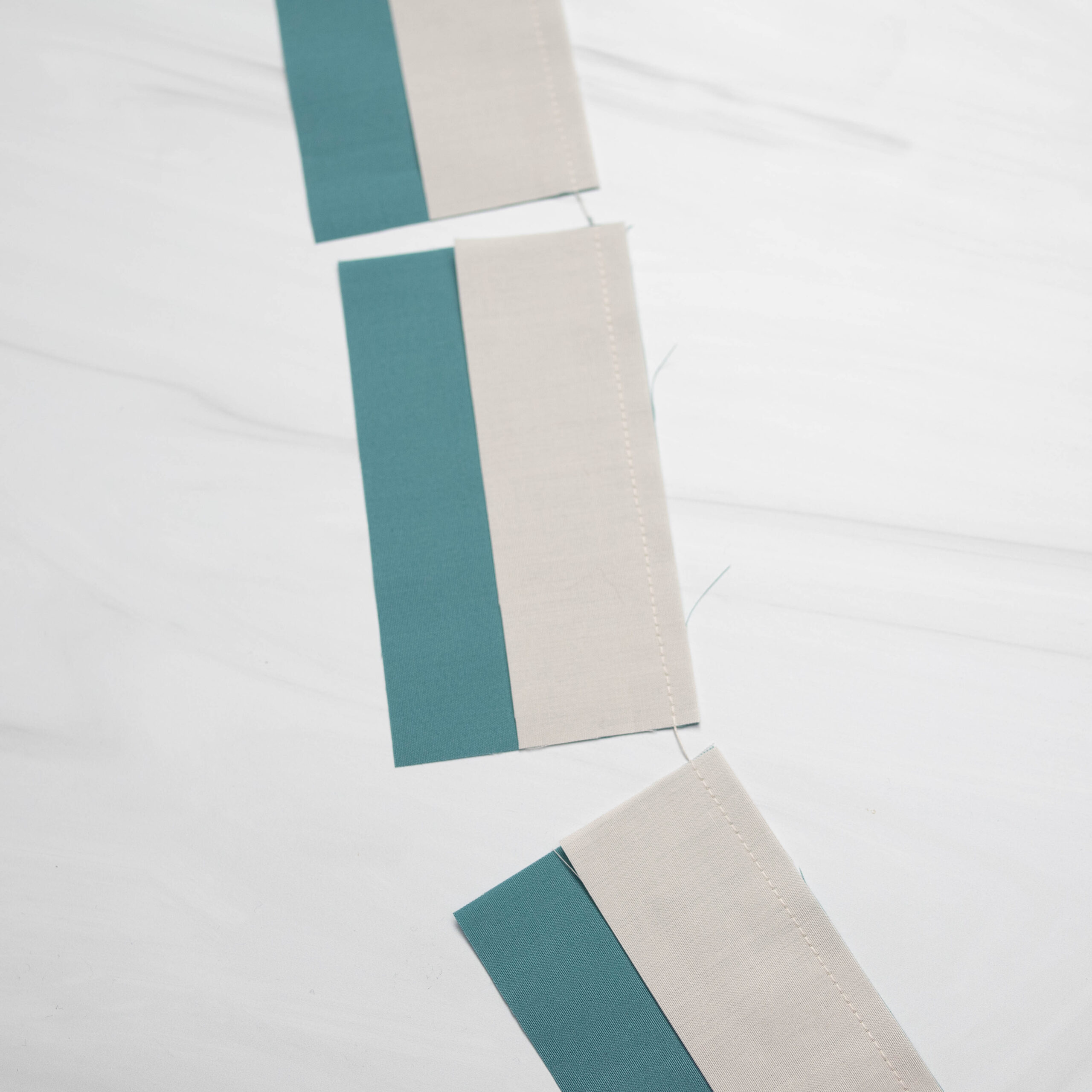
Chain Piece the Stripe Units You’ll save time and have even more fun making this block if you chain piece the stripe units! If you’ve never chain pieced before, click here for a video tutorial.
Quilt Documentation Tip Pat Sloan’s “A Dash of Fun” block is inspired by a traditional Churn Dash block. Have you ever made a quilt inspired by quilt history? Have you tried modifying a quilt block to create something new? If so, consider adding that information to your quilt label! If you keep a quilt journal or photo album, you could even include a picture of the traditional quilt block that inspired your work. For more information about what to add to a quilt label, check out the Quilt Alliance’s guide to making a simple quilt label here!
Quilt Documentation Tip: Each month, we’ll bring you a quilt documentation tip in these blog posts. These tips will help you not only learn more about the Quilt Alliance but also learn how to preserve your own quilt stories. Your quilts matter and we want to help you preserve and share their stories! Ricky’s block is focused on beginner quilters, and since this month is the first in our Block of the Month, we want to encourage you to document your very first quilt. The journeys we all take towards becoming quilters are all unique. Share yours in a DIY Go Tell It Video, just like the video Ricky made about this block. To learn how to make your own Go Tell It video, head to the Go Tell It DIY page here. You’ll see that documenting your own quilts is much easier than you might…
by Emma Parker | May 11, 2023 | BOM
Birthday Block of the Month #2: Zak Foster
Sometimes getting started on a new project is the hardest part. But you did it! We made it past the first month of the Quilt Alliance Birthday Block of the Month! One thing that makes the Quilt Alliance special is that we celebrate all kinds of quilts — art quilts, modern quilts, traditional quilts, narrative quilts, and of course, improv quilts. That’s why we chose an improvisational block designed by beloved quilter Zak Foster as the second block of our BOM series!
Meet Zak Foster Raised in rural North Carolina and now living in Brooklyn, New York, Zak is a community-taught artist whose work draws on Southern textile traditions and repurposed fabrics. He practices an approach to design that is intuitive and improvisational. He is especially drawn to preserving the stories of quilts and specializes in memory quilts and burial quilts. His work has been featured on the red carpet of the Met Gala, the Metropolitan Museum of Art, and more. His QUILTY NOOK community connects and inspires quilters and makers worldwide. You can follow Zak on his website, QUILTY NOOK, and on Instagram.
Zak’s Top BOM Tips Each month, our Birthday Block of the Month Designers will share their top tips for making the block they designed. Here are three great tips for making this block straight from Zak himself. Zak’s Tip 1: Trust the Process Play around with how you arrange your columns, but don’t get too fussy. It’ll be beautiful no matter how your stack them together. Zak’s Tip 2: Find Visual Interest in Unexpected Places Consider using the back side of the fabric. Sometimes that can offer a nice subtle variation. Zak’s Tip 3: Finger Pressing Goes a Long Way As I’m sewing my first pieces together, I rarely iron. Pressing with my thumbnail is a lot easier at this stage. However, I always try to iron the columns before sewing them to each other. It helps everything fit together true.
Quilt Alliance BOM Tips Looking for even more tips to make this block? Keep reading — we’ve got you covered! Here are even more tips and tricks to help you make the second block in our Quilt Alliance Birthday Block of the Month, especially for quilters who may not have made an improvisational quilt block before. Use Scissors for an Improvisational Look One of the best ways to get an improvisational look for your block this month is to cut your pieces with scissors. In your PDF download, there is a chart showing strips you can cut to create your own fabric sizes. If you need more help, there is a cutting guide with approximate sizes to come close to the look of Zak’s original block. Using your scissors to cut with either of those charts (or using your fingers as a guide as Zak suggests!) is key to making an improv block. Use a Ruler If You Want Help with Improv Cutting If cutting freehand with scissors feels intimidating, use a ruler to cut your shapes instead! Vary the size of your cuts using your fingers as Zak suggests (or following the cutting guide) and let loose. Improv cutting is a fun way to unwind and experiment with your quilting. Many of the most beautiful quilts use improv piecing and don’t focus on precision piecing. If you’ve never tried improv quilting before or just want to dip your toe in, using a ruler to cut can help build your improv confidence. You can see the difference in the look and feel of the two blocks above. My block, made using the cover quilt colors, was cut was a rotary cutter and ruler as an example for quilters who would prefer to cut that way. Zak’s block shows more of the uniqueness of his own hand, between the way the pieces are cut and how they are hand pieced. Try a Seam Roller If you have hand or wrist pain, like arthritis or tendonitis, you may find finger pressing painful. Instead of finger pressing, try using a seam roller! This handy tool (get it?) helps flatten seams without having to take lots of trips to your pressing station. Make Your Block Slightly Larger With improvisational piecing, it can be tricky to tell how large your block will be after sewing everything together. That’s ok! One of the best things about improv is that you can always add more to get your block large enough to trim down to 12 ½″. That way you don’t have to worry about being so precise with your piecing! For example, once I sewed all of my columns together, I thought my block would be large enough. But, once I started sewing the columns together, I measured the block and realized that the fourth column was too short. I grabbed my trusty seam ripper and ripped out some of the stitches between the third and fourth column and added a piece of my favorite color — the dark purple.Once I added that one little piece of fabric, my entire block was the correct size and I could trim it down! If your block is too small, you can also add more columns or rows to make it bigger. There are no rules this month! Just play and have fun.
Quilt Documentation Tip Zak Foster’s quilts are rooted in community. Last month, the Quilt Alliance hosted a Textile Talk with two of the designers from our Birthday Block of the Month — Carole Lyles Shaw and Bonnie Hunter. Take a look at the video to hear the powerful things these two quilters had to say about quilting with community! Many Textile Talk viewers left feeling inspired and rejuvenated in their love for their own quilt communities. But that’s not all you’ll find in this Textile Talk. There is also an extensive conversation about how Carole and Bonnie document their quilts complete with tips from their own documentation practices. Share these tips with the quilters in your community!
Quilt Documentation Tip: Each month, we’ll bring you a quilt documentation tip in these blog posts. These tips will help you not only learn more about the Quilt Alliance but also learn how to preserve your own quilt stories. Your quilts matter and we want to help you preserve and share their stories! Ricky’s block is focused on beginner quilters, and since this month is the first in our Block of the Month, we want to encourage you to document your very first quilt. The journeys we all take towards becoming quilters are all unique. Share yours in a DIY Go Tell It Video, just like the video Ricky made about this block. To learn how to make your own Go Tell It video, head to the Go Tell It DIY page here. You’ll see that documenting your own quilts is much easier than you might…
by Emma Parker | Apr 13, 2023 | News
QA Birthday Block of the Month: Introduction
Happy birthday to us! Here at the Quilt Alliance, we love birthdays. And what better way to celebrate our own 30th anniversary than with a huge quilt party? The best part is — you’re invited! And so are nine of your very favorite quilt designers who each designed a block for our first-ever block of the month quilt as a birthday gift to the Quilt Alliance. What is the Quilt Alliance Block of the Month? For the rest of our anniversary year, all Quilt Alliance members at any level or donors who have contributed $30 or more will receive a new block pattern each month. You’ll get a reminder of when each block is released in our member newsletter so you’ll never have to worry about missing one. At the end of our Block of the Month celebration, you’ll have nine fun blocks. Put them together with sashing and you’ll have a cozy 52” square lap quilt! Each of the blocks, designed specifically for the Quilt Alliance’s Block of the Month, is inspired by some aspect of the designer’s quilt story, and we’ll provide guidance and tips as you work through the blocks for documenting and reflecting on YOUR quilt story! Who Are the Block of the Month Designers? Here is the schedule for our 30th anniversary Block of the Month! April: Ricky Tims May: Zak Foster June: Pat Sloan July: Sheri Cifaldi-Morrill August: Suzy Williams September: Andrea Tsang Jackson October: Bonnie Hunter November: Carol Lyles Shaw December: Georgia Bonesteel No doubt that if you’re a quilter, you recognize some of those names! We are so fortunate to have so many influential and talented designers participating in our Birthday Block of the Month. We can’t wait to share their stories with you through Go Tell It Videos as we quilt together! Getting Started with Your Own Birthday Block of the Month Like any fun block of the month, your first step for ours is picking your fabrics! You can either choose your own fabrics or use the same fabrics we are using for the cover version of the quilt. If you’re an adventurous quilter, you can even consider using scraps! The fabrics used for the cover version of our Birthday Block of the Month are Art Gallery Fabrics PURE Solids in the following colors: Evergreen Swimming Pool Creme de la Creme Sweet Fig Cabernet For our backing fabric, we added a beautiful Ruby Star Society print for a pop of excitement on the back! The print is from the Darlings 2 fabric line and is called Wildflowers in black. It complements the neutral Creme de la Creme so nicely! The Quilt Alliance Birthday Block of the Month uses 5 colors. Feel free to choose your own fabrics, but if you’d like tips, we have examples of 7 color palettes that can help inspire you! Here is the color palette we are using to make our quilt: Here is the easy three-step formula we used to come up with this color palette, which you can use to create your own! Choose two colors or color families. Ours are deep green/blue and red/purple. Pick one dark and one light color from each. Choose a neutral color that will be used in both the blocks and the sashing. It’s that easy! This simple light and dark formula will help ensure that your quilt has enough color contrast while keeping the look cohesive and fresh. Let’s break that formula down using our cover quilt colors before diving into other color palette examples. Evergreen — dark green/blue Swimming Pool — light green/blue Creme de la Creme — neutral Sweet Fig — light red/purple Cabernet — dark red/purple Here’s an example that uses the same formula. We have a dark yellow, light yellow, neutral, light blue, and dark blue. This rose garden-inspired palette uses the same light and dark formula, but instead of a traditional neutral like white or cream, we’ve used a soft pink to connect the greens and reds. This palette uses the same formula, but like the rose garden palette, these tropical sunset colors are connected with a soft color from the same family. We have a dark and light orange, dark and light pink, and a peach that connects all the colors. You can build on the light and dark formula to make a monochromatic palette! On the left, you can see that we have a dark and light blue. On the right, we also have a dark and light blue. The connecting neutral that will appear in both the blocks and sashing is the lightest color blue, creating a cool-themed monochromatic palette! Here’s a warm monochromatic color palette that was made the same way as the cool palette above. We have a dark and light yellow, a dark and light pink, and a peach neutral that connects them all! If you like vibrant colors, you can even consider using black as your neutral color! It helps bright colors jump off a quilt and glow almost like neon. Just like the palettes above, this one is made using the same formula — dark and light green, dark and light purple, and black as the neutral. There are so many ways to choose your own fabrics, but using our dark and light formula will help make sure that you have enough contrast in your colors as you make blocks each month!
Quilt Documentation Tip! Once you’ve selected your own color palette, write down the fabrics you used and the company that manufactured them. If you journal or record your thoughts about your quilting, you could also write down the inspiration behind your color palette. Share that inspiration with us on social media using #QuiltAllianceBOM! We can’t wait to see what colors you’re going to use in your Quilt Alliance Birthday Block of the Month quilt! If you use Instagram, be sure to post your fabric pull using the hashtag #QuiltAllianceBOM and tag @quiltalliance so we can see your beautiful creations!…
by Emma Parker | Apr 13, 2023 | BOM, Uncategorized
Birthday Block of the Month #1: Ricky Tims
Welcome to the first month of the Quilt Alliance Birthday Block of the Month! We are so happy that you are following along and joining our party! We’re kicking things off with one of the most beloved quilters we know — Ricky Tims. One of the many things Ricky is known for is his easy-to-follow, beginner-friendly quilt pattern instructions. For all the beginner quilters following along, we couldn’t have asked for a better block to kick things off! And for experienced quilters, you’ll love the ease of sewing this block. It’s so quick that you’ll want to make more.
Meet Ricky Tims A best-selling author, enthusiastic and encouraging teacher, an award-winning quilter, fabric designer, talented speaker, and novelist, Ricky’s entertaining presentations feature live music and humor combined with scholarly insights and motivational anecdotes. Ricky began designing and making quilts in 1991 and was named one of The Thirty Most Distinguished Quilters in the World. In 2009 he was selected (in a three-way tie) by the readers of Quilter’s Newsletter Magazine as The Most Influential Person in the Quilting Industry. He is the co-founder and co-host of The Quilt Show. You can follow Ricky on his website, on Facebook, and on Instagram. We recommend all three! One of the Quilt Alliance’s signature projects is the Go Tell It video documentation project which anyone can do. Watch the video below to see Ricky talk about his block, and keep reading this blog post to learn about how you can create your own Go Tell It video about one of your quilts!
Ricky’s Top BOM Tips Each month, our Birthday Block of the Month Designers will share their top tips for making the block they designed. Here are three great tips for making this block straight from Ricky himself. Ricky’s Tip 1: Avoid Distortion When sewing the strips, sew the seams in opposite directions to avoid distortion — sew the first seam from the top of the strip to the bottom, then the second seam bottom to top, the third seam top to bottom, etc. Ricky’s Tip 2: Double-Check Cuts Cutting accuracy is critical so make sure the ruler doesn’t slip and double-check every cut before cutting. Ricky’s Tip 3: Handle Bias Edges with Care There will be bias edges on two sides of each triangle (fabric cut on an angle, which is stretchy). Be extra cautious not to tug those bias edges when handling or sewing the four triangles together.
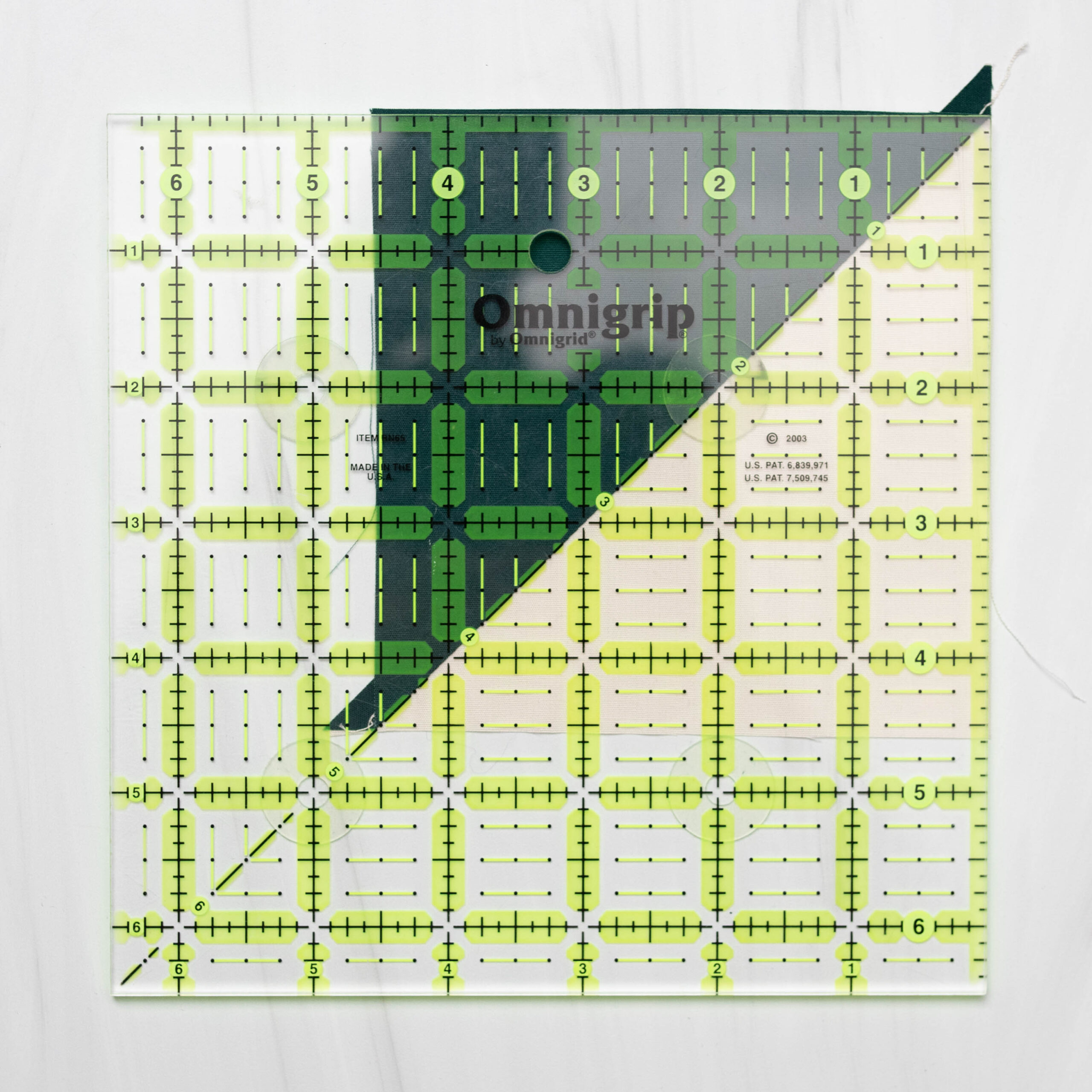
Quilt Alliance BOM Tips If you want even more tips for making this block, we’ve got you covered! Here are even more tips to help you kick off our Birthday Block of the Month with the best block you can make. Sew with a Scant Quarter Inch Seam We love this block for its trademark Ricky Tims ease. If this is your first time picking up a rotary cutter, you can make this block! The biggest thing you’ll have to focus on besides Ricky’s tips above is the accuracy of your seam allowance. If you are not yet confident in the accuracy of your quarter inch seam, consider sewing with a scant quarter inch, which is a seam that is very slightly smaller than a quarter inch. This will give you a little bit of wiggle room and may make the difference in your sewn strips ending up the correct width. Finger Press Before Using an Iron Some quilters find pressing tedious, and others love it. Regardless of how you feel about pressing, good pressing technique can increase your quilting accuracy. Before pressing your block with your iron, give it a good finger press to make sure you aren’t losing valuable fabric in your seams. Begin with the sewn strips facing right side up (seam side down). Gently press your fingers along the sewn seam to make sure the seam is completely open. For this pattern, we are pressing each strip seam to the side, so be sure that as you finger press, the seam and going in the correct direction. Finger press for about 12″ at a time and then give it a quick heat set with your iron. When you flip your strips over, your seams will be ready for an accurate iron pressing! Keep Seams Flat With a Tailor’s Clapper If you haven’t used a tailor’s clapper before, you’re in for a treat. This little piece of wood works big wonders and locks seams into place, keeping them flat as you piece. Using a spray bottle or continuous mist bottle (these bottles help distribute water more evenly than the spray setting on most irons), spray a small amount of water onto a seam. Press the damp seam with your iron. Immediately lay a tailor’s clapper on the seam. As the seam dries and cools, the tailor’s clapper keeps the fibers in your seam in place. Once cool, the seam is locked into place! Having flat seams will help with the next tip. Cutting at a 45-Degree Angle If you haven’t cut fabric at an angle before, here are some pictures that can help you make the strip triangles that form this block. Start with your sewn strips laying with Color 5 at the top as shown above. Lay your ruler on the sewn strips with the 45-degree mark across the top of Color 5. The right side of the ruler should be in the lower left corner of the sewn strips. Make your first cut and discard the half triangle. Keeping the sewn strips facing the same way (Color 5 up), flip your ruler for each subsequent cut, aligning the 45-degree angle mark with the bottom or top edge of the sewn strips. In the second picture above, you can see that the 45-degree mark is now aligned with the bottom, or Color 2. The top of the ruler is lined up with the point of the triangle. Make your cut along the right side of the ruler, and you’ll have your first triangle! Nest the Seams When sewing the strip triangles together, nest your seams to get perfect points. Once you feel the bumps of your seams nesting together as shown in the picture above, pin the seams in place so they do not stretch as you move your triangle strip blocks or sew them together. As Ricky notes, the bias edges of the triangle strip blocks are very delicate. If they are stretched, your finished block may be wavy or less accurate than you’d like.
Quilt Documentation Tip Each month, we’ll bring you a quilt documentation tip in these blog posts. These tips will help you not only learn more about the Quilt Alliance but also learn how to preserve your own quilt stories. Your quilts matter and we want to help you preserve and share their stories! Ricky’s block is focused on beginner quilters, and since this month is the first in our Block of the Month, we want to encourage you to document your very first quilt. The journeys we all take towards becoming quilters are all unique. Share yours in a DIY Go Tell It Video, just like the video Ricky made about this block. To learn how to make your own Go Tell It video, head to the Go Tell It! page here. You’ll see that documenting your own quilts is much easier than you might think!
Quilt Documentation Tip: Each month, we’ll bring you a quilt documentation tip in these blog posts. These tips will help you not only learn more about the Quilt Alliance but also learn how to preserve your own quilt stories. Your quilts matter and we want to help you preserve and share their stories! Ricky’s block is focused on beginner quilters, and since this month is the first in our Block of the Month, we want to encourage you to document your very first quilt. The journeys we all take towards becoming quilters are all unique. Share yours in a DIY Go Tell It Video, just like the video Ricky made about this block. To learn how to make your own Go Tell It video, head to the Go Tell It DIY page here. You’ll see that documenting your own quilts is much easier than you might…