A Quilter’s Legacy

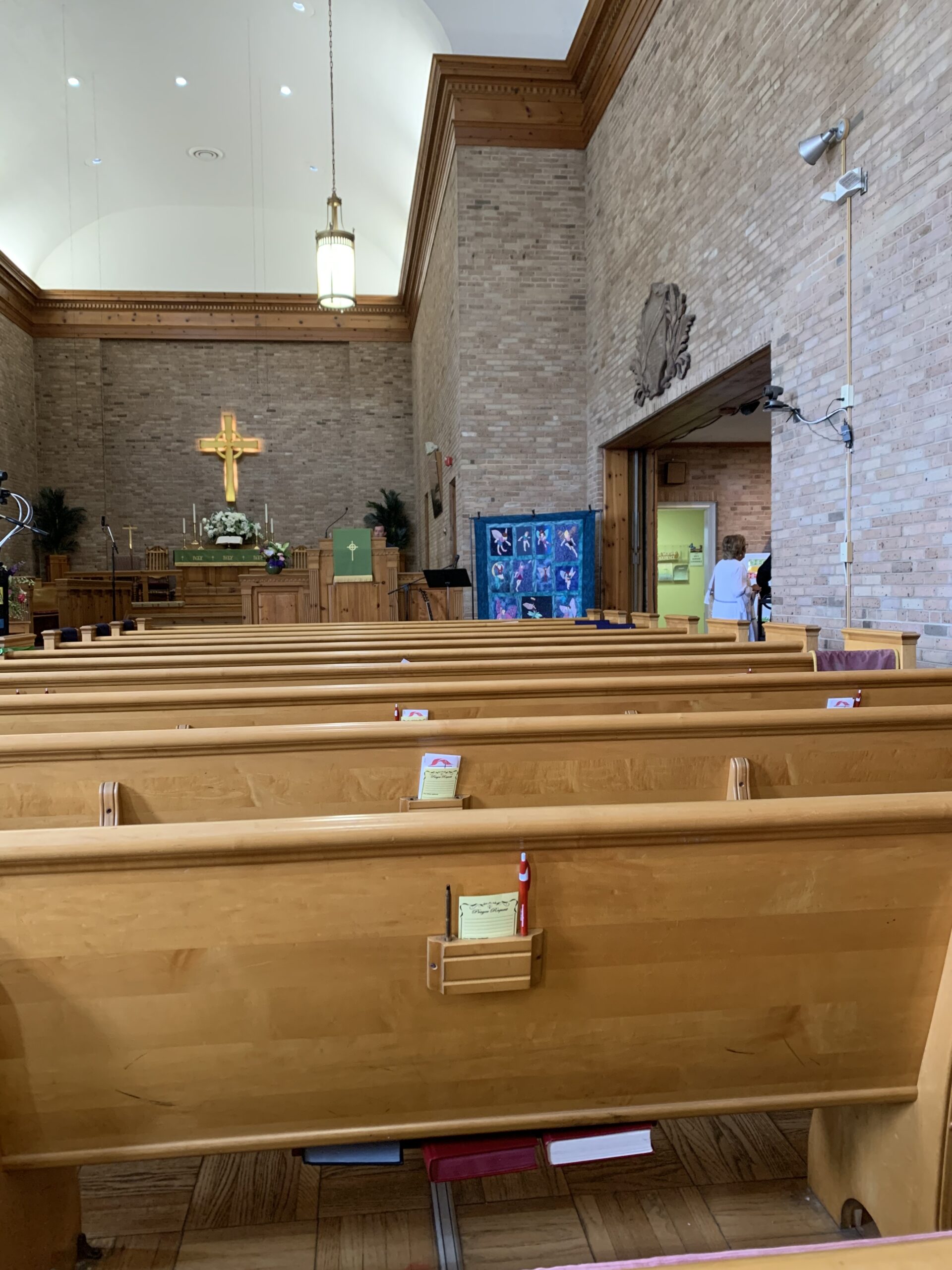
In every presentation I give on behalf of the Quilt Alliance, I share two beliefs that guide our mission: Quilts are historical documents, carrying vital information about the lives, families, communities, and cultures of their makers. Most quilts outlive their makers, making it essential to preserve not only the quilt but also the story of its creator. After a quiltmaker has passed away, an undocumented quilt risks becoming anonymous—a one-of-a-kind textile with no story attached. Through labeling, photography, videography, and oral history, Quilt Alliance projects ensure that quilts and their makers are remembered, not forgotten. I’m never more aware of the importance of our work than when a quilter we’ve documented passes away, especially when that quilter is a friend. On January 21, 2023, I interviewed Thelma Luciana, my third-grade teacher, for the QSOS oral history project. Thelma’s daughter, Lynda Reilich, had contacted me a few months before to arrange the interview to commemorate Thelma’s 90th birthday. On the day of the interview, I visited Thelma’s beautiful 1950s home in my hometown of Morganton, nestled in the foothills of the Blue Ridge Mountains of North Carolina, where she and her late husband, Jim, raised Lynda and her sister Cathy. The Luciana home was filled with Thelma’s quilts — on walls, beds, shelves, and handmade quilt racks made by Jim. I got a fun tour of Thelma’s large collection of works, all hand pieced, appliqued, and quilted. Also neatly and artfully displayed around the house were treasured family quilts, dolls, and miniature furniture. We set up a quilt stand with the piece that Thelma had chosen as her “touchstone quilt.” Dream of the Thistledown Fairies would serve as the starting point for our interview. Our interview was delightful. I loved learning about Thelma’s history; how she learned to sew and quilt from the women in her family in her hometown, nearby Black Mountain, NC. I was so grateful to Lynda for contacting me and setting the documentation session into motion. We sent out a press release to the two local newspapers, and both ran stories about Thelma’s interview. The Burke Quilters Guild honored Thelma by hosting me at one of their meetings, and I played back the interview for the group. You can watch the video recording, explore the full interview, and see more photos of Thelma’s touchstone quilt on the QSOS website. Thelma Luciana passed away in her lovely home on August 22, 2025. Her QSOS interview is mentioned in her obituary, and her family displayed Dream of the Thistledown Fairies and many of her quilts and treasures at her memorial service. Thelma will be missed by her family, former students like me, her devoted friends, and fellow quilters, but her story will never fade away, and her quilts will never be called anonymous.   
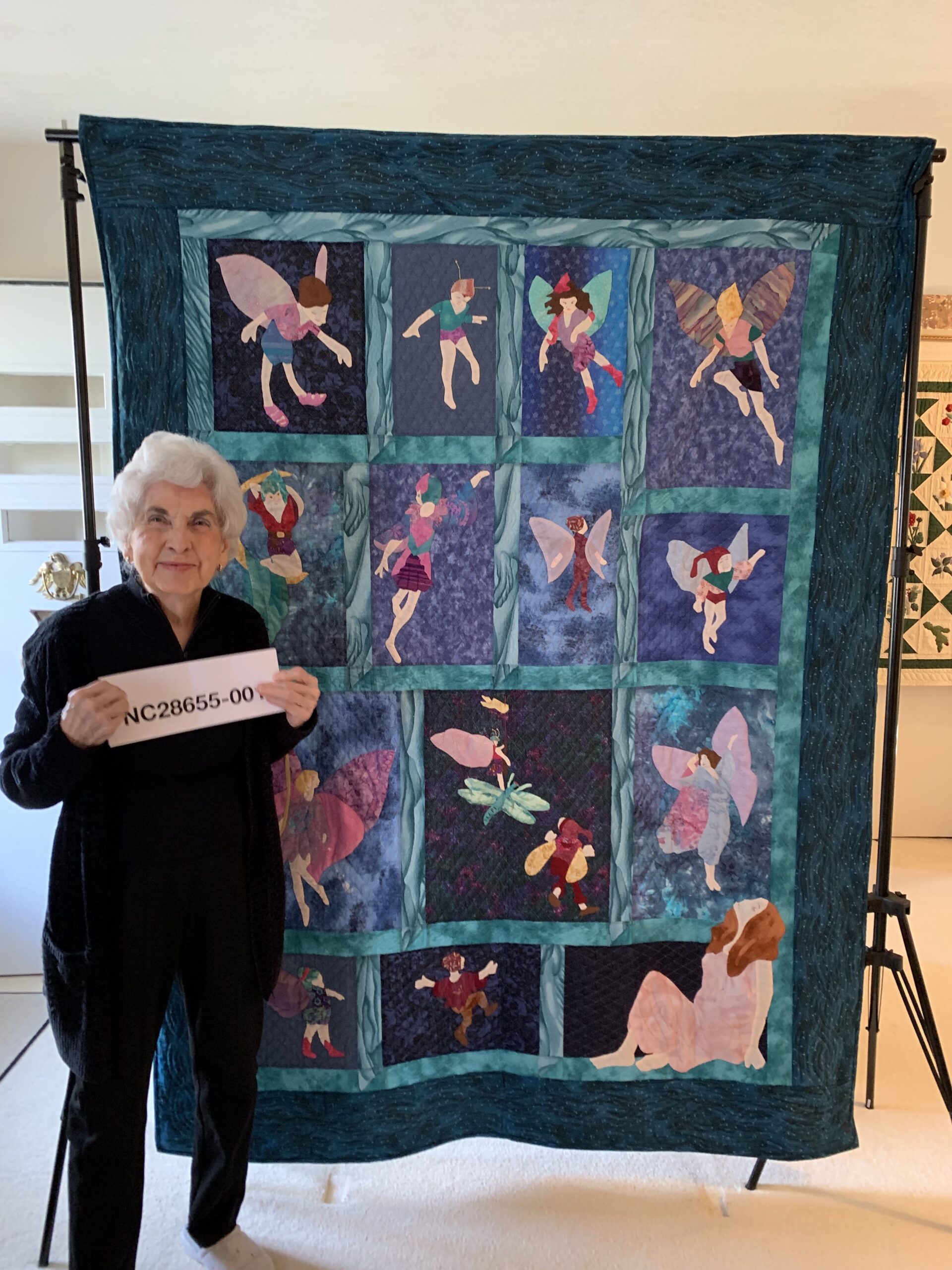
[et_pb_image src=”https://quiltalliance.org/wp-content/uploads/2025/09/display-2.jpg” _builder_version=”4.27.4″ _module_preset=”default” theme_builder_area=”post_content” title_text=”display 2″ hover_enabled=”0″…

New Episode of Running Stitch, a QSOS podcast

New Episode out now!

Have you tuned into Running Stitch yet? We’re excited to share new episodes with you this summer! In our latest episode, host Janneken Smucker speaks with Canadian quilt artist Libs Elliott, whose bold, geometric quilts are designed using generative code. Libs shares her journey from seeing antique quilts at an auction house to creating a digital design process that blends computer code with centuries-old techniques like English paper piecing. The conversation explores the ethics of AI, the power of algorithms, and the ongoing conversation between craft and computation. Libs discusses how social media transformed her access to the quilt world and reflects on how she teaches others to “embrace the chaos” of chance in quilt design. Running Stitch, a QSOS podcast, is a project of the Quilt Alliance that brings the rich stories of quiltmakers to life. Each episode connects contemporary conversations in quiltmaking with reflections from nearly 25 years of interviews in the Quilters’ Save Our Stories (QSOS) oral history project. Hosted by quilt historian Janneken Smucker, the podcast explores themes like creativity, community, identity, and tradition through the voices of quiltmakers past and present. Season 4 of Running Stitch dives into the relationship between quiltmaking and technology. From the revolutionary introduction of the rotary cutter to the rise of longarm machines, this season explores how tools—both digital and analog—have shaped and reshaped how quilts get made. Each episode pairs new interviews with recordings from the QSOS oral history archive, highlighting how makers across generations have embraced (or resisted) new technologies. It’s an auditory look at how quiltmakers can harness new technologies without letting go of tradition. And as always, Janneken brings in voices from the QSOS archive to explore what quilters throughout the decades have thought about accepting and rejecting the technology that’s changed quilting, and how contemporary culture intersects with tradition. Listen now to the Libs Elliott episode of Running Stitch, and stay tuned for two more upcoming episodes in Season 4 – follow us wherever you get your podcasts to make sure you don’t miss these episodes! Find out more at…

Re-Introducing the Quilters’ Save Our Stories Oral History Project!

Please join us on June 11th at 2 pm Eastern for a very special free Textile Talk. We’ll be talking about the re-launch of our QSOS project, and sharing more information about how you can help! Read on to learn a little more about the project re-launch, and why we believe so much in the importance of this project.
What is QSOS? QSOS stands for Quilters’ Save Our Stories. Those four words say it all: it’s a project by and for quilters, dedicated to preserving and saving the history, practices, traditions, and stories of our quiltmaking community. QSOS is an oral history project in which one quiltmaker is interviewed about their quiltmaking life—how they came to quilting, how they practice it, what they love (and what challenges them), and what quilting means to their life and the broader world. These interviews are available online and are archived with our partners at the Library of Congress’s American Folklife Center and the Louie B. Nunn Center for Oral History at the University of Kentucky. The project is free and open to anyone who wants to participate. QSOS is a grassroots, community-driven project. Quilters across the country—and the world—have volunteered to record interviews with fellow quiltmakers. These include stories from people like David White, a long-distance trucker who sets up his sewing machine in the cab of his truck; Frances McDonald Boyd, who balanced quilting with a decades-long career in education; and Alice Robinson, who shares a quilt she made during her chemotherapy and recovery from breast cancer. QSOS launched in 1999. Since then, we’ve collected more than 1,200 oral histories. A few years ago, we paused active interviewing to reflect and retool the project to make it more user-friendly, enhance digital accessibility, and streamline the interview process for the digital age. Now, we’re bringing QSOS back, and we invite you to join us for a new era of this important project.
What’s new? A simpler, more accessible interview processWe’ve updated the QSOS project for the digital age. Instead of mailing paper transcripts and cassette tapes back and forth and transcribing each interview manually, interviews can now be recorded digitally, and submitted online. Updated interview questions and guidanceThe interview topics and question bank have been revised to reflect the current quilting world. New interview guidance helps interviewers and participants explore what quiltmaking looks like today, including the tools people use, the issues they care about, and how quilting fits into their lives in the 21st century. A new way to listen and browseQSOS interviews are now easier to search and use: each new interview will have an interview index that makes the interview easier to navigate. The new system makes it simpler, whether you’re doing research in quilt history, looking for a new teacher to visit your guild, or just listening to an interview with a friend. Improved support and resources We’ve refreshed the training materials for interviewers, interviewees, and quilt groups. The updated guides are clearer and more practical, making it easier to participate—whether you’re recording a story, helping someone else do it, or organizing a guild project.
Why does QSOS matter? We believe that the QSOS project: Empowers quilters to tell their stories QSOS is for every quilter. You don’t have to be a quilt show winner or a hand-quilting virtuoso. We welcome interviews from new quilters, occasional quilters, people who quilt for a living, retired quilters, guild members, and solo quilters. No two quilters are the same, and everyone’s story deserves to be heard and celebrated. Supports research Quiltmaking is the most widely practiced traditional art in America. These interviews are valuable for quilt historians, but they also touch on topics such as grief, creativity, economics, women in the workforce, parenting, aging, and community life. The interviews are first-hand accounts of lived experience in the 21st century. Commemorates and remembers QSOS interviews help us remember the voices of quiltmakers who are no longer with us, and they celebrate events like quilt shows, major projects, local guilds, and more. They offer a snapshot in time. Encourages community collaboration The project is a meaningful undertaking for groups and guilds, encouraging members to learn more about their friends, neighbors, and colleagues. Expands public understanding These interviews make the invisible visible. They show the world how meaningful the practice of quiltmaking can be—and just how much thought, care, creativity, and labor go into a single quilt.

How can I get involved?

Volunteer as an interviewer or host a community documentation day. Help record interviews with quiltmakers in your community. You don’t need special experience—we offer online training, as well as written instructions. Additional training videos and materials are coming soon. Sign our interest form for more information about getting started and upcoming training days. Share your quilt storyTell your story in a QSOS interview. Ask a friend or family member to interview you, or get in touch – we may be able to pair you with an interviewer. Donate to support the project Your support powers this project. Donations help us cover technical costs, print and distribute training materials, and pay for the staff time required to coordinate, edit, and upload interviews. Contribute to the Quilt Alliance today or become a member to support our work. Explore our interviewsMore than 1,200 interviews are online now, and about half include audio as well as text transcripts. Dive into the stories of decades of quiltmakers and share the project with your…

Remembering Bernie Herman

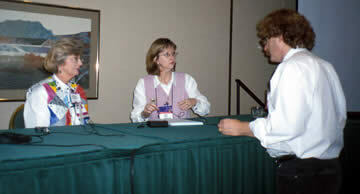
The Quilt Alliance is sad to learn of the passing of Bernard L. Herman, professor, writer, folklorist, and early Quilt Alliance board member. Bernie was one of the first champions of the Quilt Alliance (then called the Alliance for American Quilts) and served on the task force that developed the Quilters’ Save Our Stories (QSOS) project in 1999, animated by the question ‘if this quilt could talk, what would it say?’.  Georgia Bonesteel, interviewer Karen Musgrave, and Bernie Herman at a QSOS training, 1999 Bernie conducted some of the earliest QSOS interviews, including Jean Ray Laury, Ellen Danforth, and Valerie Goodwin. He also conducted more than 30 research interviews with quilters in Gee’s Bend, Alabama, for his ongoing writing about the quiltmaking tradition in the area, including an essay in the book Gee’s Bend: The Architecture of the Quilt that accompanied the groundbreaking exhibit at the Museum of Fine Arts, Houston. Listen to Bernie’s thoughtful 2006 interview with Jette Clover here. Bernie was endlessly curious about things, whether it was cataloging his fig library, championing quilts and their makers, or rebuilding the oyster population near his family home on the Eastern Shore of Virginia. Bernie photographing quiltmaker Darlene Christopherson for her QSOS interview, 2000 Bernie’s death is a loss for the folklore, material culture and foodways academic communities, but it is also a personal one. I met Bernie in 2009, when I was an undergraduate student at UNC-Chapel Hill. I had signed up for a class called ‘Visual Culture’ on a whim – it covered everything from birthday cakes to Brazilian graffiti, with a healthy dose of critical theory and jargon. Honestly, I wasn’t sure what he was talking about half the time, but I loved it. I’d never considered that ordinary things could deserve such thoughtful analysis. The fourth week of class was dedicated to quilts, spotlighting the Sunbonnet Sue pattern and the satirical quilt ‘The Sun Sets on Sunbonnet Sue’. When he offered a class the following semester called “The Art of the Quilt”, I signed up. I was hooked on quilts, making my very first quilt in lieu of a term paper for the class. Bernie suggested I look into an organization he was part of – the Quilt Alliance – as I conducted research for my senior thesis about contemporary quiltmaking.  Fifteen years later (thirteen of them as the Quilt Alliance’s oral history project manager), I’m still hooked on quilts! Bernie’s infectious enthusiasm for everyday and overlooked objects, as well as the stories of people who make them, continues to be a guidepost for the Alliance’s work documenting and preserving quilt history.  –Emma Parker, QA Project…

In Memory of Carole Lyles Shaw

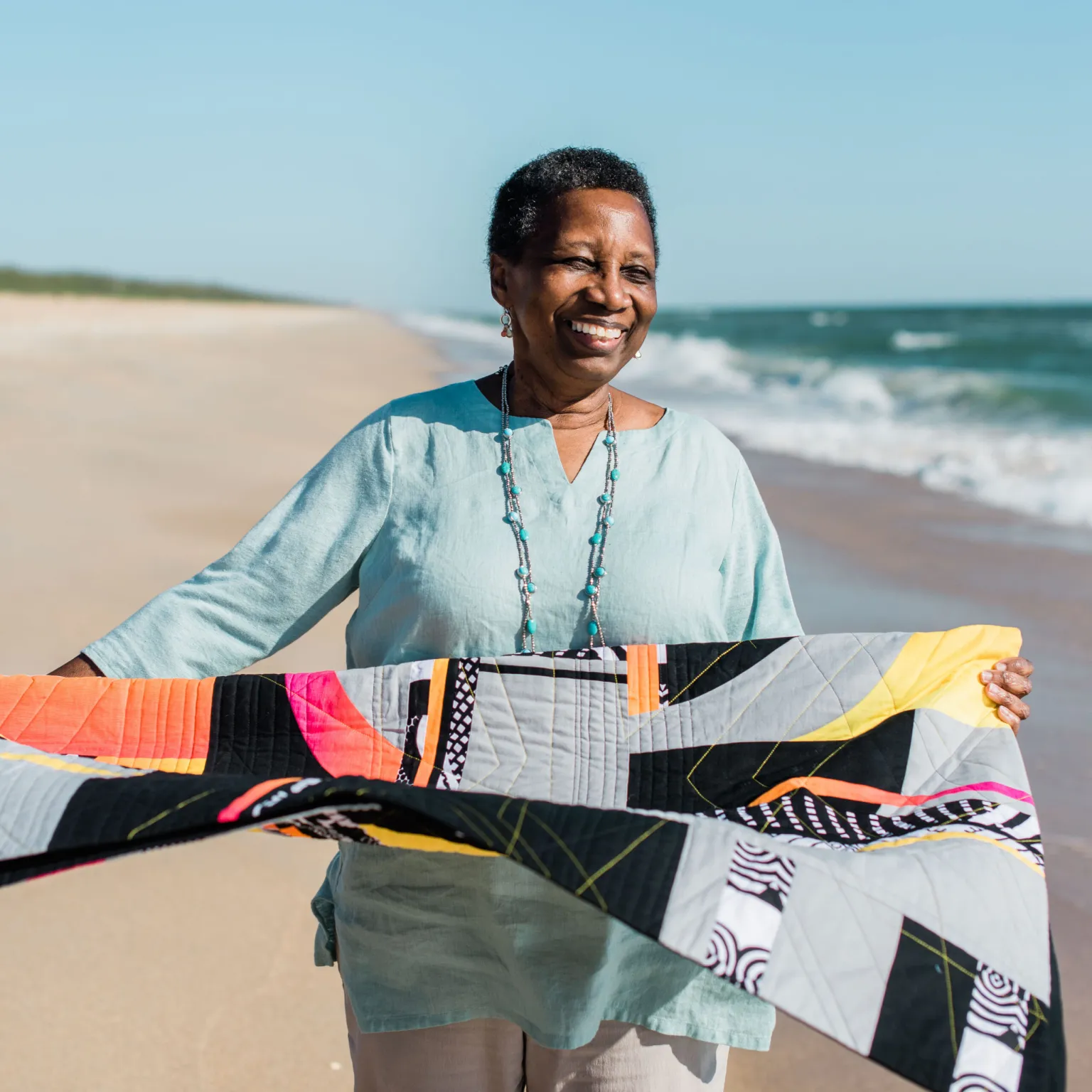
The quilting community lost a bright light this month. Artist Carole Lyles Shaw passed away on August 4, 2024. Carole was a vibrant modern quilter and a beloved teacher and community leader. She was an inspiring role model to so many quilters and did an excellent job of documenting her work, her process, and her life. Carole was a longtime Quilt Alliance member who participated in many of our projects. Volunteer Karen Musgrave interviewed Carole for the Quilters’ Save Our Stories (QSOS) oral history project in 2009. She was interviewed again by QA Project Manager Emma Parker in 2023. https://youtu.be/ryCAMotosts?feature=shared https://youtu.be/Nq1a8qJuo34?si=MEaXAEYsrPBF73A5 In 2019 Carole spoke to Frances O’Roark Dowell and led viewers on a tour of her studio for the QA’s StoryBee web show. https://youtu.be/ejISlsjjGT4 Carole was a tech-savvy creator and recorded a Go Tell It video last year about a memorial quilt she made in tribute to her aunt Dorothy. https://youtu.be/G9zZ7KnD430?feature=shared We welcome your remembrances of Carole on this post.  …

We Are Our Stories

We Are Our Stories By Karen S. Musgrave   We are our stories and this one is mine. How do I reach you and make you care about the stories behind quilts?  By you I mean the public, researchers/academia, people I wanted to interview, workshop attendees, lecture attendees, readers of the articles I wrote and the manual that I edited for Quilters’ S.O.S. – Save Our Stories and the Alliance—so everyone. Even now after being away from interviewing for years, I want you to care. Though we have come a long way, women and quilts still face inequality. We can learn a lot about a quilt by looking at it, but that does not tell us the whole story. Listening to the quiltmaker does.  A little bit about me. I made my first quilt, for a baby, in 1974 after seeing an article in a magazine. Quilts were not a part of my life growing up. It wasn’t until I started doing genealogy that I learned that there were quiltmakers in my family. I, like many people interviewed, came to quiltmaking through sewing my own clothes. I didn’t know the “rules,” so the quilt was made with my drawings, rendered with fabric crayons using polyester/cotton blend fabric. From there, like many others, I created traditional quilts before moving on to create my own designs. I came to Quilters’ S.O.S.- Save Our Stories (Q.S.O.S.) via Boxes Under the Bed™, the Alliance’s first project that dealt with quilt ephemera in 1996. I volunteered to go to the Boxes training as my guild’s representative. The guild’s board decided to hold an essay contest to determine who would attend. I spent weeks on my essay to end up being the only one to write one. I attended both training sessions that were offered at the International Quilt Festival in Houston. And while I felt it was important work, it did not excite me. I never imagined that attending the first Q.S.O.S. training would change my life in the ways that it did. After attending the training, I volunteered to put together a manual and worked for a year with the project’s volunteer task force members—Bernie Herman, Patricia Keller, Marcie Cohen Ferris and Pat Crews – and the manual was born.  Q.S.O.S. started by interviewing prize winners and people with quilts at the International Quilt Festival in Houston. Therese May’s interview from 2000 has stayed with me through all these years. It is not one that I conducted but was fortunate to sit in on. Therese’s honesty and openness left me in tears.  It was the first time I cried during an interview, and it would not be my last. I think one of the most powerful questions ever asked is, “Have you used quilts to get through a difficult time?” Shortly after Therese’s interview, I was sent to the exhibition floor to interview Marion Mackey and to discover the story behind her quilt depicting baseball player Mark McGwire setting a home-run record. I was trying to remember everything I could about baseball. But it turned out the quilt had nothing to do with baseball. Her husband needed a liver transplant. He almost died twice while waiting. They were hoping and praying for a donor. Well, McGwire breaks the home-run record while they are watching it on TV, and then the phone rings and they get a liver. She started crying and I started crying. They travel with the quilt and talk to children’s groups about the importance of being an organ donor. This was another defining moment for me about why oral histories are so important.  Quilt Festival made conducting interviews easy, but I felt the interviews did not reflect the diversity of quiltmakers and their stories that were out in the world beyond Quilt Festival. So, my personal mission began. In the end, I conducted nearly 300 interviews, transcribed nearly 75 (not all mine) and read every interview posted online. For 10 years, I never went anywhere without my trusty $35 tape recorder and paperwork.  The interviews cover all sorts of territory, and often dispel common myths. There are traditional quiltmakers who think that art quiltmakers don’t do handwork. There is a notion that hand quilting is dying out—I don’t think that is the case. There’s the notion that you cannot be artful with a long arm machine. Reading the interviews and seeing the quilts helps set the record straight and eliminates these misunderstandings.   Here are a few things that I learned. Regardless of the skill level, creating something means that a part of us will still be around after we are gone. Quilts heal. Quilts can cause change. Quilts can create awareness. Quilts can be a source of much needed income. Some people are more open to sharing than others. Some people regret how much they shared. Interviewing Latina quiltmakers and their children, especially those in northern California, gave these makers a way to share their stories about the impact in their lives from the income they made from selling their quilts. I will be eternally grateful to the Salser Foundation for supporting me and Molly Johnson Martinez who was the organizing force behind the group. Los hilos de la vida (The Threads of Life),a mostly Latina cooperative quilt group, was quietly making pictorial quilts for years before I arrived. Their quilts depict scenes of family life, border crossings, life in Mexico, dreams, and reverence for the natural and spiritual worlds. Vibrant with color, the quilts make an immediate impression on the viewer as they unselfconsciously capture the pure essence of the women’s stories. Even more impressive, the women had little or no previous experience creating art or quilts.  Angeles Segura’s quilt shows her asleep on her GED diploma surrounded by the things she loves—her books and her guitar. The mother of four, she worked in the vineyards while studying for her diploma.  Some of the most compelling quilts are those that depict scenes about crossing the border into the United States. Carmela Valdivia has created many border crossing quilts, which always have the figure of death somewhere in them.  After returning from California, my mission became to help the group gain more recognition. I immediately made the first of many attempts to get the attention of the National Museum of Mexican Art (NMMA) in Chicago. Success was achieved when two of the group’s quilts hung in the museum’s exhibition Declaration of Immigration. I also curated an exhibition at the Pacific International Quilt Festival XVII, in Santa Clara, California. Unfortunately, funding ended for the program that supported the group which means the interviews I was able to conduct now provide a glimpse of something that no longer exists. My involvement with Hilos led me to start a quilting group at the NMMA. Again, the participants had never made quilts before, and many had never used a sewing machine. However, unlike the women of Hilos, many of the women had immigrated to the United States when they were young, and all had legally immigrated. The quilts are no less powerful. Maria Tortolero’s detailed quilt is split in two—one side depicts her life in Mexico and the other side her life in Chicago. Maria Herrera’s quilt honors her father and the stories of his immigration adventures and traveling around the United States to find work.  “My quilt is …based on my dad/s journey from Mexico to the United States…I started recording my dad’s stories because I wanted my son to grow up hearing my dad’s stories…the stories I grew up hearing…I know that when my dad seed this quilt and a bit of his life in this quilt…he is going to start crying…My dad’s journey is being told through this quilt.” By the way, he did cry. The group at NMMA also created quilts that dealt with the torture, rape and murder of young women and children in Juarez, Mexico. The difficult subject matter produced incredibly thought-provoking quilts. Christina Carlos’ message, “al fub…en paz/ Finally at Peace,” is typical in that it expresses young girls no longer suffering and in a better place. I think Luz Maria Carillo expresses something universal when she said, “Each one of us leaves a piece of our hearts in each quilt that we make.” A handful of people that I interviewed (who did not know me) asked about me personally. One of them was the writer Spike Gillespie, who had begun writing about quilts at the time of her interview. After our conversation, she invited me to write essays for her book Quilts Around the World about my involvement with Q.S.O.S., Latina quiltmakers and my work with connecting American quilts with quilts or patchwork in the countries of Georgia, Armenia, Kazakhstan, and Kyrgyzstan. My connections to the Alliance through one of the founders and then president, Shelly Zegart, provided me with the connection to take an exhibition of quilts from Gee’s Bend, Alabama to Georgia, Armenia, and Kazakhstan. These quilt exhibitions provided a link in a global movement to revive interest in traditional culture and crafts. They illustrate the shared common threads in our arts and cultures—highlighting what makes us unique and embracing our commonalities.  Interviews with some of the members of the Georgian Quilt Group can be found in the Q.S.O.S. project. My writing for Spike’s book led to an invitation to author my book – Quilts in the Attic –  Uncovering the Hidden Stories of the Quilts We Love. I was also interested in gathering interviews of how quiltmaking can make a difference for incarcerated people. I found a quilting program in a Minnesota detention center for men. After months of answering questions and even signing papers stating I did not expect to be rescued if taken hostage, the warden decided without any explanation to pass on the project. I was devastated. Fortunately, in 2009, I was able to interview women who had participated in a quilt project featured in an exhibit called “Sacred Threads” in Columbus, Ohio.  The Ohio Reformatory for Women (ORW) is just outside of Columbus in Marion, Ohio. Driving down the long road to the prison passing fields filled with wildflowers, it was such a shock to see buildings surrounded by a tall wire fence with razor wire on top. The warden required the women to state the reason that they were incarcerated at the beginning of each interview. It was explained to me that this requirement was to get the women to realize they were accountable and become more comfortable talking to strangers about why they were there. I made it clear before the tape recorder was turned on that I did not care why they were there.  I cared about their experience making a quilt. None of them had made one before.  The assistant to the warden was also present in the room during the interviews. She worked quietly a few tables away and I made sure to sit so that the women would have their back to her. I continued my relationship with these women after their interviews and with a few even until today.  Rhonda Edwards was the most intense interview and one that I wished we had videotaped. Her quilt shows her split in two- her life before and her life after. Rhonda is a talented artist, so her quilt is full of her drawings. It also expresses her journey from a violent person to one who has found God, from a person who was deeply grieving her father’s death to someone who feels joy. Rhonda sent her quilt to her mom. The women were not allowed to have the quilts in their possession. Rosa Angulo’s quilt is called “Hope.” Her artist statement says so much about her quilt, “I want to give my first quilt the name of hope–Because I’m trying to express it somehow. My life in this place is the patches and the stitches are the different stages I’ve been going through. The ribbons are the razor wire that surrounds this prison. And the eagle is me, who with the help I’ve been getting from recovery and religious services, and some of the staff members, I feel I will have the tools to fly when my time gets here. Like it says in Isaiah 40:31 ‘They that hope in the Lord will renew their strength, they will soar as with eagles’ wings; they will run and not grow weary, walk and not grow faint.’“  And she added as a personal note: “I am 48 years old and the mother of three beautiful daughters and the grandmother of an eight-year-old girl. I work as a porter in my cottage, and love to do community service through the Stitching Post (a place to gain skills and employment sewing items for nonprofit organizations, many dealing with children). I’ve never made a quilt before, but I really enjoyed working on this one.” Rosa was deported to Mexico upon her release. She had sent her quilt to her eldest daughter. I never heard from Rosa after her release. I do hope that the skills she learned while at ORW continue to help her and that her desire to make more quilts continues. Once the interviews were posted and several articles about them were written, I received threats from some of the women’s victims’ families. Nothing came of them, and I certainly understand their anger and pain, yet I still feel the interviews should be included in the Q.S.O.S. collection..  I was not as successful in getting Native American quiltmakers into the project. It was only by chance that I interviewed Lois Beardslee. We met while I was working in northern Michigan. Her interview was conducted in her bedroom while sitting on her quilt. “I started piecing our old clothing and old blue jeans, everything…old handkerchiefs, old pillowcases, everything…this is {a piece from] my wedding dress…It was my son who one day took the sleeves off, and my husband said, “’Oh, no.’ I told him, ‘See, it is not about the dress. It is about the being married to you and growing old with you.’…It is a great quilt because it is our lives all wrapped up into one package.” Interviews with people included in exhibitions truly capture a moment in time and continue the historical use of quilts to communicate social or political messages. The exhibition-based projects include interviewing people who made quilts to celebrate the election of Barack Obama as president and the Ancestor Project that took place at the American Indian Center in Chicago where women from the senior lunch program stayed to appliqué designs of ancestral portraits, animal spirits and plants. Other exhibition-based projects include  the Alzheimer’s Forgetting Piece by Piece and Priority Alzheimer’s Quilt projects led by Ami Simms, that helped raise awareness of Alzheimer’s and funds for research, and Healing Quilts in Medicine project to name a few. There are so many times that I wish I could have left the recorder going because far too often that is when amazing things were shared. They weren’t always about the quilt or quilts in general, but they provided intimate details or funny stories that I wish everyone knew.  Interviewees were given the transcription of their interview to review before it was published  online and archived. One interviewer called me quite upset stating that she did not talk the way the transcription portrayed her. She “most certainly did not have a potty mouth.” I tried explaining that transcribers do not add or subtract from the interviews. Still not satisfied, I played the tape for her. In another interview, the person shared details about other quiltmakers that they regretted and so the comments were removed. After one Houston interview, I encouraged editing because I thought it would hurt the interviewee’s reputation, but she stood by her words.   I was pleasantly surprised by the deep friendships that happened because of interviewing people. I am so thankful that I was able to interview Yvonne Porcella, Merry Silber, Gwen Marston, Elizabeth Cherry Owen, Maxine Groves and Lisa Quintana, who are no longer with us.  I think my proudest moment was after we lost our original archives at the University of Delaware. As the chair of the task force, I had to find a new archival home for the collection. Board members volunteered their universities as potential partners, but I set my goal higher. With the help of David Taylor, I wrote a successful proposal to the American Folklife Center at the Library of Congress.  Repeatedly, historians often run into the same obstacle when working to identify information about a historic quilt: a dearth of clues as to the origin, maker, and story. That means a lot of mystery remains. And while Q.S.O.S. might not help today’s historians solve certain mysteries of the past, the interviews will leave behind a legacy for historians of the future.    While interviewers probably did not set out to touch another’s feelings and longings, words and images emerge in interviews that are just as universal as they are personal. Q.S.O.S. has provided a place where quiltmakers’ stories are accessible, where others can draw on them for strength and make a connection. This is the gift that volunteer interviewers will continue to give for years to come.  I will close with my favorite quote by Betty Reese and one I use at the end of my lecture, “If you think you are too small to be effective, you’ve never been in bed with a mosquito.”   About Karen Karen S. Musgrave is an interdisciplinary, multihyphenate artist whose recent body of work deals with loss, memory, and identity. She feels passionately about connecting cultures with quilts. Her projects include curating a traveling exhibition of the African American quilts from Gee’s Bend, Alabama, alongside quilts in Georgia, Armenia, and Kazakhstan. In Kyrgyzstan, she organized, curated, and wrote the catalogue for an exhibition of American art quilts and Kyrgyz patchwork. She has served on numerous nonprofit boards. She was a consultant on the 9-part documentary Why Quits Matter. As a writer, she contributed to Spike Gillespie’s book quilts Around the World, wrote the book Quilts in the Attic: Uncovering the Hidden Stories of the Quilts We Love and has written numerous articles for magazines. She has exhibited internationally, and her work is in many different private collections. She lives in the far west suburbs of Chicago. Visit Karen on Instagram                            …