by Amy Milne | Apr 8, 2019
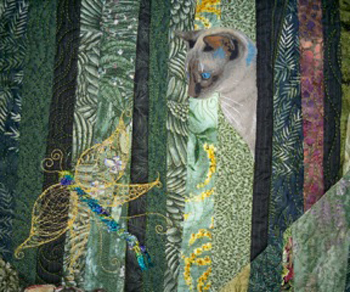
Pam Schultz (PS): This is Pam Schultz. It’s Tuesday, May 24 [2011.] at two o’clock. I’m interviewing Cindy Mumford at the Art Center in Battle Creek. [Michigan.] This interview is being conducted for the South Central Michigan Quilters’ Save Our Stories Project of The Alliance for American Quilts. How are you today? Cynthia Mumford (CM): I’m good. Good. Good. PS: Tell me about the quilt that you brought in today. CM: I brought in a quilt that I made several years ago–I think it was 2007–that was a project between a friend and I, who shall not be named, no, who’s here today with me. We decided to challenge ourselves to make this beautiful New York Beauty style quilt. And I never would have made it without that challenge because it was, at the time, probably the most difficult quilt I’ve ever made. PS: What special meaning does this quilt have for you? CM: Oh, lots of special meanings, mostly special memories, because my friend and I, can I say Pam Schultz, and I spent many, many hours shopping. It has a tremendous amount of fabric in it, in that there are a lot of different fabrics. We used mostly batiks, but a lot of other fabrics, too. I can’t even tell you how many different fabrics. I don’t know whether you could count them. But we did a lot of shopping to get all those different fabrics and we traded fabrics and we experimented with fabrics. If you know anything about New York Beauty block, it can have many different fabrics in one block, which all of these do. So, that part was a lot of fun. We also did some making together. Pam made up the patterns for the Beauty blocks, which we got out of Valerie Wells’ Book? No. PS: Karen Stone. CM: Karen Stone’s book, called New York Beauty Block, I think. [New York Beauty; Paper Foundation and Freezer Paper Templates to Complete 30 Blocks, Karen K. Stone.] So we used her patterns, made them up on copy paper so we could paper-piece these blocks. They were, for me, quite a challenge at the time. I had never done a New York Beauty block or anything quite like it before. There’s lots of little pieces and lots of points and so it was a big learning experience for me. PS: Why did you choose to bring this quilt to the interview? CM: I still think it’s one of my best quilts and I’m not sure I’ll ever make one this complicated again. [laughs.] I’m most proud of this quilt, I think, of all the quilts I’ve made. PS: What do you think someone viewing your quilt might conclude about you? CM: I don’t know. It’s colorful so maybe they would think that I liked color. It’s intricate. I don’t know. PS: How do you use this quilt? CM: It hangs on the wall in my studio and I look at it every day. It still inspires me. PS: That kind of goes with the next one. What are your plans for this quilt. CM: It’s going to keep hanging on my wall. [laughs.] It’s probably the only quilt of mine that I never get tired of looking at. PS: Tell me about your interest in quiltmaking. CM: When I started? PS: Yeah, and now. CM: I’ve always been a sewer and probably since seventh grade or so when I learned how to, actually my mother taught me how to sew on the sewing machine. Before that my grandmother was teaching me to hand sew. My great-grandmother was a quilter but she was long gone before I was of an age to quilt and didn’t live near me so she didn’t teach me to quilt. But my grandmother did, even though she didn’t really like quilting like her mother did. So I’ve been sewing a long time and when I had children I never was a quilter until my grandmother gave me the quilt that her mother had started for me. It was all in pieces. Some of it was put together but mostly it was pieces. It was one and a half inch squares and it was called a Postage Stamp quilt, I was told. On my eighteenth birthday my grandmother gave it, unfinished, to me. She was supposed to finish it for her mother, but not being that much into quilting, she never did. So she gave it to me and said if I would put it together she would take it to a quilt guild, I think it was a church group that did quilting, and have it quilted for me. As I said, at the time I knew nothing about quilting itself. I just knew how to sew. So I sewed the pieces together as best I could and she had it quilted for me as promised and that was my first quilt. I did not really get into quilting seriously. I made quilts for my kids and things around the house, but I didn’t really know anything about formal quiltmaking. I’d never had a class or anything like that. I just knew how to sew. And so when I retired I had some friends who had started quilting before me and I was always too busy with my kids growing up to take classes and things. They had started taking classes and one of our friends belonged to a guild. Anyway I didn’t do all of that until my kids were older and then when I retired I joined the guild and I started quilting seriously, which is about ten years ago. PS: What age did you start quiltmaking? CM: When I was eighteen, but I didn’t know what I was doing so when I started seriously quiltmaking I took a class when I retired. I was fifty, maybe I was fifty-one or so. The first thing I did was sign up for a quilting class, took a class and found out what I didn’t know about quilting. And went from there. Just kept taking classes and joined the guild. [Cal-Co Quilters’ Guild of Battle Creek, Michigan.] And made more quilts, practice, practice. PS: From whom did you learn? CM: My first quilting class was from Lyn [Evans.] at The Quiltery, a little shop in town that was a quilt shop, was where I took my first formal quilting class, and learned how to quilt as opposed to learning how to sew. PS: How many hours a week do you quilt? CM: I usually do a little bit every day, almost. Maybe ten to twenty hours a week, sometimes more, sometimes less. PS: What is your first quilt memory? CM: My first quilt memory is the quilt my grandma gave me that my great-grandmother started for me. I remember other quilts that she had made. She made all the family quilts to use as bed covers. When we would visit my great-grandmother, she lived on a farm, all the beds were covered with quilts. They were just everywhere and she made–my brother was her oldest great-grandchild and she made his quilt and his quilt was on his bed his whole growing up and I have that quilt now. I’m not sure why I have it. My brother doesn’t, but I have it. So I grew up, sort of, seeing quilts around and just always liked them. PS: This one’s a little bit of a duplicate. Are there other quiltmakers among your family or friends? CM: Lots of quiltmakers among my friends now, because I joined a guild and they all quilt. [laughs.] So that’s really nice. And I really like my quilting friends. I don’t think anybody else in my family is quilting, that I know of. I have a cousin who did some quilting for a while and actually she did a fairly good job but she didn’t really know much about quilting either. She just did it and she was making picture quilts, which I also liked to do. And she made some very nice little appliqué quilts but she doesn’t consider herself a quilter. She’s the only one in our family that I know of that’s done anything with quilting, so far. PS: How does quiltmaking impact your family? CM: My family? Well, all my nieces and nephews all got nice quilts now. [both laugh.] My family now consists of me and my husband. I’ve made quilts for my two boys. Several of my nieces and nephews. I usually try to make quilts for my nieces and nephews when they get married. I’ve made lots of baby quilts for the babies in the family. It’s affected my husband in that I’m always down in the basement sewing. He has to come down and drag me out sometimes. But he likes my quilting, too. He likes the products that come out of it. PS: Have you made any quilts for the grandbaby? CM: Oh, yes. Several, more than several, probably. In fact I have another one waiting for when he gets a little older, to give him. PS: Have you ever used quilts to get through a difficult time? CM: Well, yes, and yes. I think I have. Sewing has always been kind of a soothing escape for me. I can sew and let my mind wander and that’s good for me. I can sort of resolve things that might be going on in my life while I’m sewing. It’s an activity that I can do like gardening that I can kind of wander off in my head and think about things while I’m still sewing. It just allows me that time in my head. My husband was sick a couple of years ago and I think quilting and my quilting friends and my quilting guild really helped me get through that period. It gave me something else outside of my own life and problems to think about and be with people that I have something in common with and that I like and shared. So, yeah, I think it helps me a lot. PS: Tell me about an amusing experience that has occurred from your quiltmaking. CM: Amusing. Hmmm. I don’t know. I can’t think of anything. I don’t know. Let’s come back to that. PS: What do you find pleasing about quiltmaking? CM: Oh, everything is pleasing about it. I just like to sew. I like the creative part of it. In more recent years I’ve gotten into the more creative part of it and joined a little art quilt circle that we can explore different techniques and try new things and I do like that. I’ve never thought of myself as being an artist, per se, but I’ve always wanted to be. I’m an artist wannabe. I admit it. And I think I’m probably more artistic than I give myself credit for maybe, but I hear people say, ‘I can’t draw. I can’t draw. I can’t do this and I can’t do that.’ And I’m one of those people, but I really can do a little bit if I just put my mind to it and try it. And this art group gets me to do that more. So I like the sewing. I like the creativity. I love fabric. I love just touching fabric, looking and fabric, buying fabric, feeling fabric. I like wool. I like thread. I like everything about it, really. PS: What aspects of quiltmaking do you not enjoy? CM: There really isn’t anything I don’t enjoy. I have changed my focus, I think from making big bed quilts to making smaller, more artistic kinds of projects that aren’t necessarily utilitarian, but just to look at, just to look pretty. I do get bored; I think is more the word. It’s not that I don’t like it, but I get bored if I’m just making a large pieced quilt, like repeating a block, making the same block over and over again, twenty-five times or whatever. I did enjoy that for a while, but I’m not enjoying that as much now as doing things that are a little more creative and different. PS: What art or quilt groups do you belong to? CM: I belong to my Cal-Co Quilters’ Guild in Battle Creek, Michigan. I belong to a circle called Syncopated Threads Art Quilters which is the little art group I was talking about. And I belong to another circle called Sew & Sews and we just get together and do little projects sometimes. Sometimes we teach each other things. Sometimes we just work on our own sewing and then we do several charitable-type projects like sewing quilts for the veterans. There is a little organization in our guild called Quilts for Kids that we make children’s quilts to be donated to various agencies in our community. That’s about it. PS: Have advances in technology influenced your work? And how? CM: Oh, yes. When I first started seriously quilting when I retired, I had an old sewing machine that I’d had for years, twenty years probably, and prior to that I’d had a sewing machine for the previous twenty or thirty years and it wasn’t anything fancy. It was just plain, straight-up sewing machine and after I’d been quilting for a while I decided to take a plunge and buy a really nice sewing machine that was kind of designed to do quilting-type sewing. It really made all the difference in the world. It just made sewing so much easier. I had no idea that it was going to make such a big difference, but it did. I’m really glad I finally bought myself a nice machine. So the machine alone was a nice improvement and I’m sure that I could get a new one. That one is now, maybe, ten years old. It doesn’t seem like it’s been that long, but I think it has and I could probably get another new one and be even more satisfied with that, but so far I’m still using that one. I love it. It made such a big difference, going from what I had to that one. The other things, of course, there’s all kinds of products out now for doing all kinds of different things, fusing and all the new threads and just all kinds of things that are wonderful for sewing and quilting in general. PS: What are your favorite techniques and materials? CM: I love wool but don’t do a lot with wool, but I love wool. It’s really easy to work with. But I also just love the plain cotton. Hundred percent cotton is the best thing there is and that’s usually what most quilters use and what I use for my quilts is just a hundred percent, a nice cotton. What else did you say? What else? PS: Techniques and materials. CM: When I first started quilting I did a lot of piecing and, as I said, I got eventually tired of or bored with doing multiple piecing blocks and things like that. I really got into machine appliqué. I just really like machine appliqué. I don’t know why. I have no idea why, but I love doing what I call making little pictures. I use a lot of patterns or sometimes I draw my own little pictures and turn them into appliqué patterns and I really enjoy that part of it. I love seeing the little picture take shape and turn into something and every block is different. I don’t ever repeat the same, well, I shouldn’t say that. I have repeated my machine appliqué as well, but I like it best when every picture is different, when every little appliqué piece is different. I really like doing that. PS: Describe your studio or the place that you create. CM: I’m lucky to have a nice big space. When I first was sewing, as a young married person, I sewed wherever I could, at the kitchen table, the dining room table. Then eventually I had a little space in the basement where the washer and dryer was where I sewed, [laughs.] which was small and dark, but I could go down there whenever I wanted to, when the kids were finally in bed and blah, blah, blah and I could sew and not bother anybody watching TV upstairs and be by myself to my heart’s content. Now I have a nice big room in my basement, again, but it’s a walk-out basement so I have windows now and it’s a nice big, huge room. There’s a TV and I can stay down there all day and watch TV and sew. I’ve got plenty of room to lay stuff out on the floor. I’ve never made myself a design wall or anything like that but I use the floor a lot to lay things out. Or a table. I bought myself some big plastic fold-up tables. I often lay stuff out on the tables now because I’m older and crawling around on the floor is a little harder. So I use the tables more now than I used to. I have a really nice big space, which makes it a lot easier and I like it. I used to have to pack everything up and put it all away and get it all out again and make a mess and put it away and now I can just leave everything where it’s at and that makes it a lot nicer. PS: Tell me how you balance your time. CM: Well, I’m retired so I have a lot of time. [laughs.] And I don’t know if I balance it very well but I try to. I operate on guilt a lot, because if I’m downstairs sewing too long I start to feel a little bit guilty and I have to go upstairs to pay attention to my husband. But I just basically do what I want and I–wow. [vibration outside, roadwork, jackhammer.] If I have a deadline for a project then I work on that, but otherwise I pretty much work on what I want to work on and try not to give myself too much over structure, you know, my sewing, because I want to enjoy it. I don’t want it to be too structured. I just want to have fun with it. [conversation between CM and PS about the noise outside.] PS: What do you think makes a great quilt? CM: For me a lot of it is the color, I think. I like really colorful quilts. I’m sure I have particular colors that I lean toward. I couldn’t tell you exactly what they are. I think it’s more the combination of colors that draws me to a particular quilt, to make me look at it closer. Sometimes it’s the mood of the quilt, if the quilt evokes some mood in me that, whether it’s real whimsical or to the other extreme of being very somber and serious or mysterious or something. There’s always something that draws me to a particular quilt and it’s no one thing. It’s just that combination of those things, whatever the fabrics, the subject matter, the colors, maybe the quilting itself, the design work in the quilting. It excites me, I guess. I’ll say, ‘Boy, I like that one.’ But it’s not just one thing. It’s that whole combination of how the quilt goes together. PS: What makes a quilt appropriate for a museum or a special exhibit? CM: Again, for me, it would be a combination of all those things I’ve just talked about, but in addition to that, I suppose, would be the level of skill, the skill of the quilter, the skill the quilter has exhibited in putting the quilt together or the construction of the quilt or the quilting itself. Obviously some quilters are just talented and put together the most beautiful things and I don’t know how to describe that but some people are just more gifted quilters just like gifted artists are, I guess, and they can put things together in a more beautiful way. And there is a certain amount of precision that goes with the art of quilting, depending on the style of quilting, probably. For traditional quilting there is a required amount of attention to technique that is looked for when choosing a quilt to be exhibited in a special way or in a museum or a winning quilt show or something like that. Did that answer? PS: What makes a great quiltmaker? CM: A great quiltmaker. I don’t know too many great quiltmakers [laughs.] other than myself, of course. [PS laughs.] The great quiltmakers of today that are considered the great quiltmakers, is that what you mean? PS: Well, what do you think? Who do you think? CM: What I think makes a great quiltmaker, I guess, would be a combination of artistry and passion for quilting itself and knowledge of the techniques used to make a quilt. A lot of people can make a quilt but it wouldn’t be a great quilt. [chuckles.] I think the effort and the talent put into the construction of the quilt itself is a big part of whether the quilt is successful or not, as an excellent piece of work or as a piece of art. But the quilters themselves have to not only have the ability to do the techniques well, be a great seamstress, but also be very knowledgeable about color and combinations, fabrics and threads and all those things to be able to make a really great quilt. PS: Whose works are you drawn to, and why? CM: I like Caryl Bryer Fallert. She’s the one that lives in Paducah, [Kentucky.] right? She’s a great technician, number one. [phone rings.] Her quilts are immaculately produced and stitched. But I like her use of color. I like the colors she uses. She uses very bright, intense, bold colors and to me they’re beautiful. She dyes her own fabric. She’s done some designs of her own but mostly I like her use of color. Her technique, as I said, is really immaculate. PS: Which artists have influenced you? CM: A lot of them. I particularly like Paul Cezanne. I like all the impressionist artists like Monet, Manet, and Seurat. I can’t say that they influence my quilting but I do like them. Somebody like Cezanne would be more of an influence on my quilting because of his use of color. In my high school we had an English Humanities program which was copied after Michigan State’s [Michigan State University, Lansing, Michigan.] Humanities program. So we had three days of English, a day of Art and a day of Music every week. We had to take it all the way through high school. I loved it because I enjoyed the art part. I enjoyed the music part, too, but I really enjoyed the art part. It gave us the background in Art History that I don’t think I would have gotten otherwise, in high school or college, unless I took that as a college major. So I think just that background, just having that much background in Art really helped me all through my creative endeavors throughout my life time. I’ve been more of a crafter than an artist and I’ve always been a crafter but I think my background in that art education really helped me. PS: How do you feel about machine quilting versus hand quilting? CM: When I first started quilting I hand quilted. I have quite a few quilts that I hand quilted and I do still enjoy hand quilting, but my hands don’t like it so well any more. My fingers get sore and I’ve got a little arthritis now so I don’t enjoy the hand quilting as much as I used to. Initially that’s all I did. Machine quilting intimidated me but I finally just dove in and started doing it and I do enjoy it. I’ve gotten better at it and I like it for small pieces but I still don’t enjoy doing it myself for a large piece. It’s just too difficult. In fact I would rather still hand quilt a really large piece if I’m going to do it myself. Otherwise I’ll send it to a longarm quilter. [PS coughs.] PS: So how do you feel about longarm quilting? CM: I love them. [laughs.] I haven’t tried it myself. I’ve thought about trying it. I’m never going to buy a longarm machine but I know we have someone in town, now, who is going to be renting out hours on a longarm. I have not done that yet, but I may. I do like the machine quilting for small pieces but a longarm quilter, I admire the heck out of those gals because they do a great job and I’m perfectly willing to have them do my large quilts. [PS coughs.] PS: Why is quiltmaking important to your life? CM: I think now, for me, especially since I’m retired and I have a lot of time, it’s very fulfilling to me. I have always had a creative side to me that I didn’t have a lot of outlets for and quilting has given me an outlet for that. I really enjoy that. PS: In what ways do your quilts reflect your community or region? CM: I don’t know. I’m sure there is some influence there but I don’t know if I know what that is. I think being mid-western has its influences in making kind of conservative, in a way. [clears throat.] I don’t mean that in a political way. I was talking about being a little more reserved. And I, like many other people, have tried hard to kind of get outside my box a little bit and do things that aren’t so, are less conservative and a little more daring, a little more bold and therefore, to me, a little more artistic. [laughs.] PS: What do you think about the importance of quilts in American life? CM: Well, they’ve been around a long time. I think they are very important and I think they will continue to be important even though their main purpose has gone from primarily utilitarian to more an artistic endeavor. I think that’s equally as important to have, and maybe that’s their utilitarian use, now it’s something for people to pursue as an art form of its own and it’s being more and more considered as kind of an art form of its own rather than just a utilitarian effort to make a cover for a bed. I think having the creative outlet is just as important as making something useful for the household. PS: In what ways do you think that quilts have special meanings for women’s history in America? CM: Even though women were making quilts to be used and often made them out of worn-out clothing or whatever little bits and scraps of fabrics they could find, even then they were using their creative abilities, some more than others, but even then they were creating something that pleased them or that they knew would please someone else, whether they were making it for their daughter’s bed, their daughter’s room or giving it away as a wedding present or making it for their own bed or whatever they were doing, it was still for most women a creative outlet for them. You can look back through history and see some wonderful examples of beautiful, beautiful quilts, back then and today, too. PS: How do you think quilts can be used? CM: Pretty much for anything you want. [laughs.] I think they can be used in the traditional way as a bed cover. They can be used as wall art. They can be used on your dining room table. They can be used as small quilts that are placemats, or table runners, all kinds of things around the house. Pillow covers. People are using them in all kinds of ways now. PS: How do you think quilts can be preserved for the future? CM: Like technically, preserved? PS: Just preserved I don’t– CM: I just hope that they are preserved. I know there are organizations around now that are collecting quilts and making efforts to preserve examples of quilting. I think our own Michigan State has a collection of quilts and I think there are several universities now that have quilt collections around the country, and private museums and what-not that have quilt collections. I think, hopefully, that they will continue to be passed down among family members and find their way to museums or universities that keep them. I think there are efforts being made to preserve some of them. Hopefully that will continue. PS: What has happened to the quilts that you have made or those of friends and family? CM: I have at home, maybe twenty or so, quilts that I haven’t given away to anybody, and I sort of rotate. I have this one I brought today, I hang on the wall in my studio and I have several that I rotate on beds in the house. I have some that are seasonal, several that I get out at Christmas, during the holidays and what-not. The rest I’ve given away. I’ve given away as gifts or I’ve made countless numbers for charitable donations. PS: What do you think is the biggest challenge confronting quiltmakers today? CM: For some it would be money. I know in some countries fabric is very expensive. Hundred percent cotton is expensive. [phone rings.] The cost of cotton is going up in our country, we’re told. So I think for a lot of women, the older quilters, one of their biggest obstacles is the expense of buying the fabric itself to work with. It’s not just the fabric. It’s the thread and the batting and the backing takes a fairly large chunk of fabric. The sewing machine itself. Granted you can sew on any machine but even any machine costs money. So I think one of the biggest road blocks is being able to afford to quilt. Simple as that. Otherwise it’s just having the time to do it. PS: Is there anything else you’d like to talk about? CM: I don’t think so. PS: Thank you, Cindy. CM: Welcome. [interview ended at 2:43…

by Amy Milne | Jun 10, 2019
Jo Francis Greenlaw (JG): This is Jo Francis Greenlaw interviewing Darlene Chistopherson at the Quilters’ Save Our Stories Project on Saturday, November 4th, 2000 at the annual Houston Quilt Festival. Well welcome to you today, Darlene. You have brought a quilt for us to see. Why don’t we put that out first, so we know what our touchstone object is? Darlene Christopherson (DC): All right. This is something I made while living in northern Virginia. This is the second appliqué quilt that I did. [10 seconds pause. looking at quilt.] JG: Well what can you tell me about this? DC: Well while my husband and I were living in northern Virginia, I realized right away that it was just the perfect place to take classes. I lived fifteen minutes down the road from Jinny Beyer. Ellie Sienkiewicz was up the road. Susan McKelvey–and those are just the names that we recognized. The teachers in that area–their names might not be recognized but their teaching skills and their quilt making capabilities were so good. I knew I’d really gotten lucky there so my friends and I took marathon classes–for like two years we were professional class-takers. And this one was really a combination of taking Amish and Baltimore Album and a medallion class. A friend of mine, Lenore Parham, taught me that I could draw my own patterns and until I called it a pattern, it was nothing but a piece of paper that you could throw away. And that I pencil had an eraser on the other end and it was no big pressure on try to create your own pattern and how easy it really is. This is just a few shapes repeated. I can draw better to the left side than I can to the right, so I did mirror-imaging so that I could draw one side and fold it in half. Friends were sharing shapes with me so it just sort of developed out of a lot of years–I mean two years–of really taking several, several classes in the northern Virginia area. I was afraid we were going to get transferred and so I didn’t want to miss a class. You know you never put it off if you think you’re not going to be there for very long. JG: This is all hand quilted? DC: Yes. JG: Absolutely beautiful. Do you ever do machine quilting? DC: No. And I probably never will. Not because I don’t like it, but because I’m not very good at it. I’m real comfortable with my hand quilting. I will machine piece. I plan on doing a lot of tops but I don’t plan on machine quilting them because I know I’d mess them up. And I don’t want to stop and retool and relearn something. I’d rather look at someone else’s machine quilting and see what kind of work they do and have some tops done by other people. But until now, in twenty years–in more than twenty years–I haven’t until just this year had someone else machine quilt. I hand quilt everything. JG: How long did it take you to make this quilt because it’s a fairly large size? Do you know the size? DC: It’s about eighty inches square but I think we have to measure it. I know it took a while on the appliqué, but not because I was stitching so much. You can see that it has a lot of white space that I deliberately left for the quilting. The reason it took a while on the appliqué is I would do one part of it and then think about the next part, and then think about the next part, because it’s a medallion. I would think about what should happen in the next border out–and then the next border out. And as soon as I’d made up my mind, it would just be days, to finish the work so it took a period of a year to do, but not because it was the stitching time. I know exactly how long it took to quilt. Because when we moved from northern Virginia to Sioux Falls, South Dakota, I knew that I’d be packed up. You know, your whole sewing room is packed up in boxes. I mean, you’re going to be in temporary housing and then unpacking, and so on. So I had this basted. I put it in a basket with my quilting tools, and that’s all I allowed myself. Because I knew I also had a deadline on it. I wanted to have it finished by a year from then. When I left northern Virginia, I worked with Jinny Beyer on the Hilton Head Seminar staff. Actually, I got off the plane from doing that, and walked in the door, and the next morning the movers were there. [laughs.] And packed up everything and went off the South Dakota in the middle of February. So this helped me through all of that. I mean, that was not a happy day for me, because I did not want to leave northern Virginia and my quilting friends even though I was moving back to family. So anyway, I had this in the basket, and it took me eleven and a half months to quilt it. I didn’t allow myself to start anything new, and that’s a rare thing. [laughs.] So that’s the only reason I know how long this one took. JG: Do you often only work on one piece? DC: Never. [laughs.] JG: You have more than one going, in general. Have you exhibited this quilt? DC: Yes, I have. I showed it at the Bellgrove Show. It was called “Century of Quiltmaking”–was the official name of the show. Bellgrove was the name of the–I guess it’s a museum–it’s a plantation–that is on the historical registry. They used to put on a symposium every year. It was in that show. It took–it was in large appliqué, I believe–and it took Best of Show, Viewer’s Choice, and best in my group at Large Appliqué and one other–there was four ribbons on it that year. DC: Well what about your quilts–do you live with them? Do you sleep with them? JG: Yes, yes. The thing is I feel a little guilty about it. I keep them all. I don’t give them, very many of them. I can name on one hand how many I’ve given away because I’m an instructor. If I’m going to spend two years on something and then have something to show for what I do, I have to keep it. And I don’t have a book yet. And even if I did, I would still want to show people my quilt and not just a picture of it so I keep them. They’re all over the house. They’re on the backs of wooden benches and across the backs of chairs and on hanging wall racks with little things on the shelf above, and in bathrooms and bedrooms, [laughs.] and over the ends of beds. I went out and got comforters – not comforters, coverlets, that were fairly neutral so that I could put any color quilt anyway I want, draped off the end or catty-wonkus on a bed, and just throw them on there. And pile them in baskets. JG: Are they all sizes? DC: All sizes; small wall quilts, large wall quilts, bed size. I have a couple that are queen-size– to the floor. And a couple that are queen-size not to the floor, and that was in my Virginia days. [laughs.] I promised myself I wouldn’t start another quilt that size until I finished quilting several of those. I have a couple that are very large that I want to quilt by hand. I won’t have someone else finish them so that I’m not starting anything large; trying not to start anything large. JG: What is the fabric content that you’re using here on this quilt? DC: The fabrics are all cotton. The batting in this quilt is a low-loft polyester, much to my dismay. If Hobb’s one hundred percent wool had been out in the middle of the 1980’s that would be in here but this has a very low-loft polyester. The reason I chose it was because I wanted to get the finest hand quilting I could and I was trying to save mileage on my hand and not use cotton. All my friends were saying, ‘Oh you must use the cotton,’ but it’s hard to put a needle through. I just chose the poly. It’s not a terrible, terrible disaster. I just wish the wool had been around then because that’s what I use now. JG: Do you concentrate on natural fibers? DC: Yes. See, back then I was kind of, you know–also, what was available then? There was one hundred percent cotton which was hard to work with by hand or poly and that was it. And I knew what I was doing when I did it but now I will not use it any longer. I’ll use one hundred percent wool or cotton. JG: What is your influence in quilting? DC: I teach hand appliqué primarily. I like to teach beginners and give them confidence. I like to teach hand quilting. I would love to teach hand piecing but there’s what, two of us? [laughs.] So I don’t do very much of it but I still hand piece. The combination of patchwork and appliqué is what I really, really have enjoyed over the last several years. In the last two years I’ve been–since living in Texas, I have been driving up and down the middle of Texas, teaching a series–a long series of classes on the combination of patchwork and appliqué using patterns that I came up with to do a block quilt with a border and sashing because that way I–in eight classes I could share with them all of the things that I’ve learned along the way. It’s traditional. It’s hand. I teach them a lot about design, fabric choices in every class, and good technical skills in every class. At the end they actually have a quilt. But another reason for doing it that way is because we can come back together and come back together and they can ask me questions and each other, and I get to know them a little bit better. It keeps–that’s the way it was given to me when I received it in Virginia. So I finally developed something so that I can give back the way I received. It’s really cheating because I get back so much. I get to have a group that gathers and regathers and I can see their work grow and become something like this. And they say, ‘Oh thank you, I really love it,’ and they’re off to lunch, whoosh. You know. But in that series I get to see them grow and become more confident. I get to see their questions and help them make turns while they still can so I have really enjoyed that in the last couple of years. JG: You sound like a wonderful teacher. Where were you taught, how did you learn? DC: My first class was in little old Leesburg, Virginia, from a lady that was a real stickler for hand work, historical quilts and authentic everything. She became a good friend of mine and still is a good friend of mine. She taught on a sampler in a series. I learned how to be a better teacher from her and how to make it a more pleasurable experience and how to reward people and encourage people. She was my first instructor. Then I moved on to the quilt shop in northern Virginia–was growing while me and my peers were growing, moving into a bigger facility, and attracting more and more teachers. The teachers who were there were the teachers on the staff of Jinny Beyers’ Hilton Head seminar. So I could, as a young mother, just on a weekday, go over to the quilt shop and take a class from any of them. So I would go down the list and take classes from one after another, even if it was doll making which I had no interest in. I just wanted to see how she taught. I knew that I would learn something from every class no matter what it was. We did that as our form of entertainment. JG: Did you have quilters in your family? DC: Yes, my mother’s mother made quilts and they were primarily the thirties’ look. The pastel yellow embroidered blocks and hand quilted one-inch grid. I have one that I was given for a wedding gift and not everyone got one. I think–every time I’m asked that I remember that when–my first year of marriage my husband was in Vietnam. After work I would have to go by my grandmother’s house because she needed some help. She would say, ‘Come in. Come in,’ and I was always in such a hurry to get home and read my letters. I would just blow her off half the time. My younger sister came out one time and said, ‘She wants you to come in and see her quilt. Come in.’ I said, ‘No, I’ve got to get home and read my letters.’ And I didn’t go in and I never saw the quilts–and never saw the quilts. I got the one as my wedding gift, I had it at home but that guilt just [laughs.]–the guilt of just not going in there and spending a few minutes with her and looking at her quilts. Especially now–in my early years of quilting I just thought about that all the time. JG: What happened to all those quilts? DC: They got dispersed. I suppose aunts and uncles have them and their kids, you know. I’m the only one in my family that has one. JG: How do you live with quilting? How does it affect your family? DC: Well my family is part of the reason why I technically started and kept doing my quilts the way I did. Because as soon as you just become absolutely overwhelmed by the desire to stitch every minute you also have to remember that you have a family. [laughs.] And so-hand everything is portable except when it’s a big quilt that you have to haul around. So that’s why you have to start a new project. So if you’re thinking about how it’ll work with your daily life–my child–we have one child, one girl. She was about a year and a half when I first started. As she was growing up, I would design my work hours around going to her dentist appointments and her play dates and sitting outside the school waiting for her. It was always so easy to take handwork to everything. As she grew, I actually sat on a bleacher and tried to trace appliqué patterns in the wind while she was at a softball practice. [laughs.] That’s why I never–you don’t leave the family room to go the sewing machine. When he comes home at five, she’s home doing her homework I stayed in the room and stitched. I built in my little workstation–it was a chair and an ottoman. She could sit right beside it and do things and he was across the room but that’s why I started by hand and stayed by hand. Even now, she’s twenty-four, gone, and my husband and I are free as a bird; I still do primarily most everything by hand because it’s what I’m comfortable with. JG: Do you ever use a frame? DC: A floor-sized frame? JG: Any kind. DC: Not the floor model. I use a wooden hoop on my lap. I heavily baste so that it can be moved around. I use either a plastic square or a wooden hoop I’ve used since the beginning the quilting because I learned that way. I stitch one way and have to turn my work. If I had learned on a floor model, I could’ve learned to stitch forward and backward and left and right but I’m stuck. JG: Do you consider yourself a traditional quilter? DC: Yes. JG: Very much so. DC: Yes. JG: Well, with that in mind and all the technology that’s coming out now with computerized embroidery machines do you see a different kind of quilter developing? DC: Oh, yes. You know, my group of friends in northern Virginia had quite an attitude when this started to happen. I’d say, and I really believe this then and now, if it weren’t for this happening to the quilt market–what I used to say to my friends and to my students is, ‘What if we were all doing red, white and blue schoolhouses?’ Quilting would’ve died a long time ago. Now the growth of quilting is because of new technology, computer designing. That doesn’t mean I–just because I can’t do it all, don’t want to do it all, doesn’t mean that it shouldn’t be welcomed in. I welcome it with open arms because it means more quilt shops, more online shopping, more tools, more fabric for the rest of us. And more quilts to see at the show so the more the merrier. JG: How do feel about the influence of men in quilting? DC: I love it. I’ve known men in quilting since I’ve been quilting. There were–I think they need to come out. [laughs.] A lot of men keep–we don’t even know about all of them. In Sioux Falls, I was in a mall demonstrating and a man came sneaking up to the table and he kind of said, ‘You know I make quilts but I don’t tell anybody.’ This was Sioux Falls, South Dakota, not Houston or Washington. ‘But I don’t tell anyone.’ And I said, ‘You should tell everyone.’ ‘Well you know, I don’t tell my men friends that I make quilts.’ But while I was there I met several men who made quilts. Now some of them might have been denim but still. I think it’s great. They have a different view on design than, well some, I can’t say they all, but very often they have a different view on design than I do anyway. JG: A special vision. DC: More graphic. JG: What about wearable art? DC: I love to be a viewer of it. My first stitching of clothing was in junior high. My instructor taught me on a wool suit with lining. And covered loops and covered buttons and–it was great–it was tailoring in junior high. Some people learned earlier but for some reason I’m good at this but I’m not good at that. I think it’s because it’s done on the machine. [laughs.] Well I had a machine that really didn’t work well for a lot of years. That’s the only reason why I really rejected it. Now I have a better machine and that’s why I’m anxious to start using it again. That was why–I know that’s why, because I had a bad machine. Maybe I would’ve done more wearable art if I could’ve finished things nicer with my machine. But now, there’s just so much time in the day. I love it. I wish I had the time to do it but I–I like admiring what other people can do. JG: Are you a member of quilting guilds or of sewing bees? DC: Yes. Everywhere I’ve lived I’ve joined the local guild. I belong to NQA [National Quilting Association, Inc.] and AQS. [American Quilters Society.] I’m going to join IQA. [International Quilt Association.] I thought I was a member but, you know, they don’t send a renewal. And Appliqué Society Online and there’s a National Appliqué Society now. I’m a member of that. I was a member of Baltimore Appliqué Society but it’s just so far removed that there’s just really no real membership feeling. It’s just a newsletter so I stopped being a member of that. JG: As a woman, as all four of us in this room are women, what do you think quilting has done for us, as women, historically and presently? DC: Well, historically it gave us a voice, and presently it gives us a voice. For myself personally, I can tell you that when I was twenty-five years old and working, a working woman, I couldn’t have sat across the table from you and talked without being so nervous. Quilting gave me a confidence that–I knew it when it happened. I just felt it come in and it was there. I brought home an eight-pointed star and said, ‘Look what I did,’ and from that day on I knew I was good at something. It just gave me this confidence. And now I speak publicly to hundreds of people, and teach. I travel. I didn’t drive alone at night before. [laughs.] I don’t know how to describe–this is what turned that corner for me. Having that confidence gave me the next one and the next one and the next one. My daughter watched me grow up. I watched my daughter grow up, my daughter watched me grow up. [laughs.] But she didn’t choose quilting, she chose – she was born extremely shy. I could see it the day she was born. I could see it the week, the month after. She was extremely shy. [clears throat.] She chose ice hockey. She didn’t choose something creative, because I was already in that arena. She chose women’s ice hockey, as her way of–she cured herself of being shy. She went out and did it deliberately by being a goalie. [laughs.] Ice hockey. And she still is–like I am that’s her occupation. This is my occupation. I just think–I know that’s what she did because I know, this is how this happened to me. And she watched it happen. JG: Are you an artist? DC: Well I don’t like to say that–yes I am. I can draw my own designs. I can draft my own patterns. And I can come up with–everything that I make I design myself but it comes from somewhere else; from another quilter or looking at an image of something. Big word, ‘artist’ is. JG: Are you trained as an artist? DC: No. JG: No educational– DC: No. The art lessons that I have had have been through studying quilts first and then going out and finding books on design and art. All the words, all the words that I was hearing the first few years while I was trying to study quilts are in the pages of the design books. I mean, there they are in “Fundamentals of Design,” there they are. You would think–if you didn’t look at the cover, you would think it was an art book. I mean a quilt book but it’s an art book so I kind of learned it backwards. First I learned it from quilts, like relief and balance and contrast and texture and tone and line and all of that. All of that came from quilts first then I went after hearing those words so often, taking notes and thinking, ‘Now that’s well-balanced,’ and so on– then I went and learned that those were terms that you learn in art class. JG: Did you have a career before, when you said you worked? DC: I did not go to college but I worked in offices. JG: Did that influence what you do today, your background and your working experience? DC: I don’t believe so, I really don’t. I stopped working when my daughter was born. I missed working a lot. I mean, my motor was running a mile a minute, and then I was home. So I went out and found a creative outlet, and then my motor started running again. So I suppose in that way, but what I was doing before was just jobs. It wasn’t a career, it was just a job. I had no–nothing to work toward, no future in it. Ford Motor Credit and jobs like that. [laughs.] JG: I hate those. DC: [laughs.] Yeah, well I often say if I had been born a little later, if computers the way they are now were available then I might never have taken my first quilting class because I love them. And I would really love to work in that field but not now. JG: Do you have–if you were judging–what makes you think a quilt is particularly great or worthy of best in show? DC: Gosh. I have judged but not a show of this size. You know I love traditional—so the years where–I think we’ve passed through those years where we separate a quilt from being best of show only if it’s hand done or if it’s traditional or colorful as opposed to monotone. I just think when you– when it grabs you visually first and then you get up then it draws you in to study it and when it does draw you in and you see how technically and wonderfully it was done. First it has to pass those three and then you get down into really–how much of this is visual and how much of this is technical. That’s a hard one because sometimes it’s all about visual, and you get up close and oh, it wasn’t that great technically. [laughs.] I guess it would just really have to draw my attention first visually, whether it’s modern or traditional. JG: Do you have anything hanging in museums? DC: No. Well not that I did by myself alone but that I’ve worked on with others. JG: What do you think makes a quilt particularly acceptable to a museum, in a collection? DC: That’s a good question. That depends on the museum. My mind goes right to Baltimore because for a few years there I was a little bit involved in helping with the Baltimore Appliqué Society. We made quilts for them. We made quilts for museums in the area to raise funds. One museum would consider this a craft, and the next one down the street would consider it an honor that we were helping them and gladly receive what we were doing. Museum quality quilts, it depends on the museum. If it’s an art museum, then anything goes, really–anything that’s acceptable visually but if it’s the Baltimore Museum of Art then it should be something suitable to that area and probably more to the Baltimore type of quilt. JG: When you go to a quilt show or a collection, what do you look for first? Which area are you looking– which exhibit do you go to first? DC: Oh, which do I go to first? I look for appliqué. Large quilts. Thing with–I don’t go to the modern section first but I do go there. Where I didn’t used to–[laughs.]–I do go there now and I love to look at them. My first–I would go to–I like to see appliqué and I like to see the combination of the two. Traditional–well done traditional. Traditional covers a large area. There is traditional and then there’s traditional. [laughs.] JG: Well what should we do with all these beautiful quilts that we are turning out by the hundreds of thousands now? Should they be used, used up, hung? DC: Well some of them are made to be hung. Some of them are made to be savored and saved. Some of them are made for use. I think–I really don’t know this for sure but I think probably a large percentage of what’s being done right now is being made for using. It’s young mothers who are giving them to their kids, to their family members. They’re for on the bed. They’re for washing. Those are great so they should use them. Everything can’t be saved from the sunlight. This would die. This industry would die if that’s all we did was put it under UV-protective glass. I just don’t think there’s one answer to that. I think the best kept ones need to be handled well and kept. My daughter knows which ones are those and which ones are not. JG: Do you label your quilts? DC: Yes. JG: Let’s see what your label looks like. Is it in a corner? DC: This one was hand made by a friend while I still lived in Virginia. She did this with a Pigma pen. And I did that on my computer just for–I mean it’s tacked on just because nowadays they’re saying this isn’t good enough–you have to have an address and phone number on there. Now some of mine have been around far too long and they’re not labeled yet so I have been designing them on my computer and they look just like this but they don’t print out as crisply as this. They’re a little bit faded–but at least they’re labeled. JG: Very important. DC: Yeah, so I make one that’s like this and one that’s just attached that has my address on there. JG: Do you see quilting or quilts reflecting a certain region? DC: Let me tell you something about labels. A long, long, long time ago, when we started putting fabric on photos I said, ‘Everyone should put a photo of themselves holding their quilt the year they finish it,’ and I haven’t done it once yet. And I was prettier then. [laughs.] JG: [laughs.] You’re pretty now. Are you Scandinavian? DC: Yes. JG: Do you have the Scandinavian textile influence in your thinking? DC: I think so. Yeah. I know on my father’s side I believe there was a great-grandmother or a sister of a grandmother that did crazy quilt block pillows or something like that, that she brought from Norway to the United States when she came but that’s it. There was no one in my immediate family the entire time except my grandmother that was doing any stitching. I believe that my Scandinavian attitude towards not parting with the buck and buying an old quilt is what got me into this. [laughs.] JG: So your grandmother would have been doing Scandinavian-style quilting. DC: No, no. No, she was doing the thirties’ type of, gosh, little girls on embroidery. I sought out Scandinavian designs and really looked through the books for them but– JG: Do you have a first memory of a quilt? DC: You know, the first one is the one my grandmother gave me for my wedding, and that was the first one I ever saw. Just that embroidered one that was yellow but I have memories before that of looking–I started buying for my hope chest. I would buy towels and they had a center and then borders and I thought, ‘Wouldn’t that make a beautiful quilt.’ And I had never seen a quilt like it in my whole life. I bought them and put them away and saved them for when I was going to get married then I kept thinking about that towel and wouldn’t that be the most beautiful quilt. [laughs.] JG: Do you think you might make one now or yet? DC: Yes, probably, yeah. JG: Please explain that type of towel. What is it? DC: It was two colors of blue, and it had a bouquet of flowers and then a border. You know, a medallion, like this. JG: Cotton? Linen? DC: A terry cloth towel. JG: Oh, terry cloth. DC: A bath towel. [laughs.] JG: Now that’s interesting, a terry cloth quilt. Are we not using enough different types of textiles to make quilts? DC: [laughing.] It was the design in it. All I know is that I can be watching–when I was young and till now if someone is talking my eye will be going to color. When I’m walking down the street I will see the design in a tree and someone else will see the car behind it. I see color and design. Would you like some of this? [offers a drink to JG, who has been coughing.] I have an Altoid. [laughs.] JG: No, I’m fine. [a few seconds pause.] JG: You said that you travel up and down the center of Texas giving quilt classes. Where all are you going? DC: Well, just for that class I go– JG: What is that class? DC: Well just that series of classes that’s local teaching that’s north of Dallas– I’m in Waco, so that’s an hour and a half north and an hour and a half to two hours south. That’s so that I can drive to this repeat class, this series of classes but I get on the plane and travel all over to teach. I go everywhere. JG: How do you get your teaching dates? DC: Oh passing out my cards when I go. I’m on the Internet, references, sending out letters to shows and guilds. This is what I want to do as a career and I figure I have about ten more years of stamina left to do this. I mean, this takes a lot to travel and teach. I stayed at home–my daughter is twenty-four–I stayed at home pretty much most of the time. I did part-time jobs and teaching quilting which doesn’t pay well. Now I really need the next ten years to be more productive than the last twenty have been. We sent her to college; I want that back in the bank. [laughs.] When I’m home, I do my own thing but when I’m working try to, really–I’m working on a book. I’m working on more patterns and things like that so that I can turn it into something that’ll help put money back in the bank. JG: So looking at it as a business, do you sell your quilts? DC: No. JG: What do you sell? DC: My knowledge. I want to teach. I printed up patterns and that’s not the way to go. Not for everybody. I have a lot of requests for patterns on some of my quilts that I don’t want to do patterns on. It turns into kind of an uncomfortable thing to do because you start designing for what you think they want instead of what you want to do. You start designing for having it fit on a piece of paper, printing, things like that. And that’s not fun. That’s not my idea of designing a quilt. I try to separate pattern thinking and enjoy a little quilting thinking. I’m still working on that, that’s why I haven’t been making a whole lot of money at this in a while. [laughs.] JG: Is your husband involved in your quilting? DC: No. JG: At all? DC: No. JG: His feeling about quilting and you is what? DC: He admires what I do. He really doesn’t come to quilt shows or know a quilt pattern from a book. He has respect for what I do and he sort of leaves me alone when he needs to, and comes around when he needs to, that sort of thing. He encourages me to come and go to events that I want to or need to go to. All of that. There’s no complaining; lots of respect but he’s not a fellow quilter or even–he’s a quiet person anyway so he’s not like some of these husbands who are your best cheerleaders. He’ll come home and say, ‘So-and-so said they know you,’ then I’ll go, ‘Well, guess what.” [laughs.] JG: So he’s not dragging your luggage through the lobby for you? DC: No. JG: Well we’re getting near the end of our interview and in case there is something we haven’t thought about, would you like to add anything to our discussion? DC: I can’t think of what it would be. I just –I’m glad that you’re doing what you’re doing and saving stories. That’s a neat idea. If it weren’t for this diversity that’s coming in–this show’s the number one example of what’s coming in the quilting world–if it weren’t for machine and hand, traditional, and embellished, and modern and all of this then it wouldn’t be there for me and so I’m just thrilled. I don’t teach just because I need to have–I could go and design on my computer and get probably a better job. I know I could but I love to share back. I love to give back, yeah. What I received was so great when I received it. The first time I was welcomed into a guild, the first time someone really shared information with me, or fabric. I was just so impressed by that that I want to do that for others but not just for what it gives them–it gives me a lot just to do it. I love doing it. I hope to keep it going, that’s why I–also why I like doing it. JG: Well you’ve been a wonderful interviewee and if you have one last thing you want to say for posterity. This will be transcribed and available online in the future for our children’s children. Do you have one statement about quilting that you think is for eternity? DC: Oh, gosh. [laughs.] No pressure, though. Just like what women have been doing forever is tell what you feel inside. Put it on with your fingers into something that you can see and that’s what we’ve been doing–stating our feelings and taking it out and putting it out there for everyone to see even if it’s just a beautiful tree or if it’s the Temperance ‘T’, or whatever it was, just keep on sewing it even if I don’t agree with you. [laughs.] JG: That is a very marvelous insight for the ending of our interview. We have been talking with Darlene Christopherson on Saturday, November the fourth, year 2000 in Houston, Texas at the Quilts International Festival and this has been Jo Francis Greenlaw. The scribe was Karen Plummer. [tape stops and is turned back on.] The closing time is…
by Quilt Alliance | Feb 28, 2016
[addtoany] [space height=”10″] Explore and listen to Denyse Schmidt’s interview by clicking open a segment title, or by searching either the index or…
by Emma Parker | Sep 2, 2017
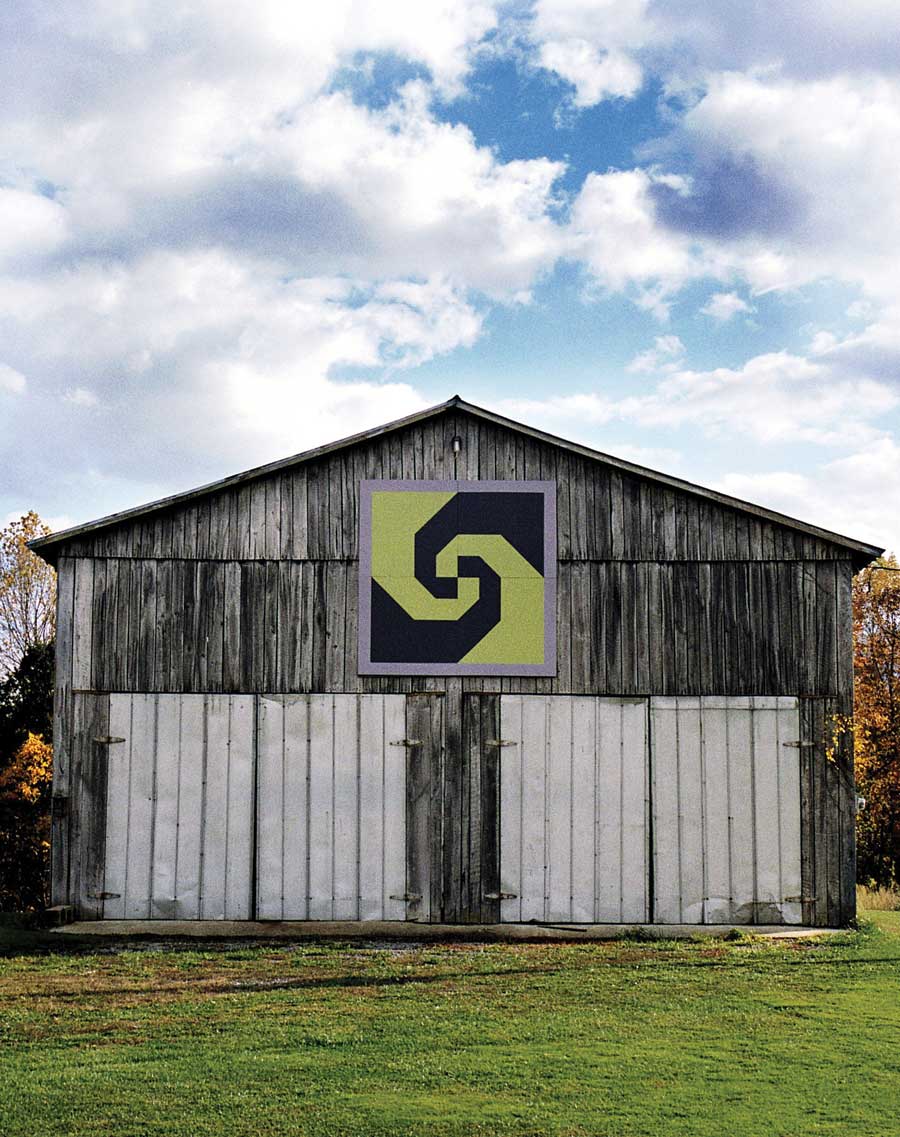
Karen Musgrave (KM): This is Karen Musgrave, and I’m doing a Quilters’ S.O.S. – Save Our Stories interview with Donna Sue Groves. Today’s date is June 18th, 2008. We are in Columbus, Ohio, at the National Quilting Association’s quilt show. Donna Sue, thank you for doing this interview with me. Donna Sue Groves (DG): Thank you, Karen, for asking me. KM: And tell me about your Tree of Life quilt. DG: My Tree of Life quilt. Well, my father died in 1976 and my mother had returned to quilting. I was imprinted early with my paternal and maternal grandmothers as quilters, as well as mother. I did not learn to quilt nor did I have any desire to learn quilting. I saw a class advertised in the Xenia, Ohio newspaper and since mother was quilting again, I thought I would surprise her and take this class and learn to quilt instantaneously. I signed up for the intermediate class because I was Miss Know-It-All since my grandmothers and aunts and my mother were quilters, I figured I could just skip the beginner’s class and go into the second one. Our project was to make a Tree of Life with points; I mean lots and lots of points. Uh-huh, right?! Wrong! So, I created the Tree of Life, and I did pretty well on my points. I received high praise from my classmates, my instructor and everyone was proud of me. I think they were glad the class ended; they didn’t have to listen to my mouth anymore about how much work it was. When we got to the point that we were going to make it into a quilt with binding and such we then had the lesson on quilting and the use of templates. Well, I got excited about templates, I just couldn’t believe that I could just place templates on the white background beside the tree and draw around them and then I could quilt over them. Perfect. So easy. I got carried away and picked a template of a biplane which was half as big as the tree, and put it up in the right corner of the quilt, in the sky area. I carefully quilted over it. I was mortified; it looked ugly, childish and horrible almost bigger than the tree itself. I was so upset with myself and disappointed. I ruined it. Then the class was over and I was very ashamed. I took the quilt to mother and threw it in the living room, and said, ‘Here, you finish it.’ And she finished hand quitting it, and then she hung it on a refrigerator. No, that’s a joke; she hung it on the wall. So that’s my experience with my quilt. KM: And you never made another one? DG: No! No, never. But I love quilts. I love fabric. I love the stories. I love the patterns. I loved being around my grandmothers when they were quilting. My father’s mother, LaDona Groves, did mostly appliqué than she did traditional triangles and squares. My mother’s mother, Mamie Myrtle Green, did more geometric designs. I don’t remember her doing appliqué. I remember my grandmother Groves one autumn, when I was out staying with her, sent me out to the yard and told me to go out and pick up three maple leaves that I liked. My favorite ones. I studied and looked and I did as she told and brought them back to her and said, ‘What are you going to do with them?’ And she said, ‘You’ll see.’ Every time I visited her, I’d say, ‘What did you do with my maple leaves, Grandma?’ and she’d say, ‘You’ll see.’ About eight, nine months later, in the spring or early summer, she pulled out a quilt that was for me and it had appliquéd maple leaves in orange and brown colors. It was magic. In it were the very outlines of the leaves that I picked up off the ground that she had used as templates. KM: So why isn’t quiltmaking your thing since you love them so much? DG: Because I can’t sit still long enough. [laughs.] I’m on to the next story, the next pattern, and the next piece of fabric. I’m just fascinated with mourning prints or the shirting and prints died with madder, m-a-d-d-e-r. I got so excited in the early nineties that I decided I was going to invest in madder and plant it out behind the barn and someday somebody would want the madder so they could dye fabric. Mother has protected my madder bed for years. The roots must be as big as our wrists by now. In case anybody is interested in madder, you can find it in Adams County, Ohio. I think probably the biggest factor for me not quilting and cutting the pieces out has to do with either a learning disability or the fact that I did not grasp math and the concepts of math early on. Plus, I was so afraid of making mistakes. It’s the fear factor, and I didn’t allow myself to try for fear of failure. But, I’m always on the watch for the stories and the fabrics and the patterns. That’s what makes me happy. KM: So tell me about the quilt barn project. DG: The quilt barn project is a project, or it was an idea, a concept, that probably was birthed about the same time that I watched my grandmother’s quilt and when we would go visit them in the Roane County, West Virginia. During road trips with Mother and Dad, my mother created a car game to keep my brother and I quiet. Since we grew up in West Virginia you can’t play the typical license plate car game when you’re traveling on the back roads of West Virginia, because all you saw was West Virginia license plates. So Mother created a car game and we counted barns. If it was a certain kind of barn, you got two points; if it was another kind of barn, you got three points; if it had outdoor advertising on it, you got a bonus of ten points if you could read it. Barns like “Chew Mail Pouch” or “See Rock City” or “RC Cola,” all kinds of outdoor advertisements. Red barns were higher points. The game led to discussions and questions about the barns, “Were they an English barn, were they Welsh, German and what the purpose of the barns was?” It became a history and cultural opportunity for my mother to engage my brother and I, and my father too, in conversational teaching moments, whether I knew it or not, and they were exciting. I looked forward to seeing barns. And then as a teenager, we traveled through Pennsylvania, where I was first introduced to the German, Pennsylvania Dutch barns with their hex signs which had the most colorful, wonderful, geometric designs on them, and they were worth fifty points in our car game and that was pretty exciting. So, as you can see, I was imprinted with the love of barns, as I said, and then imprinted early with quilting and the designs. Both were a major part of my childhood and represented my culture and heritage and my love of home and family. In 1968 we moved away from West Virginia, and moved to the flatland of Ohio, and then eventually the path took my mother and me to southern Ohio, to Adams County where we bought a farm that had a barn on it. So, I finally had a barn that actually belonged to us. One day as mother and I stood looking at our barn in 1989, it was a tobacco barn, and I, not knowing that people actually grew tobacco and dried it in barns was surprised to see how it differed from the barns of my childhood. I didn’t understand about tobacco barns because we didn’t see those in West Virginia or in our travels. I said to Mother, ‘This is the ugliest looking barn I’ve ever seen in my life! It needs some color, and I think I’ll paint you a quilt square on it someday.’ Well, that promise or that outburst became a continuous promise from 1989 through the years, until the year 2000. Friends of mine, Pete Whan with the Nature Conservancy and Elaine Collins, the Economic Development Director in Adams County approached me and said, ‘Donna, your mom’s getting older, and that’s really a great idea, you wanting to create a quilt square for her and paint it on the barn. Pete and I will volunteer to help you.’ And I said, ‘Great. I think that if we’re going to do one, we should consider doing a bunch of quilt squares, because I think we can create a driving trail and people will come to Adams County to drive a trail, to see our barns with quilt squares on them, and ultimately that will create economic opportunity. Our quilters can sell wall hangings and quilts based on these quilt squares, and our artists and photographers can make note cards, and we can have t-shirts, and our potters will make coffee mugs, and we can raise money which will help everybody locally.’ And they said, ‘Oh, how can we do that?’ And I said, ‘Well, we need to form a committee and create a plan of action.’ So we did, and our first committee meeting was in January of 2001, in Adams County. My mother was part of that committee. Several business owners, a couple of barn owners, someone from the Chamber of Commerce and the Travel and Tourism Bureau, there were about ten, twelve of us, sat down together and created this model on how we would create a driving trail. Our goal was to hang or to paint three quilt squares on barns in 2001. We applied to the Ohio Arts Council and received funding for our first three quilt squares, and someone on our committee, Judy Lewis who owns Lewis Mountain Herb Farm, volunteered that she wanted to have the first quilt square and she wanted it dedicated at her festival in October 2001. We all agreed that that would be fine. Mother had researched traditional old quilt square patterns, we tried to be very conscientious about copyright with the concern that we did not infringe on artists or designers of any quilt patterns. So Mother came up with about thirty-five squares, and we voted on twenty, the committee, that we wanted to do. The reason we chose twenty quilt squares to develop a quilt trail, a driving loop, was because mother said that twenty quilt squares make up an average size bed quilt. We felt that the trail needed a beginning or it might go on forever. So the end of the beginning of the story, or the end of that story for the moment, is we hung our first quilt square October 2001, at the Lewis Mountain Herb Fair, with an attendance of about 10,000 to 15,000 people. Then the story was out. The press picked it up. An adjoining county, Brown County, Ohio, called and said, ‘We love it. How do we do it?’ Tennessee read an article in a local magazine. They called and wanted to know how to do the project. Iowa wanted to duplicate the project. I spoke at a conference in Nebraska. Pat Gorman from Iowa was there and heard me talk about the trail. When I got back home, Pat called me and said, ‘Donna Sue, Grundy County may not have all of the bridges as Madison County but we have the barns. How do we do the project?’ So Pat and I collaborated. I went out two or three different times to work with Grundy County and help them to get a good start. And the rest is history. Now we’re up to about twenty-two states, and twenty counties in Ohio. I’m very proud. KM: What do you think the future of it will be? DG: I don’t know what the future holds. I see the project continuing to grow. I believe that right now, it needs leadership. Nationally we need to come together for people to have an opportunity to meet one another, to share their stories, to talk. The project, even though it’s about quilting and barns it is also about celebrating our rural heritage and building on our own unique assets. I guess I didn’t even explain what the project was, did I? The Quilt Barn Trail is hanging–painting a quilt square on plywood or MDO board or some type of sign board and then attaching it on a barn, farm out-building and then creating a driving tour. I guess that gives you a general idea of what this quilt square idea is and what its purpose. I lost my train of thought. Where does it go from here? I’m hopeful that now that I am no longer working for the Ohio Arts Council full time that I’ll have more time to devote to the trail development and can pull together a national coalition for conversation with the states on how they might like to come together in a collaborative fashion to share their stories and to plan on how we all might get together. The beauty of this project, the Quilt Trail and the quilt barn project, for me, is not so much as the creation of the quilt squares that are hung or painted on the barns, but it’s about the community process and grassroots folks coming together, using what they believe are their best assets, and building on and celebrating their heritage. There’s a lot of joy and laughter that’s created through the process of creating these trails. People really have fun with it. It’s a low-cost, inexpensive project and it’s changed my whole life. KM: So what pattern did you pick for your barn, your mother’s barn? DG: Well, I asked Mother because which one she wanted out of those twenty that we voted on, and Mother said that she wanted the Ohio Star. But the gal that was on the committee that wanted one for her barn to be dedicated in October wanted the Ohio Star, and since there’s a zillion patterns, Mother graciously said that that was fine. And as the patterns were chosen, we let people choose what they wanted. The barn owners chose which pattern they wanted and the colors. And as time went by, Mother still hadn’t chosen her pattern. We talked about it, we talked about it, and finally, she said Snail’s Trail. KM: What color is it? DG: It’s Martha Stewart colors, because I didn’t know what colors to pick and Mother didn’t tell me what colors to pick, so it was painted by an artist, Jeff Schenkel, from Marietta, Ohio, and we left the color choice up to Jeff. And it’s green and– Maxine Groves (MG): [DG’s mother.] Grey. DG: Gray? Green and gray? MG: Uh-huh. DG: And a mauve-y color. Martha Stewart colors. It was started in 2001, so Martha Stewart colors about 2003. Mom didn’t get her quilt square till about two-and-a-half years into the project. KM: How big are they? DG: Ours is an eight-by-eight. They vary from ten-by-ten or eight-by-eight or four-by-four or two-by-two. It just depends on where the barn is located. If the barn is sitting right on the side of the road, you don’t want a ten-by-ten quilt square right in your face, or if it’s way off in the field, it’s really hard to see an eight-by-eight. We started out painting–thought we would paint quilt squares on barns and that it would be a job creation for local artists, but we didn’t factor in the fact that these old barns, whether they’re out of chestnut wood or oak, those that are over a hundred years old, the veins in the barn, the wood, are so wide and the wood is so old, it just sucks up coat after coat after coat of paint. So we learned very quickly that painting directly on them wasn’t the best way, plus I had a panic attack thinking that we had just destroyed an opportunity for property owners, barn owners, making this a national heritage site of a two-hundred-year-old barn, farm barn or something. So we chose to stop painting them. Plus the cost to paint them on this MDO or pine board is so much less, to paint them flat on the ground or on sawhorses, because anyone can get into the process. Most of the quilters do their thing with marking the actual quilt square by drawing it, the design, and then working with the artists or the painters. Anyone can paint one. Children can paint it. Elders can paint it. As long as they can paint between two lines, and even if they can’t, it can be touched up, so the whole community can participate in this painting process of quilt squares. KM: Very cool. Did you ever think it would be as big as it is? DG: I had a sneaking suspicion that if it were good enough for Chew Mail Pouch in 1880, whenever they started using outdoor barns for advertising, and if the entire East Coast and Appalachian Mountain Range had “See Rock City” or what was the other one? ‘See Rock City’ and ‘R C Coca’ was another one and ‘Natural Bridge.’ You used to see those, too. And also those little Burma Shave signs that we might be onto something, if it worked for them. My greatest fear with the project is that some entrepreneur, that maybe big business, corporate business, will see the same thing, an opportunity, in a different way than I see it. I see combining our barns and our quilting heritage and holding or using that to celebrate who we are, the best of who we are. I’m so afraid that corporate America will come in and use the side of our barns now for advertisement, and that worries me. Hopefully, hopefully, our farmers and property owners and communities will be very mindful and thoughtful about change and how we use those barns, but when times are bad and money is short, money often speaks, and if it means putting food on the table versus getting $150 a month or $250 a quarter from a simple sign on the side of your barn, those are tough decisions to make. I hope we don’t start to see commercial ads along our rural roads and highways! But that, I do worry about that. I thought that it would grow, it would probably grow out throughout the Appalachian region, the thirteen states. Really never thought so much about the United States in 2001, and it growing that big, but what’s interesting is now that for the last seven years, and I’ve watched it go into Iowa and Missouri and Kansas and Indiana and Illinois and Kentucky, West Virginia, Virginia. As I’ve watched it grow and participated in that growth, I’ve come to realize that what I didn’t realize before, that rural people, in our rural lands, the places that people settled with their families and on small farms, are truly the backbone of America, and that we’re not so different from one another. I never thought about Iowa up until 2002. I never really gave a lot of thought about Illinois or Indiana. Now, when I hear the news of the great flooding that’s happening in Iowa or along the Mississippi, now I reflect and think about those folks. My life always has been, tied to other states, counties, but now I think about how really really flat we are and how we’re intertwined and connected together. You can take one project, Adams County, Ohio for example; you could take our project in 2001, teleport it to Mason County, West Virginia, right now. They’re planning theirs. They have their first quilt square up. You couldn’t tell the difference except the names have changed and maybe the shapes of the barns. We’re all one family, in a sense. We all have similar dreams, hopes, and aspirations. KM: There’s power in quilting. I believe that. DG: There is power in quilts. Everybody has a quilt story. Everybody remembers a quilt. People run to their closets or pull out from under the beds or in the basement or wherever they have them hidden. This project, the Quilt Trail development, I believe, has really brought more focus on quilts and barns, too, just equally. Barns are, hopefully, the barns will be preserved. They’re in more danger than the quilts are of disappearing, I think, because the quilts have a little more protection. But from the beginning, part of my dream for this whole project was that not only would we use quilt squares in a public venue on our barns to celebrate who we are and to create economic opportunity, but also I had hoped that we would be able to preserve those stories, about those that built the barns and the family farm stories and the quilts. Of equal importance are the quilts in those families and the stories that go along with them. Because preserving those stories and hearing and listening to them, will help us to know where we came from and who we came from. We can reflect on the strength that it took to–and energy and focus and dedication and hardship, all of those things that our foremothers and forefathers did so we could be where we are today. And we need to remember those stories. We need to celebrate who they were because that’s our DNA, maybe our larger community DNA connects us all together just like a quilt. KM: Is there anything else you want to share? DG: I don’t think so. KM: You did great. All right, we’re going to conclude our interview at 4:55…
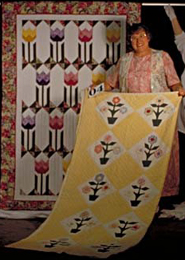
by Amy Milne | Aug 7, 2018
Brenda Horton (BH): My name is Brenda Horton. Today’s date is October 22nd. And I’m conducting an interview with Eleanor Burns for the quilt oral history project in Houston, Texas. Eleanor would you tell me about the quilt you brought today? Eleanor Burns (EB): Well, actually I brought two quilts. The quilt that I brought was called “English Garden” and it was designed by Ruby McKim probably in the 1930’s. It’s not that great of a quilt. I actually bought it at a street fair in California, in a town called Julian; it’s an old mining town. And I love this quilt because I admire Ruby McKim so much I brought pieces I’ve collected from Ruby McKim. She was an art deco quilter and she was one of the first to say ‘I think that ladies should really do this by machine.’ I go, ‘Alright Ruby,’ this is my kind of lady. When she did the flowers, she did these straight zippy lines so that a woman could actually make this, if they really didn’t want to do the needle turn appliqué, or they couldn’t get their points right, they could go ahead and do this type of technique. So she did just a simple setting in red lines, it’s not really fancy. Somebody loved this quilt and used it. But, I have admired Ruby so much that I actually bought her book as my first book. That’s my book and I bought all these things. Just in case you never saw Ruby McKim this is her picture. [flipping pages of book.] Where is it? There she is, that’s Ruby McKim. A lot of people think that she wrote all the newspaper articles for the Kansas City Star, but she really only wrote for two years. She and her husband had a studio. Okay, this is the first book I ever got and it was a dollar, ninety-nine cents. It was on the discount table. I snatched it up. I had no idea what I was going to do with it but, she influenced my whole life and that’s why I had to bring it. Now she had a studio in Independence, Missouri with her husband. I felt so fortunate, One cent to mail this catalog. This is one of her original catalogs that I have here. Some child got a hold of it and scribbled over it, but it’s in pristine condition. This is actually where the original patterns came from. This is the original. Everywhere I go, I look for things from Ruby McKim. And I found that block–let’s see if I can find that. This block is the same as the quilt I found in my hometown Zelienople English Flower Garden. The poor lady did all the needle turn and got all her zippy little lines on her flowers but she abandoned it with her needle still attached. So, I just truly love it. As I’m going through this book and I find this page, see how she was showing how to piece flowers together using the machine quilting. This one is her poppy, I’m so fortunate because I found attached to this–this is such a kick–this is instruction from Ruby McKim and someone actually started coloring it in. Maybe she didn’t know what the quilt looked like. She clipped this from a newspaper identified as “Quilt Stolen” and I go, ‘Oh sounds interesting.’ Anyhow this is part of my collection from Ruby McKim. In this book, it shows the beautiful tulip quilt. It just says that it’s simple to do and it’s attractive in yellow, orange and green. It’s set together like a diamond paned window. Well, I looked at that and said, ‘Ruby, I can do this by strips,’ and that’s what I set out to do. Looking at hers of course she did not have the pattern included, just this black and white drawing. And so I took Ruby’s tulip pattern and turned it into my own design. Here we have the “Easy Strip Tulip,” with the diamond pane setting. What’s really fun about it is you can do a quilt like this; I mean my company name is Quilt in a Day. You can piece this top in a day, because it’s all straight lines. If you have just a long selvage to selvage strip, you can do a whole row of tulips all the same color. I just felt that since Ruby influenced my life so greatly, when I did this book called “Easy Strip Tulips.” I dedicated it to Ruby McKim. Here is her picture. I did a photograph of her catalog and just a little bit about her. This is not a real large book, I could have dedicated more time to her life and her study, which I just thoroughly enjoy reading about. That was the significance of the quilt I brought today. [laughs.] That was a whole presentation. [laughs.] BH: Yes it was. That was wonderful and I see by the way you have done this that you are one of our quilt historians. EB: I am a quilt historian. BH: Would you tell me more about how you feel about studying quilt history? EB: Well, I personally prefer the traditional look in quilts, and so I study the antique quilts and I study the women that made them. I just finished a program for my PBS series, it’s a fund-raiser called “Women Who Taught us to Sew”. I started out with Marie Webster who is considered the mother of quilting, because she wrote America’s first quilting book. I just went from there and continued adding Ruth Finley, who wrote America’s second quilting book. Actually there are two quilts in this show that reference Ruth Finley’s book. Her book came out, I think, in 1928. They actually say they looked at the photographs in her book and recreated it. But, that’s what I’ve done. And then there was Anne Orr who worked for Better Homes and Gardens. It’s interesting because all of these women were entrepreneurs in their own right most in the depression years. History didn’t necessarily say that these women had to support their families. I found that I admire them so greatly because I took the quilting and I’ve used it to support my children. I raised my two sons alone, and it was the quilting that did it for me. It makes me weepy when I think about that. But, anyhow, my children were very young, 2 and 5, when I wrote my first book, which was “Make a Quilt in a Day: Log Cabin Pattern.” My children had to go to quilt shows and we could only afford a table. They would have to sell the books for me – just little guys – and take the change. They just learned how to work along with me. And now my oldest son, Grant, is an entrepreneur in his own right. He’s actually– BH: That’s him, there? EB: No, my oldest son is an entrepreneur. He has his own business manufacturing skateboards. Orion has stuck with me since he was two years old. He’s now directing my video series. They have such a love for the women and the quilts. They won’t let me sell anything. They say, ‘This is my inheritance, Mom, you can’t sell that quilt.’ Sometimes you have to clear out, because I make so many quilts. In a year, if you asked me how many quilts I’ve made, I can’t even tell you. But I know when I was doing the tulip book, which was my latest, I made six or eight quilts just to test my method, test my yardage. Just to make sure I have the best technique down on paper for students to follow. I follow my own instructions and just constantly rewrite and check and correct. So I get my influence from the women from the early 1900’s up to the 1940’s following Carrie Hall who was one of our historians from the 40’s. BH: And you did the whole series for PBS, which was wonderful. EB: Yes, I also did a star quilt. It was called “Stars Across America,” some of the stars were unidentified in Barbara Brackman’s book or anywhere. We just really created stars for technique. And since I couldn’t identify them, I associated them with woman in history– a woman who fought for suffrage for us. There were two black women– Harriet Tubman and Sojourner Truth. I made a star for Eleanor Roosevelt, because I do admire her. I took Harriet Beecher Stowe–just women who were very brave and who stood out in our country and did something special for us. BH: Well it seems that you have helped to create different things to remember these ladies by and what would you like to be remembered for or as? EB: Well, this is what happened this show. Because I’ve dedicated my life to writing books and good yardage charts, I always think about other women and the businesses they’ve started owning their quilt shops and selling fabric. I started as a teacher. I was a special ed. teacher. I taught special ed. before I had my children. I truly love to teach. So I have the business sense, the teaching sense, I was just awarded at Quilt Market the highest award Market gives called the Michael Kile Award And for me it was an honor, I really wanted to win that award but I felt that I’m really not political. I keep to myself and do my own thing and so to have the advisory council award that to me I was just ‘hoppin’ on air’ and I still feel that I am. That just happened this year, so I ‘m truly excited that this being the last Market of the century, the greatest show on earth this year, to receive the Michael Kile Award, there’s no greater thing. BH: That’s wonderful, wonderful. How has your family… I realize you have two sons, and they are a part of your business. How have they influenced you in your work? EB: Probably when they were so little it was very important to me to have the speed. Since I raised them when they were very young, I had to be a mother and a father and the breadwinner. So the speed in the Log Cabin, the speed in the Irish Chain, all of the traditional looks in the first books that I wrote, and the Amish quilt. They’ve always been there. But you see, not only have my two sons been with me in this business, I have two sisters who have also grown up with me in the quilting. My sister, Judy, moved from Pennsylvania to California to help me care for the boys when I was just starting out, because I traveled a lot and knocked on a lot of doors. My sister came and she started shipping my books all around the country and all around the world. She came on a round-trip ticket and never went home. She said she’s been with the company for eighteen years. And so when we go to work my sister is there, she’s always in the building. She’s the youngest sister and then my middle sister, Patty, also joined me. We call her the sister company because her husband and she manufacture the rulers. She came from Georgia, as an art teacher, not very happy and really looking for a place also. She was very depressed. She got into making quilts with me and now she loves the colors and the fabric. She and I are very different in that she is very fussy. I can sew a quilt as much as she unsews the same quilt. When we work together, she makes me work until I have the exact perfect colors. She and I just co-authored “Grandmother’s Garden Quilt,” which was a collection of patterns from what probably appeared in 1928 as part of the Nancy Page Club that was written by Florence LaGanke. We were given the patterns at a camp retreat. This woman just said, ‘Here, I found this notebook at a garage sale, I think you could use it.’ And we took this collection of patterns and turned them into an absolutely fantastic quilt. It was Patty who did all the fussy handwork. I was the engineer and did all of the machine assembly and laid out the book and made it actually workable for everyone. So there are two sisters that work with me besides my two sons at Quilt in a Day. I actually built the company from just my sister Judy, who shipped books from my garage. We took over three bedrooms in my four bedroom house and we no longer had room to live. We moved into a warehouse just five minutes from home, because I knew that I would need to get home to the boys if there was an accident. There were many broken bones and cuts that I had to barrel up that hill. But, in 1983 I rented a warehouse near my home that I didn’t know how I was going to pay for, but I put a couple of boxes of books in it and I struggled to pay the rent. In 1999 my family and I purchased the building. It’s 20,000 square feet. It’s a big, big building; there’s three units in it. We went from the one unit and cut a door and moved into the second unit and cut a door and moved into the third unit. So now Quilt in a Day is actually in two and half of the units and my son Grant is in the third unit with his skateboard business so when we come together every day the grand puppies come, the sons come, the sisters come and about forty other people come to work at Quilt in a Day. BH: Oh, my. Tell us about PBS. EB: Well, I’ve been on public television for 11 years, which just truly amazes me. I started out traveling first…I knew that I was getting tired traveling and teaching, but yet I wanted everyone to know my methods. So I had a good friend who said, ‘El, we could probably get you on TV.’ And I said, ‘Okay, that’s what we’ll do.’ We bought an upscale consumer camera and we started going out to the classes I was teaching. He would videotape me and we would edit it, and we would say, ‘No, that’s not good.’ Then we would do it again and look at it. ‘No, that’s not good,’ and just try to improve because I was just a teacher, not ever a hostess on a television series. Finally we felt that we had something good enough to submit to the Learning Channel. The Learning Channel was the first to accept my programs. They put me on three times a week and my business tripled overnight. I was completely unprepared for the success of going on the air, we just had one little camera and a studio. We put in sound proofing in part of the warehouse. When The Learning Channel bought my program, we had to buy an upgraded camera and make these investments in equipment. I decided to do that myself. I’m just a single woman. But through the years we ended up putting together a professional broadcast studio. After The Learning Channel accepted me, I went on PBS. It was Nebraska that got me on public television because they did a letter writing campaign to their PBS station. I think they had 3,000 signatures. The program director called and said, ‘We have to have you, what are you anyway?’ So from that point on each of the PBS stations have picked me up. I’m on at different times on 150 different stations throughout the country. They share my time with the other quilters–with Kay Wood and Fans and Porter and the other sewing programs and Nancy. We all share this time slot. We use a satellite system–every Sunday we uplink a free program. I don’t tape a new show for every week. I may do twenty new programs a year but the up linking station says, ‘You’ve got to do a new program for us. You have to do a new series. Everybody out there wants their ‘El kick’–that’s what they call it.’ Their El kick, ‘Okay, I’ll do a new program.’ I get many children that think that my program is for them. The women come to me and whisper, ‘My husband watches your show, and you’re the only program he’ll watch.’ They all just think it’s funny that I throw my fabric. One man, I believe he’s a fireman, said that if he’s depressed, he just turns on my show because he knows that I’ll be smiling and he’ll feel more cheerful when it’s over. My cousin works in a veteran’s hospital in New York and one day she was walking down the hall and she heard my voice. She said, ‘My cousin came to surprise me,’ and she started running down the halls trying to find me. She ran into one of the men’s rooms and he had my program on. He said, ‘Yeah, I always watch her. She makes me feel good.’ The program is a lot of work, it is edited down to be only 26 minutes, but all in all, it probably takes us about a week to put it together. I write my own scripts. I do a lot of my own preparation for the quilt that I’m going to be teaching ahead of time. Just the research alone to find something special and I try to find as much significant information about the quilt or the quilt maker that I can. And the audience tells me that that is what they really like, because they want to know history too. So it is a challenge. People walk by me and say, ‘Don’t ever quit.’ And I think, ‘Oh I’m getting old.’ [laughs.] BH: Well, that’s what people tell good doctors, they won’t let them retire, so you’re Dr. Smiles maybe. [laughter.] That was my next question. How do you feel that–you have mentioned that you always have a smile and people like to watch you, how do you feel about people’s reaction to you? EB: It’s a little embarrassing whenever women really fuss over me. It’s actually very embarrassing. But, I like to hear their stories and sometimes they bring tears to my eyes. I had a recovering alcoholic who brought her son to me and said that it had changed her life. That is very heart rendering to me. And that happens over and over again to me. People may have a death in the family; the quilting pulled them through the last year. And maybe a mother with children quilts, that’s really fun too. I thought you were going to ask me if I wanted to retire. BH: Well, do you want to retire? EB: Well, this is what I want to do. I want to find a large house, a retreat in the mountains, something with a barn. I’d like to start teaching classes and doing lectures in my barn. Have people come there and make it very special. I like to fuss over people and put out my best china and set the table and do flower arrangements. And things like that. I would like to do retreats like that, maybe not for ten years. I’m 54 now and we all have to think when we see Doreen Speckman pass away so untimely, we just don’t know. My kids think about ‘What’s mom going to do when she retires?’ I enjoy things like that. I am the one in the family that my home is the one where we all hang out at Christmas. I might have 14 at my dinner table, sometimes for two weeks in a row. It’s just really fun. I like to plan events for just my sons and their friends. They call me “Mrs. Burns” or “Mom” or whatever, it’s just really funny when they all come to my house and they have such a good time. BH: Maybe it’s not really funny that they do that, maybe that’s the most natural thing. EB: I really enjoy it. I get excited. They can count on me to make a special dinner for them. BH: You make people feel good, don’t you? I mean that’s the feeling I get, because they wouldn’t gravitate to your house otherwise. That speaks so well of you. The materials you used in your tulip quilt here, I noticed you have all cottons, which is kind of a standard. Do you ever work any other materials besides cotton? EB: No. I like to use wool batting and I’ve used wool strips for hooking, but usually in my quilts I use my own fabric. Actually some of the pieces in here are from a line of fabric that I did with Benertex. This is from the line called “Anniversary Florals.” BH: Your blouse. EB: Yes. Last year was my twentieth year and so Benartex really honored me by doing a line “Anniversary Florals”. This purple is one, this green is one and there’s quite a few pieces in “Grandmother’s Garden” we did. We designed the fabric, my sister Patty and I did it–the fussy one–helped me out and Benartex came out with a really pretty line. We’re working on a second line as well. BH: Now you called your sister the fussy one but you “fussy cut” sometimes on your patterns, is that where you got the term? EB: Yes, she told me “fussy cut.” What’s really interesting, we may have coined the word “fussy-cut” but now it’s a standard in the industry. And that’s really fun to see something you started as just common terminology. MF: Explain to us what “fussy-cut” is. EB: Fussy-cut means you would have a large floral design with a lot of flowers. You might just specially cut out one flower and use that one flower repeat throughout your quilt, so it’s just specially cut out of the fabric to use in a certain piece. It puts together a really pretty design– fussy. BH: What are your plans–you briefly mentioned something you are working on now. Let’s go back to your latest project. EB: Right now I am working on a quilt called “Town Square Sampler.” I have a full art department and what we are doing is–we actually took blocks from Barbara Backman’s book and from other people’s books. We pulled out blocks that we thought would be fun to sew and also some with new techniques that we could include. We pulled out the blocks and then we just generated them on the computer and designed this quilt. Going from simple strips, to triangle pieced squares, to a really fun technique of a triangle in a little corner block and then a triangle in a square in appliqué. We’ve put in together into this whole large quilt with Main Street across the center and angels which is our appliqué row flying across the top. But, my concept was always thinking about the shop owners and how they would teach and sell fabric. My concept was to put it into rows. There’s a lot of row quilts going on now but I’m disappointed when I look at other people’s patterns, because I don’t think they give enough information and they are very expensive. Mine will be all in one book with very detailed instructions. The shop owner can use it either for an eight week or eight month series, each time starting out with the beginner strip and building technique until they have a whole quilt put together. It’s called the “Town Square Sampler.” I do all the writing myself, work out all the measurements and the yardage, my art department illustrates it. We hand it out to testers so we make sure it’s correct. We teach classes on it. I’m starting a series on it when I go back. And since it’s called “Town Square Sampler” I’m going to be pulling parts from my hometown and just visiting some different towns that fit in with the story line. We’re preparing the series for PBS and it will be going out in February. So, I work long days. I start at six in the morning and maybe quit at ten at night. But I sleep really well. MF: May ask one question? EB: Yes. MF: What do you think about the importance of quilts for women in American life? Over time too. EB: I think the importance of quilts. I see quilt making as a confidence builder for women. I think that is why I work like I do. I want to build confidence in them. I want to give them something that they love, they excite for, they lust for, they get up every morning for and cannot wait to do, to fill void time, may be empty time. It’s so satisfying to touch a piece of fabric. It’s exciting to work with different colors. I think that if they can feel that pride in themselves, they can bring that to their families and their family is also proud of them. It’s unbelievable what it creates. BH: What do you think makes a great quilt? EB: [laughs.] Something based on tradition. [laughter.] Tradition. BH: What makes a great quilter? EB: A great quilter? I don’t expect a great quilter to have a perfect seam. I expect them to really have enjoyed what they did. When I’m teaching a person who thinks things don’t match, I talk with them quietly and I go over it. I’ll ask them if they like it and it’s acceptable to them, and some women will say, ‘I did the best that I could do, and I am really impressed. I know it’s not perfect, but I am so excited that I did that.’ I just let imperfection pass and go. They all learn. They have to make their first quilt. That’s who I am. I’m here to teach people to make their first quilt, get them started, they can go on. They can become great. There are two ladies at Market that started out in my company who have opened their own shops. Just this Market there are so many other people who took my classes first and they tell me that. Sometimes they sort of whisper it to me. But I got them started. They just have to do one quilt and then they can go on and do great things. BH: What do you think makes a quilt appropriate for a museum or a special collection? EB: Probably the ones that I marvel at are the ones that have intricate piecing, decorative hand-stitching on the top. Tiny stitches and a lot of quilting lines, close quilting lines and the quality of the fabric and it’s still in pristine condition. BH: I notice you talk about the process and some people work because they enjoy the process and some people work because they want the finished product. How would you classify yourself – as a process or product oriented person? EB: Process, definitely, I’m the engineer. People say interesting things to me, they say, ‘You brought to quilting what Julia Childs brought to cooking, and that’s showmanship,’ or perhaps I brought to quilting what Liberace brought to music. It’s showmanship. But it’s the appreciation of what we do to. BH: I think we have a few more minutes. I’d like to know how when you design… I know some people enjoy the pattern, some people enjoy the color, and some people enjoy texture. When you design, how do you go at that? EB: You know sometimes I just go into my quilt shop and ask the ladies to put a kit together for me. Because it is always the technique that I am most interested in. I know that we’ll get the colors right. I may not make the most beautiful quilt, but I want to be able to tell them how to get the correct measurements and how to go about it correctly. And then my students, my staff, somebody else comes up with an absolutely fantastic quilt. It’s just really important to me that I sit and sew over and over again until I have it down to a science. It’s like manufacturing you know, that I teach [laughs.] I’m the assembly line. BH: Well we appreciate it. Thank you, Eleanor for giving us your time to become a part of the [Quilters’.] S.O.S. [-Save Our Stories.] project. EB: You’re welcome. BH: We’re ending the interview at 9:55. Eleanor Burns, I’m Brenda Horton. Thank you very…