by Amy Milne | Jun 4, 2019
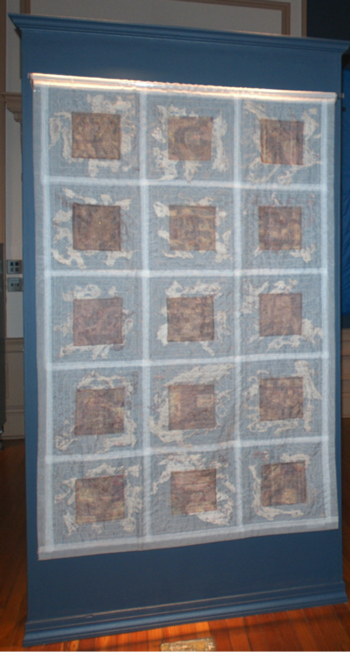
Bernie Herman (BH): This is Bernie Herman for the Quilters’ S.O.S. – [Save Our Stories.] project at the American Craft Council, Baltimore Craft Show with Ellen Kochansky. The day is the twenty third of February 2003. And Ellen we always begin in the same point which is to tell us a bit about the object that you brought with you today. Ellen Kochansky (EK): My issue has been the things we throw away. Quilters are the savers, the conservers. And this string of beads is a very physical representation of the issue of loss and recovery. It is made from the shreds of my mother’s letters to my father during World War II. I want to honor the things of value that we might not recognize, what we have discarded and what we need to think twice about. To use my quilts in a much more symbolic way than I have for the good twenty years that I made quilts to sleep under. BH: Could you talk a bit about the process of the object and before we move on to talk about its broader connections to your work? EK: I’m often using three dimensions, packing things into bundles, and I’m often using paper in my quilts. I’ve embroidered them onto screens, and layered boxes. These strips of paper are made into beads, and it feels very meditative to do them, just to wrap them around a quill. And lately I’ve quilted them between layers of silk organza, too. That paper is a way of telling stories is intriguing to me. And now the way I’m expressing myself is through a single fabric – with contents. I came to quilts that are more about the content than the surface. So a material that you can see through allows me to express what’s in the stuffing. And I’m able to use the content visually and symbolically to create the message. It’s just such a pleasure to me to watch my work changing in a way that adds something to what I can say. BH: I’d like to come back to the content part of this, but before we go there could you talk a bit about that. You said about ‘started’ into the world of quilt making and if we could get a sense of how you got started. EK: Oh, that’s a long story. But basically I trained in art. I have been a textile fan all my life. I worked in fashion. I made doll clothes. I have done theatre. Probably the theatre part of it was the most growth producing. They didn’t tell us that we couldn’t do it, so we started a youth theatre group, and produced musicals every summer for about ten years or so. I loved fabric. It was my best medium. I knew how to do that. So I got good at clothing, but the fashion business did not appeal to me though I danced around with it for a while. My real voice started coming to me in the seventies when Jean Ray Laury wrote a book that gave us all permission to do things wrong. We didn’t have to make quilts in the old-fashioned way. We could really blow away the assumptions. And that lesson became my art form at a moment in my life when I really could engage in whatever art form I wanted. The lesson also contained the corollary.You can break whatever rules you want, but you have to make it work! For the last fifteen or twenty years, I’ve done a business called EKO which was–revolutionary concept–quilts for people to sleep under. These were limited edition pieces with very much my own stamp on them. Probably two or three hundred a year – we made as many as two thousand quilts through my studio. At the same time all these years I’ve done huge corporate commission projects, a kind of collage work – an example is in the White House collection. These had more to do with layers and painting, stretched like canvas – quilts for the walls. So there are a lot of kinds of imagery and metaphor that I’ve explored, color, no color, texture, less texture; with layers of things that always involve my own history. I still have fabrics I acquired thirty and forty years ago, and the work became more stacked, more three-dimensional when I realized I’d have to hurry if I were going to use all the fabric I had left. Each stage of my work somehow grew from the leftovers of the previous stages! The journey, Darwin-like, leads you to an unoccupied niche every time you put your foot in front of the previous foot. Recently I’ve felt the opportunity to say something more social, and my work has had more to do with honoring other people’s debris as well as my own. Recycling issues, sustainable design issues, what we are doing to the planet. And interestingly my bed quilts that I had always just made with a little tag that said, ‘Dry Clean Only,’ got into trouble when it turned out that OSHA changed the rules on dry cleaning. So, I had been making things out of all sorts of different fabrics and they had been doing fine in the previous dry cleaning fluids–which were toxic. Quilters are the world’s packrats, but also the world’s caretakers–it was irresponsible for me to make something whose future was not safe for its practitioners. I started guiding all my customers toward a dry cleaning process which was CO2 based and non-toxic, but I also chose to simplify my life by making only things that would not need to be washed or which were washable. BH: Did you make quilts before you read Jean Ray Laury and if so how did you get started? EK: My first job was as an editor at the “Vogue Sewing Book,” published in 1971 in New York. It’s still a text that people use. It’s a wonderful book, which contains my first visual quilts. Because I hung out with my nose pressed against the glass at the Vogue Fabric Library–Herman Phynes was this wonderful man who ran it. And we ran around New York together exploring the stores where the couture houses left their leftovers. We built a stockpile of swatches that I just loved. My college degree included a textile minor. So, one of my jobs was to write the fabric dictionary that went into the book and then make collages of the things that Herman and I had collected that became visual quilts. They were cut and paste version of simple block quilts that were used to introduce and illustrate the dictionary. There is every sort of fabric. I wrote about wool. I wrote the description from my microscope of how wool behaves, what does silk look like, how is each fiber different from other fibers, what makes it felt. So, this scientific and linguistic fascination with all of the magic that is textiles was distilled into my first quilts. BH: So the quilts are published in there. EK: Yes. I also did a very interesting color wheel. So the relation of color to value was part of my earliest professional memory. Those were quilts in a technical way. They were layered and assembled and glued together, because Photoshop didn’t exist at the time. We also physically made quilts of our editorial pages–pre-computer, we cut them apart with scissors and glued them together with scotch tape and gave them to Doreen, who gave us back our copy in typed form. The physical cutting and pasting and the contribution of that to the editorial process later on inspired one of my first community quilts -a lesson for the students in a high school. We took a class full of honors English students, and asked them to hand in both the first and final draft of an article on the act of writing. There were two sessions, I think 45 students. I had been inspired by Anne Lamott’s book Bird by Bird. Using a folded origami bird–the folds became the quilt lines. We processed their papers through a copy machine so that the coded number of each of the parts was on the back. And then we cut up the drafts and mixed up the pieces. The kids reassembled these in patch squares, and then put the squares together. The lesson was that the first draft is not sacred. You must break what you expected in order to achieve progress. BH: And does that work in your own work in terms of being a quiltmaker? EK: Absolutely. Quilters and artists and I think that I’m moving from the one to the other constantly, must always question assumptions. It’s our job to question assumptions. It’s a daily mantra for me to look at what I thought I knew especially if it didn’t work [waits for announcement to end.] and question my own assumptions about it. Did I start with a small wrong thought, is this color better over here, who says you have to do it that way–But then the squinting process is also the quilters’ specialty. When we back away from things we find that our best decisions are about value rather than color. So the relationship of values to each other is a very great lesson. I ended up doing a lot of pieces for religious groups, for churches, they would all give me their meaningful fabrics and I would make something of them. The sermon that comes out of that process turned out to be, ‘Look for the basic value–filter out the distraction in your basic choices. Look for what you get by squinting. Literally your eyes relieve you of color, and distinguish value only. That’s what makes a good quilt. It’s what makes a good decision.’ BH: Let me shift here. I have several questions but one that you began with was the idea of narrative and the relationship of words to objects, in particular words and quilts. The narrative capacity of those things if I understood this correctly. EK: Yes. BH: And I’d like you to sort of expand on that please. EK: The piece that I’ve just finished is a sculptural quilt. It is for a group called the Hub City Writer’s Project, to honor the people in the textile industry, and to coincide with the publication of their book “Textile Town.” My proudest moment was the editor’s awareness that this work could express things in a form that was not words. The mills have been declining, collapsing, moving off shore. They were for many years the economic engine for my part of the world, the southeast. They are bulldozing these fabulous buildings which were the home of enormous machines and life stories. And the people whose stories they were are vanishing. But these people were not always verbal. So they commissioned a quilt-like sculpture, twenty-four panels literally framed in the floorboards of the demolished mills. It was made of their contributions. I got blueprints from the mill houses. I got precious gifts like the check that was written for the mill house that someone’s father bought. Tools that were handmade in the 1800s that had been handed down to generations. Those tools were so symbolic because that’s what they honored, that’s what they used that was their effort. The reed hooks for the looms. We got scrip that was used instead of money for the mill stores. People’s toys. People’s baseball uniforms. The descriptions that came with these things we put in a book. So one of my quilt forms now is making the books that chronicle who gave us what. But they are more about pictures than words. Betsy Teter, who is honored by the state of South Carolina for her vision, has published some twenty books, and she commissioned this piece as an extension of the story telling process, because she thought that it tells some of the story better than words. BH: How has the response been? EK: Inspiring! I love these community pieces–watching the people find their stuff is the best part of it. We invited people to participate through the local newspapers, and then to come to the unveiling at the local museum. During a snowstorm we had the best turnout ever for an opening at the Spartanburg Arts Center–they don’t do snowstorms well in South Carolina. The magic of it always is watching people light up when they see what they contributed and how it is part of the big picture. BH: One of the themes in your quilt work and the one that certainly engaged my attention was that of transparency. Could you explore that a little bit? EK: We come to everything the hard way. It takes us so long to see the obvious. What I tell students is you just keep trucking until the stuff tells you what you need to know. And what it told me finally after hitting my head against the dry cleaning wall and all those issues was that I need a single fabric. I started out quilting with every fabric in the known world, and I’ve come to a single fabric- silk organza. Diane Itter a million years ago was a magical textile artist. She made knotted work with just one type of linen thread, on the theme that a single material helped you focus. So I listened, and chose to ignore her for twenty-five years. I have finally come around. It took me all those years of doing it another way, very deliberately. Now I am simplifying my life as an artist, and finding that the forms that tell the most use the least material. So this is my own exercise, my own kind of academic challenge to myself. What every good teacher does for his students – you do it to yourself and then come up with an answer that’s been in there all along. Like the sculpture in the stone. Silk organza. It’s a magical fabric, It has always spoken to me. It has some tooth. It has what they call [announcement over loudspeaker.]. In the fabric dictionary there is a word called ‘scroop.’ What it means is the sound cloth makes when it rubs against itself. Victorian petticoats. There is “scroop” and it has a kind of a life of its own. So, I started playing with it. If I know I’m changing I need to guide the change by my own intuition. I was using this material just because I loved it and what I discovered was that you can see right through it. So all the things I started making were about what you could see through the surface instead of what the surface is. And just playing with that single issue allowed this new collection of information to come through. But it turns out they go on windows instead of beds! I’d put weeds in between the layers of this silk. Washed stockings. Feathers. Slices of dryer lint. I’m very focused on the issue of recycling. Unloved materials embedded in two layers of this silk organza became so powerful, so much more compelling when quilted than they had been floating around. It kept me in the quilt vocabulary because I am making a sandwich, but the sandwich has the stuffing as the point, the object of the game. And this got to be so much fun I could hardly wait to get out of bed in the morning. Just what you hope to find in your art life. BH: Let me put a concrete example to this and I believe it’s “Ghost Quilt.” Could you talk a bit about that as how this brings together narrative, word, recycling, transparency, memory, all these themes that are there? EK: I hope the guy who owns this piece really knows what a “ghost” he has. He seemed to respond in a way that I love when people see what you’re saying and get it. It’s so cool. The piece is made of the batting of a quilt that was sent to me by a wonderful woman who has since become a very dear friend, I don’t know that I’ve ever seen her, but she is great. She owns a quilt of mine she got many years ago. She found me again and she said, ‘My father died recently. There’s this quilt that he had in his history that all of us remember in our childhood that was said to have been made by slaves. I would like you to just look at it. I know you don’t like to repair other people’s quilts but this one’s really interesting. Tell me what we need to do with it.’ Normally I would have said to take it to a quilt conservator. It’s not in my field. But I liked this lady, and in this transition I’m trying to be open to the surprise moment when you get what you need, so I had her send it to me. It was a magical quilt. I could see the hand stitching in it. It was very ineptly repaired and it was quite old – a hundred years certainly. The batting was coming out, and it was obviously in bad shape. I honor what happens when quilts disintegrate–that’s more interesting to me than when they’re intact and brand new, because textiles age and so do we all. I was fascinated with the deterioration of this piece–some of that is what my recycling issues are about. The wear and tear, the wrinkles, the history is shown in textiles in such graceful ways. So the history of this quilt was already in the surface but the stitches–big funky hand stitches… might easily have been made for practical reasons. The backing was as interesting as the front. What we did in consultation with this woman was to take this whole quilt apart, sacrificing the hand stitches because it was going to fall apart anyway. We reconstructed the surface in a way that actually could be slept under. We rebuilt some of the parts and assembled the borders out of the backing to enlarge it to full size. But the most fascinating part of the quilt was the stuffing. It was raw cotton. It had adopted threads from all of these upholstery materials that were part of the original surface. It had migrated and welded itself together in a way that was very like felt. I was floored with it and she said, ‘Play with it. Do whatever you want.’ So I started playing with that in between the layers of organza. And in honor of the original quilt we photographed and printed on organza the surface of the quilt that it had come from, and created squares in that form. We hand stitched the squares onto the layers with the stuffing in them. In looking through this you are seeing both the history of quilt and a very contemporary version of the quilt as it has been rebuilt and then the homage to the quilt we had to sacrifice. So there are all the layers of this history and you can see through one layer to the next. BH: And it has one other quality that you comment on there, which is that of ‘scroop.’ It has the capacity for noise. And how does that add to that quilt? EK: Ah, actually, I hadn’t thought of that. Language is ‘scroop!’ The storytelling process in getting to what this object was meant to be. And it’s been informing me since. I think the scroop is not so much that the piece will abrade itself and make a sound, but the sound I’m making talking to the microphone. The sound that people create by observing and recognizing the layers of each other’s history. The transactions that took place between Audrey and me in resolving the process. It’s a kind of storytelling. And that’s the sound that quilts make in their growth. In their development. BH: I love this metaphor of ‘scroop’ is the sound of storytelling. I think that this is a really powerful image. EK: I thought that would get to you. [laughs.] BH: I want come back to the beads and the fact that you see these as connected to these issues of memories and transparency and narration and ask you to talk about these in the context of a quilt EK: The most recent screens I’ve done have been very emotional. These are emotional times. A war is hugely wasteful of human health, life, resources. These shreds of the letters my mother wrote to my father in World War II…she didn’t discuss it with me that she was doing away with them. Of course, she didn’t need to they were hers. Her handwriting has been compelling to me all my life. She’s a calligrapher and her writing was tiny and magical. There are stamps. Three-cent stamps from the war years. He got a letter every day, many of [loudspeaker interruption.] the letters were in photographic form. Their scale was reduced in order to send them overseas. My father was in France for a lot of the war, and he missed my brother’s childhood. My brother was born in 1944. My father left in 1941 and came back in 1946. So a lot of the letters were apparently about my brother’s childhood. She thought we wouldn’t need them. So she let go of her grief over my father’s death and did this emotional housekeeping, and I let go of the stories that I would miss. I re-learned that we don’t get to know all the stories. We get to imagine what they might have been. But, the best thing about a story is what’s between the lines. So I was given a basket full of shreds, with permission to make my own stories out of them. I find myself doing things that are in effect my own grief processing for my father. He was a publisher, who worked for Scholastic Magazines. He handed me printer’s ink in the blood. The grace of words on a page, the love of letter forms, how verbal communication is not everything but it’s some of the best stuff we’ve got. Words on a page have become a legacy for me. BH: Can you expand on this idea of the aesthetics of communication in relation to your work and in particular to quilts? EK: A quilt is a wonderful rectangle, amazingly similar to the shape of a page. I’ve made dozens of quilts with that theme in mind. I’ve reduced them to 8 x 10 [inches.] and they are exactly queen sized. And so in a way the design organization that was required of me in reproducing limited edition quilts for 20 years was the shape of a page. Yards of files show all the quilt designs to scale on graph paper, with coded swatches so we could make them again. And now in working on my father’s letters and his handwriting and the issue of text, I’m finding myself floored by handwriting. I’m making things for other people who are blindsided by a letter that was written by a lost relative and finding the handwriting to be [interruption of loudspeaker] the most intimate footprint. So that is both a personal and a collective issue. I’m enlarging text. I’m exploding individual letter forms. There is a graininess to an enlarged letter that has great character. Typefaces. I’m finding magical newspaper clippings that didn’t get shredded, that are about the typeface – Garamond, Goudy. There’s one that I’ve used ever since the beginning of my quilt business called Raleigh Light. It’s a magical typeface. The ‘Q’ which of course as a quilter I use a lot is the most glorious form. So just finding the thing that you delight in and making it your own personal message is something that we all do. And each of us has a thumbprint that has a different collection of things about it. BH: Would you and how would you draw connections between quiltmaking and the book arts? EK: Different ways of telling stories! I’m doing it in very physical ways just lately. Because in the collective work, the pieces I’m doing for groups, the book turns into the chronicle of the quilt, and the quilt is a kind of book. It may be a physical quilt with twenty-four panels, like pages, with huge potential to move around. The book itself as the footnote, becomes it’s own object. I’m literally making books – that’s how we describe who gave us what, and what they wanted to say about it. And I’m back to creating books that I want to be beautiful to hold. The pages relate to the quilt in ways that really are the story telling process. We ask the contributors to put a tag on what they are giving us in order for us to recognize them in the book. So, it’s interesting that instead of the object of the game the quilts become the footnote for the collective activity, a bit like Cristo, who describes the activity of engaging people and governments in the making of his works as more important to him than the works themselves. BH: You talked a bit about the qualities of visual paradox that arise in your quilts. For example, I’m thinking of the transparent quilt that was done as a folding screen, which is meant to conceal in it’s most literal sense, but once you render it transparent it becomes a paradox about what a dressing room or a dressing screen is all about. EK: Yes, that’s really interesting. The thing I love about the transparent pieces is that light comes through them. I care about being honest. So, concealing allows things to be hidden–transparency which is not always exposure but hinting gets to be a way of reaching out to people and luring them through the screen. If what I’m doing with this screen which is made of the fragments of words is hiding, I am missing my own best point. If what I am doing is allowing light to come through– [loudspeaker interruption.] BH: It’s a shame all these lost people– EK: I’m revealing the message behind–not exposing but encouraging exploration. Someone has to look more carefully to see something that is suggested. And in organza there’s a sort of mistiness. It’s not all really apparent, it’s not clear like plastic, it’s kind of drifty. Like scrim in theater, I’m using the screen to conceal and reveal at the same time. And with light coming through behind it which is the way this works–it’s also great as curtains–you get a kind of change from day to night which is very organic and honest. And you get the possibility of looking at something from both sides. There is also–for all of us of increasing age–a mistiness to memory which is very expressive. BH: You use the word hinting which is a very powerful word in the idea that the material that is not truly transparent but almost translucent in a sense. It doesn’t reveal but hints. I wonder if you could talk more about hinting? EK: I think we can only really express, ‘through a glass darkly,’ to another person from our own frame of reference. We can’t be clear except to the extent that they are willing to accept our message, whether we are talking personally or internationally. We can only be clear if there is receiving and expressing going on. And both of those are always intermittent and flawed. Assuming that, we can only guide the person or country or character that we’re hoping to communicate to–we can’t understand or express from someone else’s point of view. And so the process of communicating is always that of ‘here’s what I have to say, I am filtering for those who may hear it carefully and I am understanding that they will hear it with their own background and language and willingness to open up to my voice.’ BH: Given the fact that quiltmaking in the U.S. alone is so enormous in scale in terms of numbers of people that are involved in some aspect of this and so diverse. Where would you situate your own work within this broad and very diverse world of quiltmaking? EK: Certainly the philosophical end. I love that recently it’s about our culture. It’s not about what I want to say, it’s about what can I do to bring a group together to say what they want to say. I believe that community and collective process is an important change. It is not a new concept–friendship quilts have been made in honor of the bride, the transformation or transition, for centuries. I feel like that’s the piece that I’m linking to and hoping to expand the field in a way that is both two and three dimensional and in a way that is very contemporary and formed by my own art, history and background. I hope to guide groups to get together, to understand each other better than they might otherwise have done. And, to feel that they are part of a continuing process. I am a catalyst, a conduit for these groups, who I hope to find in increasing numbers that is a commitment I have just recently made. I want to help people to recognize themselves in each other. BH: I have one other question. It actually fuses two things that you’ve brought up. One of the ideas of the quilt work–narratives on one hand, but ’emotional housekeeping’ on the other. And I was interested in your thoughts on how closely aligned is this idea of emotional housekeeping. EK: Emotional housekeeping is dealing with the grief of something worn, letting go. It’s the pants with the hole in the knee. I love it. I call it cultural compost. I’ve written some articles about what we’re doing with the quilt– that is, a historical image of the quilt– taking worn fabric and old clothes or something that’s had a life and revitalizing it into another life. There is no new atom. It’s all been here. We are recycling and reassembling existing parts all the time, all our lives. We give birth. We turn into compost. We don’t assume our lives are anything but a continuum. If we do we’re wrong. Part of that in our quilt process is to take apart and to reassemble and to reconfigure. That in a way is a grief/ hope process. It’s a grieving for the thing that was and a faith and hope in the thing that we’re making out of it. That’s why we have children. That’s why we make baby clothes for the grandchildren. It’s part of how we keep the faith. So our letting go of things is a vital and essential part of that process. And I think quilters do it better than most because we’re archivists and we make things out of meaningful stuff. That’s grandma’s housedress. That’s George’s blue jeans. That’s the message. My friend Brooks told me the best thing about textiles is that they are pre-verbal. It was a psychologist speaking. He says we are aware of textiles before we are aware of language. Our association with textiles is clear before we’ve cluttered our brains with the consciousness of words. So we develop an understanding with the first textile that we remember, and it will never leave us. It is lower brain stem stuff. When our consciousness evolves we still have that resource–the power of the closeness to the cloth, and because of that our relationship to textiles is one of the most powerful connections that we make throughout our lives. It allows quilters to speak to the planet in a voice that is very deeply resonant. [loudspeaker interruption.] BH: We were looking at other works that you brought with you. I wondered if you could speak a bit about the degree to which Orientalism or exoticism informs your work. EK: I’d love to. I just got back from a trip to Japan with my son. He was on his way back from Australia, studying art. It was the trip of a lifetime both for my mother-ness and my artist-ness. I felt at home. I studied Japanese art in college, and always felt a very strong tie. Several aspects of my work bear directly on that aesthetic. The serenity and minimalism of Japanese art is profoundly influential. Two dimensionally I’m all about big rest spaces, and compositions that are off-center, and grayed, austere colors. What I’ve found myself doing in three dimensions is wrapping. The tying together, the assembling of threads in a way that is compression. It is a tidiness. It’s a rhythm. The little knot becomes a message. There is a relationship to the knots in quilting, the ties that hold the layers together. So the three dimensionality of it, a reflection of a very strong Japanese fascination with wrapping, has become kind of my own expression. Another theme has been the idea that you should not see it all at once. No good art work is worth looking at if you see it at once – you must be drawn into it and each time you see it something else new should reveal itself. And so the fascination with layers and subtlety. BH: Having discussed scroop and transparency, I wonder to what degree you see your work as having an erotic quality. This is an unusual question for the site, but your transparent quilts invite it. EK: Interesting. I haven’t thought about this lately, though you’ve picked up on a few suggestive aspects–stockings and all the see-thru stuff. Back in the 70s many of my first quilts were huge graphic nudes. One was for a patron who worked with sexuality as a therapist. She got a silhouette of a pregnant woman with the earth in her belly! Andy and Ginny Lewis have a series of reclining women as mountains. Others have garter-belts and elbow-length opera gloves in them. I hope I’m less blatant, if that’s what I’m still working on. There’s a very intimate thing about quilts in general…all those years I made bed-quilts, I worked with couples making that design decision, and found out lots more about their relationships than I sometimes wanted to know! You can argue that all art is about sex, one way or another, and textiles, especially ones that have been worn or used, are tremendously personal. But I’d like to think my issues are more humanitarian and ecological recently. BH: Finally, looking at these works and the piece that you did for the Gateway Center for Bank of America, is that I’m struck with the question as to what extent would you characterize these works as quilts or as quilt-like? EK: They’re repetitive, and modular, and usually involve textiles somehow, and made of layers like a sandwich–What is the rule they use in Quilt National? I’ve been using the quilt image all my life, trying as we all do both to embrace and escape it. I haven’t spent much time on the quilt scene, because in my first few experiences with it, it was full of people who had lots more rules than I was comfortable with. And also because I’ve managed to feed my family through the craft movement. And there aren’t really a bunch of us out here in the American craft field. So, I could sell my stuff and make my living as a unique voice in this corner of the field. But at the same time I’m avoiding being a quilter. I am loving being a quilter because the form is so close to the concerns I have for things of conservation; things of warmth; the things of comfort; the sense of a woman’s work being respected. [loudspeaker announcement.] I am woman artist and I think the voice that we must listen to is what we’re best at. We know how to do this. We multi-task. It’s something that we can put a new twist on. I don’t have to defy my history in order to enhance it. So, I’m a quilter, and want to be more in touch with other quilters. I’m so grateful for this chance. BH: Well, I really feel we’ve covered a lot of ground here, but, is there an area we didn’t get into or a question that should have been asked that didn’t get asked, or someplace you would like to go in this conversation? EK: You’ve done a lot. I hope my wandering mind has given you enough insight. As an editor I think, ‘Oh, I just tossed out the first stuff. It needs to be about a third of this and we’ll have a real good story.’ [laughs.] BH: Well, you’ll have a chance to review the interview. Right now I’d like to thank you very much for taking the time here to do an interview for the Quilters’ S.O.S.- [Save Our Stories.]. EK: My pleasure, it’s a wonderful exercise and a very wonderful purpose, so I’m really excited to be part of it. BH: Well, thank you very much, it’s been great. [tape…

by Amy Milne | Jul 14, 2018
Note: This was a demonstration interview that occurred at a training given at the Hyatt Regency Hotel. Karen Musgrave (KM): My name is Karen Musgrave and today’s date in October 21, 1999 at 2:30. I am conducting an interview with Georgia Bonesteel for the Quilters’ S.O.S. – Save Our Stories project in Houston, Texas. Georgia, what do you have in this bag that’s sitting here? Georgia Bonesteel (GB): Well, I have brought a sampler quilt, which is probably one of my favorites. It’s one that –an earlier quilt that I did but one that I still tend to hold on to as indicative, I guess, of my work. I seem to spend a lot of my classes working with people who perhaps have never sewn before and are just getting ready to make a quilt or have a sewing background and maybe want to learn patchwork so this is a sampler quilt. KM: And when did you make this? GB: I would have to look at the corner to actually date it. I believe it is dated. Let’s see if we can find a corner that– KM: Sure. [both look at the corners of the quilt.] GB: Let’s see. 1984. KM: Wonderful. So when did you start quilting? GB: I started quilting when I lived in New Orleans, [Louisiana.] which was about 1971. As a little girl I did patchwork. I am one of these people that have been fortunate to be born with a lot of energy and I think that was a way for my mother to keep me out of her hair basically so I was given– I can remember as a little girl being given hexagons and sat in a corner with a needle and thread and was told to sew them together. I still have that piece. KM: Oh, how wonderful. So quilting was in your family? GB: Not particularly. No. My mother was a seamstress and in fact recently–my mother’s still alive. She’s 87. And if I have an opportunity to take her with me on an event I do and I did do that about two years ago and in route I asked her or I think maybe in public I commented that I learned to sew from my mother watching her at the sewing machine. And it was her love of sewing that I think really got me going and she interrupted me. She said, ‘Well, I’ve got to set the story straight.’ She said, ‘You might have learned to sew from me, you might think that I loved to sew but I sewed because I had to and I’ve never really liked it at all.’ [laughter from the audience.] And I mean she is very candid and she said you’ve got to realize that mothers of my generation needed to sew in order–they didn’t have a lot of money and they needed–she needed to make garments for my sister and myself. And, but my mother was very keen. She could look at a chair and upholster it or do a slipcover for it. She went to college and was an art major for two years before she met my father and then did not continue her education but she’s also very good at mathematics so I think that’s really basically, I inherited those genes for going on even if she did not like it. KM: So what part of quilting don’t you like? GB: Oh, well I can’t think of anything I don’t like about quilting. KM: Oh, how wonderful. GB: No, no. I like every phase of quilting. I sometimes wish it would get done in a hurry. I get anxious. I want to move on but we’ve got the sewing machine for that so, no problem. KM: Cool. What do you think makes a great quilt? GB: Oh, I haven’t gotten a chance to walk through the “100 Best Quilts” [special exhibit at International Quilt Festival called The Twentieth Century’s Best American Quilts.] yet. I helped in picking those out. And one reason I brought this sampler, I know that the people that chose the quilts know that one of my regrets in that selection and it’s not–it’s not that my quilt didn’t get in but I really feel bad that a sampler as such did not get in because I feel it is the core of what has been taught for the last 20 years in this country and if you go to a quilt shop that’s where a lot of teachers begin and it is where a lot of people get there impetus to go further. And so they allowed those of us that interviewed and wrote up some of the descriptions of the quilts to select our favorite quilt and it is interesting to note that I found a–I went through all the sampler quilts that I had seen and there was a favorite that I showed two series ago. And it was up in Lancaster, [Pennsylvania.], in that area, and I got hold of the lady who owned that quilt and it was interesting and all of you might be interested to know because I raved so much about the quilt and said how special I thought the quilt was, in her mind she thinks she’s got the best quilt that has ever been made and she would not let it leave the house. [laughter from the audience.] So sometimes you can overrate a quilt. [more laughter from the audience.] Finally I ended up saying it’s just a nice sampler, you know. But that’s basically what happened so I had to–and I just loved that sampler quilt and we couldn’t use it then so I had to take other suggestions. And I do–I believe there is a sampler quilt that is from Donna Wilder’s collection. And I just felt a sampler quilt should be in that “100 Best.” And so–and I’m still drawn to sampler quilts. If I go to a quilt show I think people have become very ingenious on how to set them in a quilt and they are not always what I call the plunk system anymore. It’s not plunk, plunk, plunk. [demonstrating: shows with her hands imaginary blocks set left to right three times.] They have become creative and so I’m always seeking those out. KM: So why is quilting so important in your life? GB: Quilting in my life? My goodness it’s my livelihood. Oh, I could name many reasons. I think for me personally quilting has identified my–I feel I am identified because I am a quilter. I feel that I have proven to my husband that it is not ‘just what are you doing with that needle and thread.’ And that is kind of the attitude that I think, at first, he had. Why are you doing that all the time? And then when I got my first royalty check and I’m being very honest with you and I think those people that are professionals would agree it’s too bad we have to evaluate that with a check–but it’s the truth. In fact it is interesting, maybe this is a private story I shouldn’t tell but I’m going to tell it anyway. I asked last night–I’ve become identified with Karey Bresenhan and with Nancy [O’Bryant.] and I just happened to mention to one of her friend’s last night I said, ‘Well do Karey and Nancy’s husbands ever come to these events?’ And they said, ‘Well, not regularly but Maurice, I guess is Karey’s husband, does come the last day and he will bring a video camera because now he is very proud of how far she has come but it wasn’t that way at the beginning.’ So I think that quilting in today’s life for those people who pursue it and find enrichment for it have been able to make a name for themselves whether it is monetarily or that– I mean all of us have seen full grown women cry in front of a ribbon whether they won it or whether they didn’t. And I think- [laughter from the audience..] shucks, she won it and I didn’t. [more laughter from the audience..] But I think that I’d like to say that the end result is what we are really after but there is a lot more in the threads then that. And I think when we stop and think about the element that we are all given that it is so cherished that everyone one of us have and it’s time and that is what takes so long in making a quilt. I look at any quilt and it’s time that has got to be the cherished part of what we do, the time that’s spent. KM: So how many quilts have you made? GB: Oh, I’ve never counted all of them. I have them in various places in my home. I’ve only sold about three. And most of them will be just handed down to my family. I’ve made many. I’ve made many. And I need to really–here I am telling someone in preservation that I don’t how many quilts I have made but it’s a lot. KM: Have you documented them? Have you– GB: Well, they are pretty much documented in my books so they are already self-documented. They are book documented. KM: Okay. How do you think quilts can be preserved for the future? GB: Well, I’m sometimes very frustrated because we work in a medium that does not last. I go to folk schools and I see blacksmiths. I see silversmiths. I see people that are working in a medium that is very lasting. We work in a medium that does not last and all of us that have seen old quilts know what happens–know the life span of a quilt. And I think better education certainly is a part of it. And making families realize the value. Being a quilt shop owner, excuse me a past quilt shop owner, I would say at least twice a week people would come in. And I live in an area where there are a lot of retirement people and people that are forced into taking care of what’s left in their family and many of them disregard these quilts. They know they are kind of valuable but many times they’ll say–but the first thing I’ll say is ‘but aren’t you going to give this to someone in your family? Don’t you want to document this for a reason to pass it on down?’ ‘No, I have no one to leave it to,’ they’ll say. And so in many instances quilts are lost souls because people don’t have any place to leave them. My first instinct is to say, ‘Well why don’t you present it to the museum in the area where your grandmother lived.’ Well, museums today are too filled with quilts. I mean if they don’t have the ways and the means to store those quilts, that is a problem. But I think that education and knowing that all of the things you all I’m sure have gone into, the no plastic sacks, not against wood and everything. And I certainly done my part, at least I try to when on public television to talk about that. KM: What do you think quilting will be in the future? GB: Well, from the looks of Houston today I think that it has a very positive future. I–I’m not sure; I think that in many regards–“a” I know it is going to go on. I know that we have created–I’ve also said here–felt recently that we have created many chiefs and not enough Indians. That we have as teachers have done an excellent job of passing this art and this craft onto people to the point that many people will say, well if she can do that and write a book, I can do that and write a book. So we’ve got a lot of people writing books, a wonderful array of fabric being printed. And what we need now are more Indians. And–but I think definitely, it will– quilting has a future. There is no doubt about it. And when you see what is happening with fabrics today and with the notions that are being made and the books being written—we just need the hands out there. And I think that where we need to reach the people are the young people before rock music, make up and boys. [laughter from the audience.] So that’s from the age of 4 to 12. That’s where we need to reach people. Then let them go through that phase in their life and then let them come back after in their late thirties or forties. That’s what we need to do. [laughs.] That’s my solution. [laughs.] KM: Let’s go back to the quilt. GB: Oh, okay. KM: How do you use this quilt? GB: Well it is folded up right now on a shelf with many other quilts. I do have quilts on all of my beds. And I sleep under quilts. I know many quiltmakers who don’t sleep under quilts. But this quilt is sentimental to me. It was on a cover of a book. [banging noise.] I use it for a quilt show if I take it and exhibit some of my works. I would show it as an example of say six different samplers that I have made. And–I like the balance of stitches in this quilt. I happen to like the colors in this quilt. And it’s just a favorite quilt of mine. It’s certainly not my most recent one–1984 so. KM: Right. It’s wonderful. GB: Thank you. KM: It’s very wonderful. Who’s influenced you with your quilting? GB: Who’s influenced me? Well when I first began quilting I didn’t really have anyone to influence me. I had an education from Iowa State in textiles. I was a home sewer. I knew how to make garments for my children. And I was approached because I was a seamstress in New Orleans [Louisiana.] and when I started doing patchwork the only thing I knew how to do was to go buy a little paper pamphlet and study that. And then when I first started teaching at our community college I simply learned to quilt by sitting with some senior citizens at the Opportunity House in Hendersonville. [North Carolina.] And I watched them and I observed them. And I’m certain they took out my stitches when I left everyday. [laughter from the audience.] One lady even had the nerve to ask me to make smaller stitches. They were at a large frame. And I didn’t quite understand what they were doing but I can honestly say that I feel that I learned from my mistakes. I tried. The first class I tried to teach I thought I was very naive I thought everyone would come. There were like twelve ladies in the class. I thought everyone would leave with a finished quilt because we had this big quilt frame and we would put it on and we would quilt everyone’s quilt every time. I thought I’d seen pictures that that’s what people did. I thought that’s what they did. Well it didn’t work out that way. So I had to change my approach and that is when I started working in smaller more manageable sections to do my quilting. KM: So is that how you came up with your idea? GB: Basically, I am associated with lap quilting. At the first all my lap quilted quilts were made in sections, which we then put together later on. I now do lap quilting by making a whole pieced top and a lot of things are quilted in a hoop in my lap and I still call that lap quilting. So I guess I’m always thought of and I’m happy being what is known as the technique person in quilting. I love for people to come to me and for me to solve their problem in quilting. It’s like maybe I’m doctor quilter. [laughs.] I like that idea. I want to make this, show me how I can do this. And then that pleases me to have people have a solution and that knowing they can go forward. KM: Do you miss teaching in a small environment? GB: Oh, I do that. I just taught. I just ended a class just recently just a week ago. I had ten people at our community college. So–we had a major milestone this summer. After being in business for 20 years, we closed a quilt shop and hardware store. And– I hadn’t realized what an emotional thing that would be. Not so much for my husband but for me. [laughs.] KM: So what did you like about owning a quilt shop? GB: Well, I liked the fabric that came in every week. [laughter from the audience.] I paid myself in one yard of fabric off of each bolt. [more laughter from the audience.] I never received a paycheck. I never, never once had a paycheck but it was okay I got that one-yard of fabric. And I liked the contact with people. I would try to get, if I were in town, I would try to get down to the store every day and I liked the quilters; seeing them; being able to help. We had ten part-time people and I think when you have a shop you do a lot of handholding. You help people out a lot. You assist. And I still have a small area in Hendersonville. I’m still in business. KM: So how did the quilt shop/hardware store work? [laughter from audience.] GB: Well, it was just a big open store. Just a–I mean,–it wasn’t anything real glamorous but it was just a big building. And–Pete had one side and I had one side. He wasn’t allowed to come on our side, of course. [laughter from the audience.] Kind of like sisters growing up in the same room type thing but it worked fine. It really did. KM: The men were happy I would assume. GB: Yes. Yes. Well they grew to understand that they had to bring sewing machines in and take them upstairs for classes. Yes we made them understand. [laughter from the audience.] KM: I can certain see that. Let’s see what else was I going to ask you? What do you think makes a great quilter? GB: A great quilter? KM: Yes, a great quilter? GB: Well, I guess it is probably the one asset all of us want in anything we do that would be enthusiasm for what you do and the love of what you do. Knowing that you’re content and happy and thinking up a design and– I think one thing that’s so fascinating about quilting is that there are so many phases to it. And you have to think up what you’re going to do or you have to make that decision number one. You have to decide on color. You have to decide on how you’re going to do something and then you have to actually do it. And I sometimes think that the reason that quilting goes on and on is that we never really quite get it right. We get a quilt all done and we’ll say why didn’t I put more yellow over here. Or why didn’t I do this. So we keep making quilts until we get it right, maybe. Until we get that perfect quilt. And I would imagine even those “100 Best Quilts” if you went in front and talked to Flavin [Glover, maker of the quilt “Row Houses”] or any of the ladies and said, ‘Is this your perfect quilt?’ They would say, ‘Well, if I umm, if I had just done that.’ So she’s going to make another one. KM: So what is your perfect quilt? GB: Oh, I haven’t made it either, no. But after that awards presentation the other night I– In fact, I hope that everyone that went to that said well they’re all fantastic but maybe I could do one. So without our store and that obligation anymore that’s one thing I would like to do, to be to see if I could make an award-winning quilt. So that–We all have our own little drives that we want to try and do. KM: Will it be a sampler quilt? GB: No, I don’t think so. No, no, I doubt it. It might be a good idea though. It might be a good idea. KM: Wouldn’t that be interesting? Do any of your children quilt? GB: No. No, they don’t. I have two sons and a daughter. My daughter unfortunately used scotch tape to hem her skirts in college. [laughter from the audience.] I’m ashamed to tell you that and pass that along. [laughter from the audience.] She can’t even sew a button on. I mean it’s bad. [laughter from the audience.] But she’s a journalist and she has other attributes. She’s a great gal but she just can’t sew. But I do have three granddaughters and there is good hope for them. Anna, our granddaughter, has–Last time she visited spent an hour and a half sitting on my lap in front of the sewing machine. And I told my son, her father, I said great attention span and I think there is good hope for Anna. KM: How old is Anna? GB: Anna, she’ll be four in just about another week. And then Claire, her sister, is too young. Then I have another grandson and another granddaughter in Atlanta. [Georgia.] So I have three good possibilities. Then we have two sons. And our son, Paul, our youngest, is a video producer. And he helps me with my public television and does some of that work. KM: So what are the challenges of being on TV? GB: Well, many. Many. The–my biggest desire is to try to present new and inspiring things for people to learn from so they can go forward. Something new and different. And that means being in touch with what is going on in the quilt world and try to inspire people. I think the one thing I like to do is to make people realize that it’s easy. That it can be done. If I can do it, they can do it. That’s my goal. KM: What are your plans for the future for TV? GB: Well, I’m working on my eleventh PBS series and I start taping in Switzerland and Germany next April. And I’m fortunate enough to be one of the teachers going over to Strasbourg. And I just met with Mr. [Hanspeter.] Ueltschi, who is the president of Bernina, which was quite an honor. And he welcomed me to bring the TV crew to Switzerland and we will take a 15-minute tour. That’s pretty quick but we will go through the plant and see how sewing machines are made. And see how they drop those chips in those little compartments or whatever they do. So I think, just thinking ahead, planning is something that keeps me very busy. KM: Do you have any other plans for anything else? GB: Well, no just– KM: Any more books? GB: Well, no, not for a while. I’m working on part of a new book. I just finished an article for one of the national magazines. All that takes a lot of work, a lot of paperwork, a lot of editing, a lot of getting samples ready. And one thing that I think for anyone who is a quilter is it takes time. We go back to that old thing. It takes time. It does not happen overnight. Pretty quilts take time. KM: I lost my train of thought. GB: Oh, well, it will come. KM: Well, thank you. I hope so. [GB laughs.] What are other quilts that are favorites of yours that you have? GB: Well, I think in talking to teachers, I think you will find at least for myself, we all have our specialties and our techniques that we work on. This morning I taught a class with a product that I am proud to have invented. It is something that has been a solution for me in doing the technique part of my work. And it is nothing more than having a continuous ¼ inch grid printed on freezer paper. And so we produced that and it allows me to skip over plastic templates. It allows me to go directly to a graph pad and design on something and code it in a certain way and then cut it out, press it on fabric, add seam allowances and sew it together. So this morning, I taught how you can use that in your quilt making. KM: So how long did it take to– GB: Well, they finished. KM: From creation to– GB: For what they did? KM: For what you did? How did you come up with it and get it out into the world? GB: Oh, well that took quite a while and that’s a long story. [laughs.] I came up with the idea when someone walked in a room and said, ‘Have you read in Quilter’s Newsletter [Magazine.] that if you take freezer paper you can iron it on cloth?’ And I said, ‘What?’ And they had read it, that freezer paper would adhere to cloth with a dry iron. And it’s not just once, you peel it off and you press it again and it will stay fifty times. And at the time I had taken a class from a quilt maker from England, Pauline Burbidge, who is a very contemporary quilter who I truly admire. And in this class, she taught a technique that I ended up calling, I don’t know what she called it, strip picture piecing. Where you can put designs together rather than appliqué, they are put together in long strips that can be horizontal; they can be rectangle or diagonal. And I call it interrupted rectangles where the designs come together and you can even get the curve of a moon or the shape of a fiddle or guitar because in between these pieced rectangles are straight lines that come and meet each other. And–but my frustration was I didn’t want to make a plastic template for each one of those silly little templates so when I heard that freezer paper would adhere to cloth I said why don’t I just put the design on freezer paper. And then I tried drawing a straight line across 18 inches and by the time I got to the other side it wasn’t straight anymore. I said what I want is a continuous grid on there. And so I contacted the president of James River Corporation who makes all this freezer paper. And I hounded him. I called him so much that he was very frustrated. At one point he said, ‘I’ve never been to the Blue Ridge Mountains. I will come down.’ And so he flew down from Michigan. And came–actually the day he came I had a class going on. And he came to our hardware store and to my class and I showed him why we needed this paper gridded. So for about five years, he–they produced this paper and I would buy it from him and then I would resell it. And one day he called and said, ‘We just are not in the craft industry. We do not know how to market this.’ As much as I had teased him and said, yes, but ladies could always buy it and then freeze their meat and they would know how much meat they were freezing. They’d know the size of their meat. [laughter from audience.] But that still did not convince him. He didn’t think that was very funny. And so they passed on the copyright and the trademark to me then I had to figure out how to print it. So we have it printed on a web press and it’s a very tense day when I have that done. It happens so fast [snaps her fingers.] and if the grid isn’t right we have to stop the press and I have five men looking at me saying, “Why does that woman care if it’s not a perfect quarter inch?” And they are looking at their watch and I’m saying it has to be perfect. And so then we start again. It means dealing with my husband, which is sometimes not that easy to do. So– [laughter from the audience.] so I’m not alone in that I think many quilters have come up with an idea and they have just had to stick with it and come up with an invention of some sort. So that is one of the classes that I teach and then there are some other classes that relate to specific quilts. On Saturday I am teaching a class on mountains that has to do with using the 30 and 60-degree angle on the ruler. And that’s a measurement that is sometimes–we all know 45 and 90 but we don’t deal too well with 30 and 60 so that’s a good experience. And–I think I will be offering more classes in machine quilting. I think that’s become very popular. And ladies have gotten to the point they are dropping the feed dogs on their machines quilting so now they are just what I call stippling the stew out of everything but they are not really understanding where to stipple and how to stipple to make it to their advantage. So–Most quilters today have developed specialties is what’s happened. KM: Did you make your vest? GB: Yes. KM: So you make wearables? GB: I do. [banging noise.] Yes, I do. I have a closet full of wearables as most of us do. Some we would not be seen in anymore. The kind of tacky ones. Our bodies change and styles change you understand. So lots happen, there. KM: Do you like to make what kind of wearables? Vests? GB: Mostly vests. KM: And why do you like to make vests? GB: It’s just a fun statement. It’s something you have to wear. You really only wear them with your quilting friends. You wouldn’t wear them out in public with other people. [laughter from audience.] They just wouldn’t get it, you know. [laughs.] You wear them to the guild meeting and to your quilters and to Houston. But we all have friends that don’t quite get. They don’t understand our quilting phenomenon and as much as you try to get them to cross over, they–they just don’t get it. I mean I have some tennis-playing friends. I do enjoy playing tennis. They don’t get it. To them it is another world that I am in. And so maybe we are happy with our little world that we are in. And–it’s just the way it is. KM: It’s getting bigger. GB: It is getting bigger. Maybe they will join one of these days. Yes. KM: That is true. What would you like your legacy to be? GB: My legacy? KM: Legacy. GB: I worked hard. [laughs.] Oh, I haven’t ever really thought of that. I think that I was a quilt teacher probably. KM: Did you like being president of I.Q.A.? [International Quilt Association.] GB: It was challenging. It’s an organization that basically meets once a year and so when you are on the board of this association it’s hard because you only meet once a year and you play a lot of catch up. And I did establish a rule yesterday that you cannot be a board member unless you have e-mail. [laughter from the audience and GB.] Because that has allowed us to have much more frequent interaction with quilt makers. In fact this morning, my class of 25, I asked how many did not have– were not online. Three people out of 25 raised their hand that they were not online. Now that is an amazing–and I think within just a year that’s really changed. And so I turned to the other three and I said, ‘Are you?’ And they said, ‘Um.’ By the time they leave Houston they will probably think that they better get online. KM: So how long have you been online? GB: Oh, just since July. [laughter from the audience and Georgia.] Well, it’s taken me a long time. It’s not easy. I have my own web site and our son has helped us with that. He’s in communications but he has–The other big thing going is to be a web master. There are lots of web masters out there and they’re doing very well. The younger set that know how to do all that. And I just before I left–on part of my web site–I’m having a step by step so that every two months I will have a lesson plan on there that you can download a pattern. And I tried it before I left and it was most exciting. And, I have a little quilt store on there. Just a few things. KM: So what other plans do you have for your webpage? GB: Well, just keeping updated with the lesson plan will be enough. And I put my travel itinerary on there. And probably write up a little message about being here in Houston and things I did and people I saw. That sort of thing. KM: Do you do anything else on the web? Do you surf on the web? GB: No, I’m kind of scared of the web actually. I’ve surfed a little bit. I wrote a nice message about Doreen Speckmann dying. I felt very strongly about Doreen. She’s been a friend for a long time. And I check out other people’s web sites. I find frustration with it too because I knew all along that it would take away from time at the sewing machine and it has done that. And I find that I’m on the web at 4:30 or 5 in the morning or late at night, at weird hours, but it’s the only time that I can find time to do it. So it’s another mechanical device that we’re going have to learn how to appropriate time. Definitely. KM: Is there anything else you would like to add? GB: No. I think you have done very well. I do a lot of interviews myself and I–our son, Paul, graduated in communications from NC [North Carolina.] State. And one time I said, ‘Paul, I watch certain people and they do such a good job. I said what’s–do you have any keys? Was there anything in a book that told you how to do this well?’ He said, ‘Well, the secret to be good at interviewing is knowing all the answers before you ask the questions.’ [laughs.] I asked, ‘How are you going to do that?’ It does take a lot of research and I know Karen tried to meet me at some point before I came and with our busy schedules we hadn’t been able to. So–but–I thank you for this time and I commend you for this and I know how much fun it is to listen to other people’s stories and I think this will be a worthwhile project. KM: Terrific. Well, I would like to thank Georgia Bonesteel for allowing me to interview her today as part of the Quilters’ S.O.S. – Save Our Stories project in Houston. And our interview concluded at 3:05. [slumps down into her…
by Amy Milne | Jul 14, 2018
Charletta McDougall (CM): This is Charletta McDougall. I am interviewing Georgia Burnsteel [voice of Marcie Ferris corrects Georgia’s last name- “Bonesteel”.] and this is October the 22. All right Georgia, would you tell us what quilt you brought today? Georgia Bonesteel (GB): I have brought a quilt that is entitled “Spinning Spools.” And it’s a quilt that I made for a book that I wrote. And it is also a quilt that I made that I could teach on public television. And it is something that I am particularly fond of because they are some fabrics that were in a collection that had my name on the salvage for Wamsutta and Springs Industry in 1984, many years ago. But it’s a quilt that is indicative of my work because I have taught sampler quilts for a long time in my quilt history. CM: Now could you describe some of the colors? GB: It’s pastel and it’s a light–they’re called “sister fabrics” in that many of them are the same pattern but shaded in different colors of mint green and peach and lavender and yellow. CM: And did you choose those colors because they were–What was your choice? GB: Because they were sitting next to each other in the fabric shop and it was from a collection. I did add some other pastels to go with it but it’s a collection of prints and it’s quite often easy to choose fabric like that because they all go together. CM: And choosing your patterns you have–This is a sampler. Tell me about your choice of patterns. GB: Well, I try to stick with traditional patterns that I felt would not intimidate beginning quilters and I always try to choose something when I feel they can learn from the pattern so that I can teach technique. And there’re nine patches. There’re four patches. There’re quilt blocks made on the diagonal. So for everyone I try to use it as a teaching tool. CM: Why is quilting important in your life? GB: In my life? Because I feel that it is identified what I have learned and what I can share with people as a teacher. I look upon quilting as a–kind of the core of what I do. And it is how I spend a lot of my time every day. I go to bed usually thinking about a quilt. I wake up and after a cup of coffee I just go to my sewing room. I might–I spend a lot of time in my quilt studio. CM: Well– what do you think about the importance of quilts in America? GB: In America? CM: And in the community. GB: In the community. Well my focus of quilting is–I hadn’t–I don’t think I realize the scope of quilting until I am in a group atmosphere such as this one. I run into a lot of people from all over the country that I guess have been affected by the fact that I do public television and so–I’ve had an opportunity through that medium to reach out to a lot of people. And I think that quilting has given people security. It’s given them something to turn to. It’s given them a way to spend their time. They’ve been able to grow in quilting. And it’s become a part of their lives by simply watching someone and saying, ‘Oh, I think I can do that.’ And so then they’ve been able to become a quilt maker. CM: And could you tell us how you got into television? GB: Well, I came about–I told this story yesterday in the bus and it was to a young gal. She really seemed just fascinated. I don’t know how she asked the question but however she asked it; it just got me going. And it was fun to share it with her. She was so enlightened. When we–after our children were all in school we lived in New Orleans [Louisiana.] and I was bored with housekeeping. It seemed like I could get the house cleaned by ten o’clock and there wasn’t anything else to do. My husband was at work all day. And– so I saw an ad in the paper for a department store in downtown New Orleans in the French Quarter that wanted a seamstress who would come in and choose a pattern, pick out fabric and make a garment and then model it in the fashion department. So I did that for about three months and one day I got a phone call to do an audition for a television show. And I did a pilot show and I was chosen out of about twelve ladies to be an assistant in a TV show called “Sewing is Fun” in New Orleans. And I was the one who did all the sewing and this gal said she made all this stuff. [laughter from Georgia and Charletta.] And however, she was a very sharp lady and they ran out of ideas. And finally they said one day, ‘Well, do you have anything you can show?’ They could see I was a seamstress. And I said, ‘Well, as matter of fact, I’ve been making my husband’s neckties and with all the leftovers.’–When you make a tie you cut it on the bias and there is always a triangle leftover. And I said, ‘With the leftover I’ve been making patchwork pillows and it’s a lot of fun. I can show how to do that on TV.’ So I did that. This lady, the star of the show, at the time her son-in-law was president of Countess Mara and Wembley Tie Company. And year’s ago when ties were made and cut out and I imagine still, there are packed layers of raw silk, the most beautiful fabric you have ever seen. So to make a long story short, I ended up with boxes of raw silk tie fabric given to me and this woman said– She was also a very smart businesswoman. ‘Let’s start a business together. You will do the sewing and I will supply the fabric.’ So after many trials and errors, I ended up making quilted handbags that I sold in the French Quarter and the business was called Cajun Quilters. And it was a great little store I had. I only had the store for two weeks because it was right next to Pat O’Brien’s and it was in a bad part of the French Quarter. And sometimes I’d actually have to get help to move bodies to get in my store in the morning. [laughter from Charletta.] So–But it was a fun period in my life. It was during my hippie period. I used to ride a bicycle down the levee of the Mississippi River, take the free ferry over with these handbags on my back in a backpack. I was just kind of–It was my free spirit time. And I would sell these—I actually started supplying boutiques in the French Quarter with my handbags. And they only came to life when I put batting in those layers before they were just patchwork. And so I learned a lot about connecting three layers and the shadows that are formed on the surface of a quilt, which is what really brings it to life. We had to move to North Carolina. I’d burned out making handbags. I just couldn’t make another handbag. I mean I even crocheted the handles. And the handles–I had to dye the polyester cord on my kitchen stove. It was just a mess. So I–when I got to North Carolina, I was made aware of a quilt group at Opportunity House, a place for senior citizens where they quilted quilts. And I had become fascinated with quilt making. So I would go down there a couple times a week and quilt with them at a frame. And I learned to quilt really the right way, the old fashioned way, by sitting with these ladies. And I suspect they took my stitches out after I left [laughter from Charletta.] because they were very particular ladies. They at times asked me if I could make my stitches smaller. And–but anyway, from there I started teaching classes. This was about 1971. I taught classes at our community college. And I’m very proud to say that more people took my quilting class in the adult education program than any other course at that community college. And that record still stands today. So I happened to come upon quilting at a time when it was just right. It was a good time. And people were anxious to do something like I taught and because of making those handbags in small sections I was able to adapt the quilting classes to lap quilting at the community college. We couldn’t–We tried making a quilt on a big frame that I ordered from Sears and Roebuck. It was wobbly. It was–I’m not even sure what ever happened to that frame. We probably chopped it up for firewood. It just never worked. So then we switched gears and I started making quilts in sections and putting them together after they were quilted. So I became known as the lap quilter. One day my mother called and said that she’d seen a knitting show on public television. She said, ‘Wouldn’t it be a good idea if you did a quilting show?’ She said, ‘You’ve had all that experience in New Orleans. You were on TV and you worked with a producer.’ So I wrote to the University of North Carolina Public Television and asked them if they’d be interested. And this was 1976. And our little son was getting ready to go to college and we needed to check out the schools over in the Chapel Hill and Durham area so I drove a car load of quilts and met my producer Bill Hannah and they liked the idea. And it took us a year but in 1978 we produced the first lap quilting series. And it aired in North Carolina first then it went–then it went nationally. And I’ve been doing PBS series every two years since 1979. CM: When did that book that you wrote come out? GB: 1979. Actually my very first booklet was a little paperback booklet called “Lap Quilting Your Legacy Quilt” that sold for five dollars. And we had that little blurb at the end of my first six shows and I’m very proud to say that the sales of those five- dollar books bought a hardware store later on. And my mother and my children helped me collate that little booklet. Half the patterns weren’t even printed right. I mean, now that I go back and measure them they were off a little bit. I mean I drew them by hand. We’re talking primitive. And–but then that book was picked up by Oxmore House, the Southern Living people. And my first hardback book “Lap Quilting,” they got the patterns right and then sold lots of those books. It’s no longer in print. It’s died. It’s had a long life but it’s gone now. CM: What are your immediate plans? GB: My immediate plans? Well I’m going to go home and make an award-winning quilt for next year’s show. That’s what I really want to do. We’ve been involved in business in our community for 20 years and this summer we sold our hardware store. My husband wants to retire. I want to spend more time teaching and being able to work in my studio and not worry about 10 part-time employees. I found that merchandising is very hard and it’s hard to mix the two. It’s hard to mix teaching and merchandising. I find it difficult. And I have a mother who is 87 that I enjoy being with and I spend time with her. So those are my immediate plans. I’m about to have a new grandchild so we just checked on that baby last night. It’s due November the eighth so that’s just two weeks away. And we’re very excited about that. CM: Have you made some baby quilts? GB: I’m making one right now. Yes, I’ve made several baby quilts. In fact, the one that my granddaughter–I have a namesake, a little granddaughter in Atlanta that’s named Georgia. They didn’t tell me that until I got to the hospital when I saw her for the first time. Oh, she makes–I even want to cry just thinking of her. She’s wonderful. And I made her a baby quilt. And she will not let go of it. She absolutely loves it. And I made it-this is sweet too. I made it from shirts that my father wore. He was a lawyer and he was from a farm in Iowa. And he was quite a man. He was–I’m very proud of my father. He won more legal cases for the government than any other lawyer as an anti-trust lawyer. And he was a farm boy but he loved to dress up. And he would buy his shirts from Brooks Brothers. And he had those 100% cotton beautiful shirts and we saved them all. And I still have them. And so I made a quilt for Gigi out of–out of my–her great grandfather’s shirts. And she loves that quilt. She carries it everywhere so yes, I have made quilts for my grandchildren. CM: Well, let me see– Marcie Ferris (MF): May I ask one real quick? CM: [shakes her head.] MF: I just totally forgot what I was going to ask. GB: Something about–did you think about the shirts or my family? MF: No, it was about what was your first quilt memory? CM: Oh, yes. GB: That’s a good question. I did a stupid thing. I can remember as a little girl. I must not have been that little. I must have been 10, 12 years old. And I–we lived in Danville, Illinois at the time. Being a child of a government person we moved around a lot. Whenever a new lawsuit would have to be tried, we would move so I went to 13 schools growing up. And I was born with a lot of energy. And I think I must have driven my mother crazy because I always wanted to do something. And so I can remember Mother giving me hexagons that were already cut out and telling me to sew those together. And I–once I started teaching quilting I found this. I had for some reason I carried this around always. I had this thing that I had made. And it was only about say 24 inches square. For some dumb reason, I cut it up and made a stuffed kitty cat out of it. And I’m so mad I did that because it was really precious. It was all stitched by hand. And that’s my first patchwork memory. Now my quilt memory, as even a younger child I had a grandmother that went to auction sales all the time. She loved auction sales especially in Miami, Florida. And I’d go with her. I’d tag along. She would also take me to the five and dime and buy these preprinted squares that you would do embroidery work. I mean the red work is coming back. But I would do just hickory dickory dock and I’d do butterflies. And I can remember sewing by hand on those, doing embroidery work and thinking wasn’t it smart of someone to invent embroidery thread that changed colors for the butterfly. I’m sure that you have all worked on those. But my grandmother was not a quilter but when I finished those blocks she gave them to some lady and they put them into a baby quilt then I had that baby quilt. It was always a part of–we had it in the family and then I gave that to our first granddaughter that was born, Anna. Those are my earlier memories. And I’ve also got a quilt that was–that came from my husband’s side of the family. It was evidently a baby quilt that belonged to his mother. So I–but those are good questions because I think we have other quilts then what we’ve made that once we have them in our household possessions we know to cherish them and not cut them up and put them into stuffed kitty cats. [Charletta laughs.] CM: Well, what do you think makes a really great quilt? GB: Oh, dear. I don’t know. That’s hard, it’s hard to say what your parameters are whether it is going to be the kind of quilt you want to sleep under, the kind of quilt you want to be on the wall that you want to look at that you would never want to sleep under. I think probably the greatest quilt is the one you finish and that you are happy with. [Charletta laughs.] It has to feel good. It has to have nice colors in it. And sometimes I look at the quilts here at the show, it doesn’t necessarily have to be so intricate and so challenging and something that you could never make but it is just awesome. It has to respond– it has to respond to other senses. I mean, I guess it’s a sense of color, a sense of proportion and balance. And I’m finding even as I look at the quilts around here there are some that are what we call picture quilts that have dogs, cats, or a bird or something on it, a picture quilt. Then there are others that respond to tradition and geometrics and 360 degrees. I mean those that are just more traditional. That’s a hard question. [Georgia laughs.] MF: Can I ask one more, Georgia? How do you think quilting in your life has affected your family or even influenced your family members? GB: Well, in some respects I wish my family responded in a more positive way. Each member of my family responds differently to my quilting. And unfortunately– they like it but they don’t–my own family don’t ask me the kind of questions that my friends and my students do. It’s like oh there she goes again quilting. They don’t–They like it and they accept it but it’s not–They don’t have the passion for quilting that my students and my friends do. I mean I am being very honest with you about that. Even my daughter who you would think would. They all have my books. It’s our youngest son who is more like me that has– that is interested in what I do. He will ask more questions and wants to know like what is my latest quilt but my other children they don’t really say what are you working on now, Mom or let me see your quilt. They never ask. I guess it’s just so much a part of me that they just know I’m on another tangent and they just don’t ask. My mother is very involved in my quilting. And she helps me and she helps me rip out. She helps me do things. And–but I think my family basically knows that it has taken me away from them in some respects and it might be that they resent it a little bit. I sometimes sense that and I’m sorry about that but I think as professional quilters we do the best we can to balance our quilt life with our family life. I hope I have always kept family first but I know that sometimes it’s not always that way. MF: How old were your kids when you started to get really involved in quilting– GB: They were–I was doing patchwork when I lived in New Orleans and they were all in school. I’d say the youngest was 8 and they have all been two years apart so 8, 10 and 12. Now I did not start leaving home or traveling until they were in high school and in college. I didn’t do all the traveling and all of that and so I was basically teaching at home for the community college when they were in their more formative years in junior high and in elementary school. Because we lived in New Orleans–excuse me North Carolina for 30 years so that has really been basically home to them. MF: Did they recognize what you did as an occupation– GB: Oh, I think so– MF: as much as their father? GB: Oh, I think so, yes. Oh, they do and they are very proud of what I have done but they just don’t get all wrapped up in it. They really don’t so it’s Mom’s thing and they are proud of her but that’s it. [Georgia laughs.] CM: Well, this next TV series that you’re going to do will there be a new, something new about that? What are you thinking about doing in that new series? GB: Well, that’s a hard question. I’m working on that right now. I’m not going to write another book for that so I’ll probably use a lot of what I have in this current book. I thought it would be fun to–One–I’m working on ideas. One thing I’m going to do is take something as simple as the alphabet and divide the alphabet up into 13 shows. And staring with “a” for appliqué, I was going to do like four or five letters of the alphabet on each show and have it respond to quilting and have it include notions and everything that’s new in quilting. So as I am going around here I am taking notes and getting some new ideas. I also am– will probably try in a subtle way to teach math in quilting again. It’s– You worry about losing your audience when you teach math on TV in quilting because even though I know how important it is people tend to turn off when I tell them, you know, give them these things. They don’t want to–they don’t want to learn that even though it is the whole key to the doing the geometrics in patchwork so I have to find very clever ways [Georgia laughs.] to teach that. I will also be touring some quilt shops and I’ve been thinking about using, because I’m a grandmother now and I love to read to my children like the Richard Scary books on how things work. I might even open a show with a grandchild and be reading that book because what I would like to do on many of the shows is to show how things are made. We hope to go to Bernina factory in Switzerland and actually see how sewing machines are made. We’re going to a batting factory and we’re going to see how batting is made. And if you have ever read those Richard Scary books–I mean it’s fun. They do that and they go step by step. So I’d like to do a lot of that. I find it interesting to interview quilters and not always the famous ones. I like to interview people that are teaching today mostly on a grass roots level because they’re the ones that are truly passing it on in a very simple way. Some of the professional quilters who have been my mentors I think sometimes might intimidate some of the other beginning quilt makers. So that’s what I am thinking of. I’m working on that. I’ve got it with me with a yellow legal pad trying to get the shows worked out. I have wonderful underwriters in this business that give money and so we need to include them on the shows. And I have certain guidelines and restrictions from National Public Television that I have to abide by when I do these shows so I have to–when we go to the Bernina factory we can’t really make it that well known that we’re at “the” Bernina factory. It has to be “a” sewing machine factory, that kind of thing. CM: Well, what part of quilting do you enjoy the most? GB: Do I enjoy the most? I guess it’s maybe getting the ideas and coming up with the right idea. I like that part and then because there is satisfaction in going forward. And you have to believe in what you are doing because once you get the idea it’s quite a while before the completion gets there. And I–That can be the frustrating part. That’s why people laugh all the time about their works in progress but–but sometimes that happens. You get half way through something and you say it isn’t exactly what I thought it was going to be so you kind of put it on the shelf and you hope that isn’t going to happen. So–but I–I think it is the initial part of getting started that gets me fired up. CM: And when you choose a design then is it difficult to find the material, the actual material for that fabric? I mean for that design? GB: Well, sometimes but there is a wealth of fabric out there. That hasn’t been a real problem, no. As long as they keep making fabric, I don’t think we will have any problem. MF: What are the big challenges that you think you face today or other people in the quilt industry face today? What are the biggest concerns or challenges? GB: Challenges? Well, there are so many as far a– I don’t know if you mean personally or if you mean overall all quilters or either one. MF: Either one. GB: I guess time is the most frustration. We– There is a lot we want to do and it’s that balance, it’s that balancing act that we have to perform of fitting family in appropriate amount of time and seeing friends and trying to lead a normal life but yet setting these goals. That I think–we all laugh about being addicted to quilting but we are. I mean there is no doubt about it most city women that are teaching in this field today are driven. We are driven. And I can’t put a handle on what drives us exactly except we’re sick. [Georgia laughs.] We really are and we have found something that we like. [Charletta clears her throat.] We found something that we can control and now we have to meet the challenges of how to balance it into our lives. And I don’t think I am different than a lot of quilters when that happens. So I guess time management and fitting it all together. Most of the time, I plan my days ahead of time. Before I go to bed I usually write down what I have to do the next day. My top priorities. I have to. And–and in order [Charletta coughs.] to get things done-There’s a lady that I was anxious to meet here and I met her right before my Vegamatic operation [teachers demonstration area.] over here. [Georgia points.] And I said, ‘Jane, I’ve been anxious to meet you but when I look at you all I can think of is I know I’m late with your deadline. I know that I have got to get home and get a quilt made by next Thursday,” because there’s–I mean, a lot of us work on deadlines and got to get it done. So I guess the balancing act is [Charoletta coughs.] what hangs over many of us. MF: What do you do when–to relax? GB: I love to play tennis. [Charletta coughs.] And I love to walk. And I have friends who love to walk so I try to walk. On–In our new house we live on a lake and I have a canoe. And I always thought you needed two people in a canoe and one day I was standing at my kitchen sink and I saw this lady out there all by herself. I said, ‘How stupid of me. Of course I can go out in the canoe by myself.’ So I go out in the canoe a couple times a week and just relax. And I think it’s–I relax when I go to my mother’s. She lives about 25 miles away. She laughs when I go down there I usually take a long nap. And–but she is good company. And– so I go down and spend time and take her out to lunch a couple times a week. And that takes a lot of my time but it’s good quality time. MF: Anything else you have? CM: Well– MF: I’ve got one more. CM: Okay. MF: I’m not quite sure how to phrase this. I was just wondering what you think about the preservation of [Charletta coughs.] the history of quilting and of quilts themselves. The role of museums in this country– GB: Oh that’s a–that’s a– MF: How do you feel about that? GB: I feel strongly about it. I think that your project and what all of you are doing here is very valid. I would be anxious–I would love to hear some of these stories. And I think they’re going to be wonderful. I think that it will give us an idea in hearing some of these stories of the past and the future. I think it would be fun for you to interview some of the mothers of these people that you are doing. I think that would be– you would get some generational things going on and I think that would be very, very interesting to balance their thoughts against our thoughts. And so maybe what you are starting can be handed on to future generations. And maybe my granddaughter Gigi, maybe you can interview her someday and which would be a wonderful thought. So–I’m sorry that there aren’t the monies available for museums around the country. When people use to come to my store and want to get rid of a quilt because they had no one in their family that understood a quilt. And they well, what should I do with this? I’d say give it to the museum in the area where your mother or your grandmother lived. Well they would contact them and then they would come back and they’d say the museum doesn’t have the money to take care of these quilts. And so I guess that it’s too bad that we– that more money isn’t appropriated through our government or who ever to take care of these quilts. And that’s too bad. But maybe it will be someday. I’m also upset with what the Smithsonian did with our quilts. I think–I think what is happening in the quilt world, I don’t know if that has been addressed but the quilts that I see in mail order catalogues for $100. I just– I mean, maybe you need to go save their stories and find out is it true that people are making these quilts in a prison in China. I mean I don’t know. But that has affected our quilt business. It really has and our quilt making. I have laughingly said maybe we need to write a book. Maybe those of us that are quilt teachers need to write a book and copy some of these quilts that are in mail order catalogues as kind of a rebuttal to what they are doing because whoever is picking out the designs is doing a great job. And that’s a whole other ball of wax you could say. MF: Do you have anything you want to add? CM: No. MF: Charletta you got anything you want to add? GB: There is one thing I would like to mention. I know that for me personally. That– about–in 1985, I had some serious surgery. I had an acoustic neuroma brain tumor and at the time I was working on a quilt that meant a lot to me. And I think that working on that quilt in the hospital three days after I came out of intensive care was very meaningful. And I was determined to get that quilt done to enter it into a contest. And I made the deadline. So I think that things like that–that I never thought would be that meaningful to me but at the time was very meaningful. I have a funny story to share with you about that. I have since given that quilt away because we went to Europe about six years ago. Pete had hidden our passports somewhere in the house and we couldn’t find them. Now our plane flight was leaving on a Monday and on a Saturday morning we could not find our passports. So I had to call my U.S. State representative and bribe him and he somehow made all the connections he could and finally he called me in tears Sunday night saying that there was nothing he could do but he worked all weekend trying to find out how he could get Pete and I two passports. That morning my cleaning lady had come to clean the house and she opened a cabinet and found my passports. This was like three hours before we were to get in the plane. I was a nervous wreck. I mean I was–because I knew that would not let me into France without my passport and yet I was going to the Lyon International Quilt event so when I came back I sent that quilt to Congressman Taylor. He had hung it in Washington, D.C. in his office before. He had wanted to borrow it. He’d seen it. I finally just gave it to him. I have good memories with it but you– I know you worked so hard that weekend to try to get us — get our passports even though we didn’t but of course, I had to let him know we found the passports before we left. So that’s a cute story. [Georgia laughs.] Karen Musgrave (KM): Tell me why it is important to you to make an award-winning quilt. GB: Well, I never use to think that was so important. In fact I judge a lot of shows and sometimes it irritates me because I get frustrated at that but I have gotten awards at quilt shows and I feel very puffed up afterwards. I feel very proud. I feel that yes I have been judged against my peers and it becomes a seal of approval. It becomes like well you’re okay. You can go forward. In my mind, even if I get an award I sometimes know I could have done better or I wasn’t that happy with the quilt but it’s a pat in the back and it’s a very sincere one from you peers, from people that have seen a lot of quilts. You know the judge has seen a lot of quilts and she uses all of that–all of that is weighed again and sometimes it’s not just the quilts in that show but all the quilts that she has seen when she judges a show. So and I look forward to making some prize winning quilts. I’d like to but it’s not what I make quilts for. That’s not my–I make quilts to teach and to pass on. And I don’t make quilts to win awards. MF: What did you think you were going to do with your textile degree? GB: Oh, I had no idea. I mean I had good training. It was in merchandising and I worked in Marshall Field and Company. I dressed mannequins. Was the first job I ever had and then I was promoted and I got to write the copy for the live models that modeled at Marshall Field and Company. And that ended up helping me a lot. I learned how to see something and condense it into like three sentences. But no I had–and I guess that is what is interesting about life, you never know what you are going to do next year. And you never know what door is going to open. MF: It sounds so much like all these your experiences in your life were this really interesting journey that one experience built on another– GB: Right. MF: That really allowed you to develop the skills that you ultimately all joined– GB: Right. MF: Together to do exactly what you do today. GB: Well, and sometimes I look back–I can remember going to New Trier High being scared to death especially in the public speaking class and in the English class. I was always scared to get up in front and talk to anyone especially if there was a boy in the room that I liked. I know I thought how could I stand up in front of Lori Stetson and give that book report. And I can remember standing up being so embarrassed when I was suppose to say, “The author of this book is” and instead I said, ‘The book of this author is.’ I mean just– you can remember being devastated, that you could have just fallen into the floor. And then to think years later here I am standing here up at the Vegamatic talking to all these people and I think it is the security of learning a craft and being able to feel secure in what you do. That you can easily talk about it. I mean if I had to talk about you know, the rain trees in South Africa or something else that I didn’t know anything about I couldn’t but when you require a skill and you’re sure of yourself in what you do then you can easily talk about it. So I feel very fortunate to do that–haven’t you learned enough about me by now? [Georgia laughs.] Are you sick of me by now? [Georgia laughs.] MF: I think we should let you close. GB: [Georgia laughs.] Do you have anything else Charletta that you want to ask? CM: Well, I, I want to say that I have that little book. [Georgia laughs.] [Charletta is referring to Georgia’s first published booklet.] GB: Oh, you do? Don’t measure the templates please. [Georgia laughs.] I’ll send you a new copy, okay? CM: I just thought–And I treasure it and this is such an honor for me. GB: Oh, you’re sweet. I appreciate that. CM: I– This is an honor for them to have such a–you know–such a wonderful quilter– GB: Well, you know I’m one of many you realize that–I am one of many that love quilts. CM: It is sort of like, you know, there before us on television. GB: Oh, I know, I realize that. Where are you from? Where is your home? CM: I’m from Houston. GB: Oh, are you? CM: Yes. GB: Okay. Are you in the Houston guild and– CM: Yes, I am. And for many a Saturday morning, I got to set up and watch your program. I enjoyed it so. GB: Well, I couldn’t do it if I couldn’t count on you all being out there. That is truly [announcement made by Quilt Festival organizers over the auditorium loud speaker] the only way someone can do something like that. [Tape…
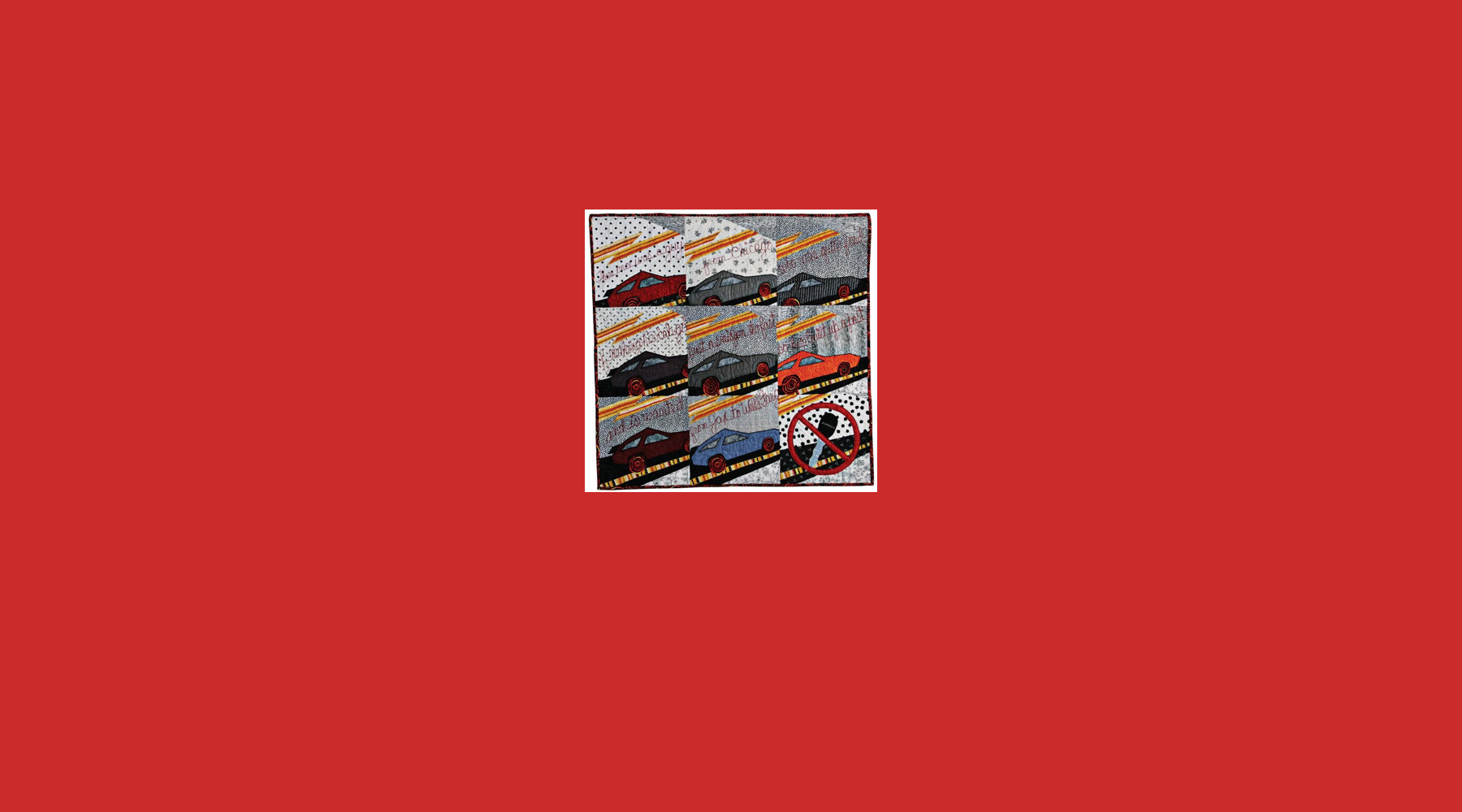
by Amy Milne | Jul 14, 2018
Karen Musgrave (KM): This is Karen Musgrave and I am doing a Quilters’ S.O.S. – Save Our Stories interview with Georgia Bonesteel. Georgia is in Flat Rock, North Carolina and I’m in Naperville, Illinois, so we are doing this interview by telephone. Today’s date is March 7, 2008 and it is 2:28 in the afternoon. Georgia thank you for doing this interview with me. We are doing a special Quilters’ S.O.S. – Save Our Stories because this is based on “Alzheimer’s: Forgetting Piece by Piece” exhibit, so Georgia I would like you to talk about your quilt “A Porsche Problem” which is in the exhibit. Georgia Bonesteel (GB): Thank you very much Karen for calling me. My quilt is something that I was moved to do because of my father’s situation health wise. I would like to tell you that he has Alzheimer’s, but he had one of the forms of Alzheimer’s. We never could quite figure out what he had, yet he died of congestive heart failure, but because we lived in North Carolina about thirty miles from my parents for about twenty years, I was able to have a close connection with my parents. Pete and I were raising our children close by, so I was very much in touch with what was happening day by day versus living far away. When my father first started getting ill he sensed that he was not right and so we went through that process and had many situations, especially with the car. My father actually loved that car and he had about four or five of those Porsches and drove quite a bit from Chicago to North Carolina because he had a hard time retiring. He was a lawyer in Chicago but wanted to be down on a golf course in Tryon, so he went back and forth with his car. When he got ill it was difficult to take the car away from him. We tried many situations, we even tried having a friend of his who was a policeman come over and talk to him and explain that because he was getting lost, well he wouldn’t come home, he would lose his way and we knew it was time, and my father would say, ‘Well yes, I understand you need to take the license away from me because I live here in North Carolina, but South Carolina is just right down the line a little bit, so I will drive in South Carolina.’ So he really didn’t get it, and the only way we could handle it was that one day my sister just drove the car out of the driveway and took it to Pennsylvania. So in essence, we did take the car keys away from him and it was a sad day, but he got over it. When Ami [Simms.] asked me to do this, to participate in this exhibit it was a natural thing for me, I knew that I would have to do the car and I did this exhibit because I have a lot of admiration for Ami. I actually got to meet her mother one time at one of the Mancuso shows and Ami is a person with an uplifting personality so you enjoy being around her. I find her creativity stimulating. Her website is wonderful. Her stories about her dog and her family are just very good. She is just a welcoming spirit. I wanted to do that for Ami and I wanted to do it as for recognition for my dad also. I had to do the car. We had pictures of the car but it wasn’t really a good picture so I went over and found a used car dealership here in town that had the same vintage year that he had and took pictures of it and that helped me to kind of get a sketch of the car. Then when I made the quilt, I did the yellow streaks in it just to kind of give the idea of speed. I hope that shows it, because he did like to drive fast. Then I used the car, it got larger in each of the blocks as it went down and I thought that, until it finally came into full view, and then of course the last block shows the circle on top of the key. KM: So the universal not. GB: The universal not. [laughs.] That is really the story of the quilt, and I’m proud to have it go around the country in different exhibits. I’ve seen it a couple of times. I did see it at one of the Mancuso shows. Like any exhibit, one of the most interesting parts I think of doing a quilt show is to stand next to other people and hear their comments, especially if they don’t realize that you made the quilt, whether it is yours or someone else’s, because you really learn the inside of what quilters are thinking. I have often thought that there should be a tape recorder in the back of quilts and then play it later. You would really get some interesting verbalization I think. I think it is a very poignant exhibit. I helped Ami out one year in Houston and stood at her booth. People are so moved by this exhibit. Anytime you have a health problem in your family, especially Alzheimer’s and then you see these quilts you have to talk about the person in your family personally. I mean you want to share that story. It’s either my aunt or my mother or my father, and then it is like it all happens all over again. That is really my perspective on the exhibit and I’m very proud for Ami and I’m very proud to be a part of it. KM: Tell me about the poem. GB: Oh gosh, yes, the poem, “There once was a guy from Chicago.” That poem, my mother and father had a close friend, Dr. Graves and Martha Graves. In fact Martha just died last year, she outlived my mother by three years and they were very close and every birthday she would write a poem. She was just a poet and so I have a whole stack of poetry that she wrote about when my dad would have a birthday. One year she wrote a poem about the year he shot his score, his par on the golf course. Then she wrote this poem about daddy’s car and so it was a natural to be stitched on top of his block. I was very proud to do that for Martha. KM: It goes: ‘There once was a guy from Chicago Who was quite found of making his “cah go” Just a smidgen too fast So he built up a past And is he wanted from Jax to Wells Fargo!’ GB: He was wanted from Jacksonville to Wells Fargo. KM: But it is Jax? GB: Jacksonville, I just put Jax. KM: Okay. GB: From Jacksonville to Wells Fargo. KM: That is awesome. GB: [laughs.] Perfect. KM: It is wonderful. What are your plans for this quilt when it comes back? GB: I have to admit that it will probably slip through my fingers. My sister drove the car away, she ended up actually paying my dad for it, I think she got a good price. Then the car ended up going to her son Quinn who has it up in Boston, and when Jill saw this quilt, she said, ‘Oh I bet Quinn would love to have that some day.’ So I will probably give that to Quinn. I’m not sure how long the car will last, but I will probably give that to Quinn. KM: One of the things that we had to do as artists in this exhibition was to do the audio part of the CD. Tell me about that experience for you. GB: You know, I will be very honest about it, I can not remember that. KM: It must have been easy for you, because it wasn’t easy for me. I remember it. GB: Oh my, well I haven’t played it in a long time so I must have just. KM: You probably did very well. GB: I hope so, I hope so, I can not remember, and. KM: Seriously I think that is a good thing because Ami would call me up and say, do it again. [GB laughs.] So you didn’t have that experience? GB: No, I think I only did it once so I was lucky in that regard. KM: Tell me about your interest in quiltmaking. GB: Oh, Karen it goes back to the Stone Ages now. My quilting started in New Orleans of all places, although as a little girl I have always done patchwork. I was gifted with a lot of energy and I think to keep me out of my mother’s hair she would give me needle and thread and so I’ve always done stitching. I did the doll clothes thing. I guess I was always with a needle and thread going through cloth. It just always intrigued me, and I really didn’t have any question about what I would do when I went to college. I went into merchandizing. I should have stayed at Iowa State. I went there for two years, one of the best home ec [Economics.] colleges in the country. I fell in love and then transferred to Northwestern, which was an equally good school, but they did not have a very good home ec department, so I simply graduated with a BA. I was able to get a wonderful job in merchandizing at Marshall Fields and so I’ve always stayed in touch with cloth and always have been sewing. When we did finally end up moving to New Orleans with the young children I had an opportunity to once again use my sewing capabilities at a department store in the French Quarter which led me into some quilt opportunities. I quilted little evening bags and sold them in the French Quarter for about three years and came into the necktie fabric because of some television work I did. Someone said to me, well these are great little bags that you have made, but they are flat, they don’t have any body to them, they have no life and they said what about putting some batting inside, and before I knew it I was quilting with embroidery thread and I had batting in between layers of silk and batting and then fabric. That was basically opened my eyes to quilting because I had to search out little magazines and books that had quilting patterns in them and then we moved to North Carolina I started teaching quilting at our community college. KM: Give me a timeframe. GB: We moved to, we were in New Orleans from about 1970 to 1973, and in 1973 we moved here to North Carolina. Of course being in the Appalachian part of the country, I knew that quilts were popular here. So I just started teaching at our community college, but I was also quilting with a senior ladies group down at the Opportunity House and I learned a lot from those ladies. I learned my stitches weren’t small enough, I learned that it was hard to quilt on a standing quilt frame, and then I learned that if you are going to teach twenty ladies how to quilt in an eleven week class, we couldn’t make one quilt for each lady, that everyone had to work on their own individually and I realized then that if I broke the making of a large quilt down into sections we could have more satisfaction and see things grow faster. So that was when I started really teaching lap quilting and so those initial three years of teaching at the community college gave me enough samples that I had things to carry with me over to the University of North Carolina Public TV Station. I went over and made an appointment and suggested to them that I could do a How to Sew on Quilting, and I couldn’t have done it without those classes that I taught. That was the meat of what I had and so I just did a little TV show. [laughs.] KM: Kind of an understatement there. GB: It was, that really is what it was though. As I look back on those first shows and we had a very simple set. They wouldn’t stop the tape if I did something wrong because that cost too much money, and I look at those tapes and there are sometimes when I would pick up the edge of a cardboard if I couldn’t find a ruler to draw a straight line [laughs.]. It was very, very crude to begin with but we did get a little more upscale as the years went on. KM: And, there is a lot more there. [GB laughs.] Share the Evolution. I think it is really important. GB: It was an evolution because I was just kind of secluded. I was just so inspired by my students, and after these eleven weeks we would have what I called a quilt in. We would have it at the auditorium, and people that had taken a previous class but hadn’t finished would come, and we would spread out the quilts over the chairs and we would all, everyone would come up and talk about their quilt and tell their little story why they made it, and we would take pictures and we were just so happy in ourselves, and then pretty soon the guild started, and people realized, and I think this is happening all over the country, people were saying, ‘Well if classes can do it, then let’s get the classes together.’ Then let’s reach out to the community of people that have quilted over the years and their grandmothers and their sisters came. All of a sudden guilds started emerging around the country. Then people would get wind of my TV show and they would drive up in my driveway thinking I had a shop at my house. We had not bought the hardware store yet, and I’d say, no I’m not selling fabric out of my house. Then I had my first invitation to actually fly out of town with a few of my quilts and talk about what I did. People weren’t doing that, at least to my knowledge they weren’t. I can remember being excited when Jinny Beyer won that Good Housekeeping Contest and then Hazel Carter had that first quilt show in Virginia and we went up there, and so things started to happen. Then I went to Houston for the first time, so it was a progression that grew, but it was gradual. I think once my shows started airing around the country and my books were published to go with the shows that is when I got really busy. Then we bought the hardware store, so then I was managing a store, writing books and doing TV and traveling. KM: We should really qualify the hardware store, because it was an element of the quilt corner in the hardware store. GB: Yes, right, it was, it was called Bonesteel Hardware and Quilt Corner [website is georgiabonesteel.com and her blog is georgiabonesteel.com/gablog.html.] and people loved that. It was all open; there weren’t any walls in between. They would come in and their husband would go over and look at hardware and they would come over, and they just thought that was just wonderful. [laughs.] I was teaching there too, and it was a good thing, it really was. Our children were in college then and so they were pretty much on their own. Well they were, in the early years they were still in high school, because I can remember leaving and still dealing with that kind of situation. My husband was dealing with it also. All of a sudden he was Mr. Georgia Bonesteel and that was not easy for Pete for a while. He had been the breadwinner and then all of a sudden we were getting calls from Oxmoor House to come down for grand celebrations because of so many of thousands of books that had been sold. He dealt with it after a while, but it was hard at first. KM: What do you think is the biggest challenge confronting quiltmakers today? GB: Oh my, I think traveling is difficult. I’ve slowed down my traveling, especially this year. Last year I was out every month and it used to be I would go out twice a month and then the last five years I’ve been going out once a month and even that is a challenge. I think that after 9-11, quiltmakers have had to kind of take a different look on not so much the quilts they are making, but how they are getting their story out? How they are dealing with being a professional? The fact that we have restrictions now in the amount of bags we can take and the amount of pounds we can carry, the fact that we have to ship things ahead of time, that has put a new challenge on our profession. Last year I was able to handle it. I think this year, because I have cut back quite a bit, I’m doing different things in the quilt world. My obligation now is with the [Quilters.] Hall of Fame. I am going to do that for two more years. I’m excited for what is happening there and I want to see that progress so I’m helping out once again this year in July. I’m going to teach a class and I’m excited that Helen Kelly is going to be there. That is going to be a very exciting thing for all of us. I’m changing the direction of my quilt life mainly because, I guess partly because of my age, but partly because we have seven grandchildren now and we live on a wonderful piece of property in North Carolina and I love working outside, so I now, I’m in the middle of a Master Gardener Program with Home Extensions people here in North Carolina, so I’m learning about our property and about the soil and about what grows in North Carolina. I have forty hours of volunteer work that is ahead of me with the program before I graduate. I’m doing some different directions in my life which is kind of fun. I still consider myself a professional quilter, but I’m not doing any more taping. My shows are actually being rerun in a different venue all over the country, so I spend a lot of time on the computer everyday because I get so many questions about my shows that are still airing around the country. They are on a new network called Create TV.com. That is the network, and so I have to quiz people as to what show they are watching because after doing twelve CBS series, I’m not sure what actual show they are looking at. However, I am actually thinking new quilt book. It is time. KM: You talk about your husband and his reaction to your quiltmaking, how about the rest of your family. How has it impacted them? GB: They have all been very proud. I think that they are at an age where they are all so involved with their children right now. They will of course someday wreak the benefits of all my quilts. They will have to deal with them. Some of them I am in the process of selling and moving on, but the quilts that I have made specifically for them, I’m going to let them deal with that someday, but they have been very proud. I guess of our three children, Paul our youngest because he is a video producer and helps me with my website and also helped to produce the documentary, “The Great American Quilt Revival.” [www.quiltrevial.com.] He is the one that is the most involved in my quilt business. I share more with him I think than anyone else. My daughter, because she is a journalist has helped me I think in some of the writing things that I’ve done, but because she is not a seamstress, she doesn’t really understand the actual technique and that sort of thing. I’m going to cultivate these granddaughters. I have four granddaughters and I plan to cultivate them into the next quilt world. [laughs.] KM: Why is quiltmaking important to you? GB: Oh my, because I don’t think I’m any different than any of those people that love quiltmaking, I think we look at fabric and the results of what we do of fabric as an extension of ourselves. I think it is a creative outlet. It’s a tactical thing that we can hold on to. I think it is something in our lives that we have control of. There are so many things that we don’t have control of from the dentist bill to the price of ground beef. That is out of our field, but if you tell us to make a quilt for a reason or just because we bought this beautiful fabric and we know it has be to cut up and put back together into a design. We have control on that from the size to the design to how we make it, whether we hand quilt it or machine quilt it, and I think it is something that we own and that is ours and I guess that is why I think it is so valuable. KM: Tell me about the quilt groups you belong to. GB: Oh my, [laughs.] they are all unique, they are all different. I just met yesterday with a group that we call ourselves “The Cover Lovers.” That group of ladies actually met through one of my community college classes that I was teaching in garment making and we have been together for twenty-seven years. We have lost three of them, but one of them, Francis Gardenia always said that in North Carolina we have called quilts Kivers. They were always called Kivers. I have always laughingly told them that we can’t call our group Kiver Livers, so we will call our group Cover Lovers, so that group is called “The Cover Lovers.” It is truly a self-help group, in other words we have lost three of our members, we still talk about them every once in a while their name will come up, we have gone through divorces, deaths of children, we have gone through everything together. Yesterday I showed them a quilt I’m doing for AQS [American Quilters Society.] that I have to get done in three weeks. [laughs.] So I took that and we quilted together and we are just all very close. Actually where we met yesterday is a lady that has moved into a retirement condominium and we meet at her house now once a month because she can’t leave her husband. We have gone through all of these transformations together and we laugh, I looked at the slides of the group that we have watched our hair color change over the years. [laughs.] So that is one group, then I’m in another group, PTA, that is for Patchwork Talking and Appliqué and you might have heard some of those girls. Linda Cantrell is in that group and Barbara Swinea and Lynne Harrill, Connie Brown and other stimulating professionals. They are movers and shakers, and we have done challenges that have been in AQS. Right now we have an exhibit at the North Carolina Arboretum. Two of the ladies just got accepted for AQS and next Thursday we are driving to Pigeon Forge to look at an exhibit, so it is an invigorating group because they are younger and they are very much into making today’s quilts. They keep very much on top of what is happening. I’m also in three guilds in the area, the Landrum Guild, the Ashville Guild, and the Western North Carolina Quilters Guild. I can’t go to all the meetings because of traveling and other obligations, which is frustrating, but I do keep up with what is happening in the guilds. I think that the guilds are having a hard time across the country right now and I don’t know why exactly, whether it is the size, whether they are going to large, or whether the new people that are being voted in are not listening to what is happening with what the people that have formed the guilds have done, whether they are not including them, I’m not sure what is happening. I don’t know if you find that is true, Karen. KM: I do, I really do. I do think this is just, I personally have not been able to figure out what it is. GB: Right, I haven’t either, but there are things that are happening and I think they are going to have to work a little bit harder on making it come out okay. Things are happening in the guilds. KM: What other changes do you see changing within the quilt world? GB: I guess, one of the biggest things that is happening today is the hand quilting versus machine quilting. I think everyone is talking about it. KM: You have the extension of that, which is longarm quilting. GB: Yes, and the longarm too, so there are the three things, and I don’t–I’d prefer not naming names, but I know that one of the quilts that just got rejected for the upcoming AQS show, one of the comments was I can’t believe this quilt was rejected because I spent so long hand quilting it. In defense of machine quilting, I think it is, it takes longer to hand quilt, but it is equally challenging to machine quilt some of these quilts and now to compete in the machine quilting you have to really go on another level, I mean it is difficult too, so I don’t know why. I sometimes question where it is all going, because it is like, it is making it very different in the quilt world. KM: I think that technology is definitely impacting in a very big way. GB: Yes. KM: In the quilt world. GB: Yes. You have to understand that the people that are making sewing machines, they have put forth all of these opportunities for us and they realize that young people in schools today are very much tech people and so what they are hoping is that this will cross over to sewing machines and so then the new field of people coming out there are challenged to sew and make these things that are going to be awesome and then the people that have done all the hand quilting are saying, ‘well I can’t do that.’ Maybe it has something to do with the people that are crossing over from slide presentations to PowerPoint presentations. That has become challenging in of itself and now even the people that are doing PowerPoint are being challenged cause if they are taking all of their equipment with them and in many cases they can’t take it on board an airplane anymore. They can’t take their batteries anymore. I mean it is like where do we go from here, it is difficult. KM: It is evolving. GB: It is evolving. KM: That is what I keep saying to people, it is evolving. GB: It is evolving; right you have to hang in there with it. The bottom line is that it is still very exciting. I just came from an all day experience in a small community way up in northern North Carolina up near Sparta and Wilkesboro. I just had the most glorious day. I talked for four and a half hours and I took a carload of my quilts and to see those happy faces out there, to hear my story, and I have fun stories that went with all of my quilts and stories that related to my parents and to my mother helping me rip out things that were wrong and. My sweet mother, who has been gone now for three years, she spent a week ripping out the first quilt that we ever put on a longarm quilting machine because, and I can’t remember whether we had the wrong color thread or the wrong pattern, but she ripped it out and when I picked it up from her, she told me, she was serious about this, she said, ‘I think you can give this sort of quilt to anyone that has been locked up in jail on drugs.’ KM: [laughs.] GB: They would never do drugs again. [laughs.] KM: [laughs.] GB: I just loved it. Anyway. KM: Give me timeframe. GB: That was probably five years ago. My mother has been gone three. KM: Okay. GB: Three years, it was about five years ago, and she helped me in so many ways. She was just a good sounding board and oh I miss her so much. She was with it right up to the end and she happened to have a bad fall in her house and broke her collar bone and her shoulder and she gave up. At the end, the last two or three years, she knew it was a struggle to live. She was in a lot of pain, and she was on a lot of pain medicine, but it was a joy to have her close by, it really was, both of my parents. Getting back to my wonderful day in Wellsboro, the day was culminated by a wonderful thing that happened. I had designed a modern teapot quilt for their group. The Sparta Quilt guild pieced this quilt and then had it machine quilted. I had not seen the results and everyone was so excited. I hope this quilt will get some good visual coverage. I hope they will exhibit it in Houston and it will hopefully end up in the museum that they are building up in Sparta, North Carolina. It is a modern quilt and they learned to use my grid grip. I gave them a couple of lessons. They came down here to my studio and then we met in Hickory one day and I gave them lessons on how to use the grid freezer paper and that is how they pieced this quilt, and they said they couldn’t have done it without that, and that was a really exciting thing for me to see the end results of that quilt. KM: Tell me about grid freezer paper. GB: Grid Grip. Years ago, I mean this was a long time ago, I would say probably about 1980, ’82, someone came to one of my classes and said they read in Quilter’s Newsletter that freezer paper with a dry iron will attach to fabric. I said, you have got to be kidding, I mean up until then we had gone from cardboard templates and window templates to plastic templates and I was always frustrated with drawing around a template and I knew there was a way to go a little bit faster in the quilt world. I went over to the hardware side of the store and got a roll of freezer paper. I started working with it and designing on it. It wasn’t very long, a month or so, I realized what I needed to continual quarter inch grid on this freezer paper. I need something printed on this. I contacted James River Corporation up in, I thought this was always pretty clever, Parchment, Michigan. [KM laughs.] Isn’t that cool? KM: Yeah, that is cool. GB: I bugged the president so long, and I would say listen I’ve got an idea for you, you’ve got to do this. He said, ‘Okay I’ve got a private jet. I’m going to fly down.’ He came to our little hardware store and spent a couple of hours with me and I said, here is why, and I showed him why and so they printed a continuous quarter inch grid on rolls of freezer paper and we sold it that way. They would provide it and I would sell it and he would get a little bit of money. I would get a little bit of money and we sold it about two years that way and finally he called me one day and said, ‘Listen this is too much trouble. We are just going to give you the trademark and hand it over to you.’ I said, ‘Are you sure you don’t want to continue doing this?’ I said, ‘You know the nice thing about it is that people still freeze their meat with freezer paper and now they could measure the amount of meat they are freezing.’ [KM laughs.] He didn’t think that was funny. Then we had for about five years, I had to, I had the rights for this, and then Pete and I would continue doing it, but instead of being on rolls we found a web press up in Waynesville, North Carolina where we would have it printed and it was difficult to do. It was not easy. We would have to order these huge rolls of freezer paper and then we would take it up there in a big truck we would rent and we did that for about five years and finally it is no longer done that way. It is done by Prym Dritz Corporation.. So I sell it and still have an interest in it, but Prym Dritz makes continuous freezer paper that has a quarter inch grid on it, so you can design on it. You have a design tool and a template at the same time, and you can, that is what I use and that is what a lot of people use. In fact, I just sold some to a lady up in Canada. Not everyone knows about it, but yet if you talk to people like Ricky Tims and Caryl Bryer Fallert, they are designing their quilts with freezer paper. The reason the grid for me is so good and for teaching is that the grid is synonymous with the grain line of fabric, so if you design a block with Grid Grip and you code it properly, cut it out and then you iron it on fabric, so that you always align the grid, the straight line with the grain line of the fabric so that you never have bias edges on a block or on a design that you are doing and that is the beauty in what you are working with if you have a grid on it. KM: How do you want to be remembered? GB: Oh my, I told my group in Wilkesboro, someone asked me that or I guess it came up in the course of my conversation, and I said I guess I will always be remembered for the full proof knot, it was one of the things I taught on one of the very first shows, my full proof knot for quilting and dog ears. I don’t think anyone has come up with, when you cut off the extension of a triangle, those little things fall off and I have always called them dog ears, but that is kind of in jest, but I think what I would love to be remembered for is probably the comment that people say when they saw me doing patchwork on TV is like, well I can do that, if she can do that, I can do that. I guess that is what I would like to be remembered, that I’m really basically an ordinary quilter that was able to transcribe the fun, the excitement of doing it through a television screen and then many people can say, well I can do that. I guess that is what I would like to be remembered for. You are getting me all very emotional about this Karen. [laughs.] I guess the bottom line is that for many of us quilting is an emotional thing. I guess that is the bottom line. KM: I agree with that. GB: Yes. KM: I do. GB: For what you have done Karen is a wonderful thing. For you to bring that out of so many of us. There is another group that I’m in, it is called The Coffee Clutch group at my store, well I don’t have a store anymore, but I do–I’m in touch, I have a little group, a corner down at–it is called My Quilt Shoppe, and there are a group of us that meet once a month and I’ve turned them onto the Alliance people, they have discovered the Alliance [The Alliance for American Quilts.], the website, and so what you have done is to open up a great window of people that have enjoyed quilting, not only professionally, but other people that have found that world of quilting is just a meaningful part of their lives and we thank you for that. KM: Thank you, it is a meaningful part of my life. It truly is a meaningful part of my life. I think we all have value to the collective. GB: I agree. KM: I don’t have professional people who make a living at this, but we have people who don’t belong to guilds and just make quilts, and I think that is a wonderful thing. GB: I agree. KM: I want to thank you for taking your time to share. I also want to give you the opportunity to turn to Ami and the “Alzheimer’s: Forgetting Piece by Piece” and Alzheimer’s Art Quilt Initiative. Our involvement in this is a tribute to Ami. GB: Yes I agree. That is the way I feel. Half the reason I did this was that Ami would take this step and do this and go so far with it. We were all so impressed that one day it was the collection, then it was getting around the country, then it was the CD, then it was the book. KM: Now it is a nonprofit. GB: Now it is a nonprofit, I mean it is like there is just no end to it. She hasn’t gotten on Oprah yet, but we know she will still be on, that is all there is to it, that is going to be her last step. [laughs.] KM: I think the whole thing is that this is a real tribute to what quiltmaking can do. GB: I agree. KM: Quiltmaking, I think quiltmaking is a changing force and that is what excites me. GB: Right, and even non-quilters who see this exhibit, then they can be turned on to quilting and say, well my goodness look at what that has been done and then they can make a quilt for a cause within their family. It works both ways. KM: It is a win, win for everyone. GB: That is right. KM: Thank you so much for taking your time. GB: You are welcome Karen. The best of luck to you. I hope our paths cross again one of these days. KM: I know they will because I will be at Quilters Hall of Fame again. GB: Okay, we will see you there. KM: Thank…
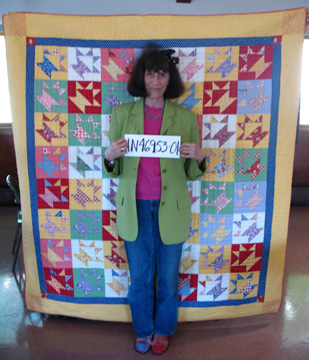
by Amy Milne | Apr 18, 2019
Note: This interview was done as part of a Quilters’ S.O.S. – Save Our Stories training that took place during The Quilters Hall of Fame’s “Celebrations 2007.” Karen Musgrave (KM): This is Karen Musgrave and I am in Marion, Indiana with Gwen Marston doing a Quilters’ S.O.S. – Save Our Stories interview. It is July 21, 2007 and it is 10:18 in the morning. Thank you, Gwen, for agreeing to do this interview with me. Gwen Marston (GM): You are very welcome. KM: Tell me about the quilt that you brought for the interview. GM: This is just the last one I finished, and so it didn’t have a binding on it and I am on a road trip so I never leave home without something to sew, so this is a little basket quilt that I made specifically for my quilt retreat that is now in its twenty-fourth year. Every year I have a different theme, and this year it is basket quilts, so I have been keeping very busy making both traditional basket quilts and liberated basket quilts. This is one that just got finished. KM: Is this a traditional or a liberated? GM: It’s very traditional. It is a traditional pattern and a traditional setting and it is furthermore the color idea is taken from an antique quilt. Someone sent me a little card and I could see about six blocks of a full size quilts. It was made in the thirties, so I could just see that it was thirties prints and the backgrounds were kind of thirties solids, but it didn’t seem from what I could see that there was any particular order, so I just got out those fabrics and kind of worked my way through it. I have to say, first I made the red ones and then I got into the yellow ones and I was laying them out and I noticed in the original quilt there were blocks with white background. I thought that is going to look kind of jarring against the ones with the color, but I bravely forged ahead and made a few with the white ones and it worked out great. So that is pretty much the way I work. When I’m working in a traditional style I look at antique quilts. Even though the one that I was working with, working from that little picture, it was a basket quilt but not this particular block so I changed the block and I used that idea of having the prints for the baskets and using five I think, four or five solids from that same period to do the background. KM: Did you machine quilt this? GM: No I did not. That is one thing, I wash windows but I do not lift my feed dogs. So if I have something machine quilted I don’t do, I send it out. This was quilted by a girl who comes to my retreat named Robyn House. She is a northern Michigan quilter and does my machine work. KM: Do you give her any instruction as to how you want it quilted? GM: Yes I do. I wanted this in a real traditional quilting style and cross hatching. KM: That is in the middle. GM: Feathers on the border. KM: Nice feathers. GM: She is very good, yes she is. That is my little thirties basket and most recent piece. KM: Tell me about your liberated quiltmaking. GM: That started in ’91, and I was, I have always taken my clues for my quiltmaking from studying antique quilts. I started out with a bunch of Mennonite women as my first teachers who got me going, kind of taught me the basics. Then I kind of fell into the arms of Mary Shafer, so my roots are very traditional, but I noticed from looking at very traditional quilts that they broke all the rules that people had made kind of since then in the last twenty years. We have a lot of brand new rules now in quiltmaking, and I noticed that the antique ones, they seem to have a lot more freedom and they were doing all kinds of things that wouldn’t be the judges wouldn’t care for today and so there was so much of that, I started kind of trying to use those ideas because I like the look of antique quilts. If I’m going to make a traditional quilt, I would like it to look like one. I noticed that in my study of old quilts that you would see blocks that were, they were kind of like cotton crazies, they were these little kind of compositions made of scrapes. One day I was making those out of little pieces of fabric that were next to me at the sewing machine, just kind of sewing them together to see how they would come out, and I sewed a triangle on that was floating out there on my desk and I sewed it onto this little kind of mismatched block and it looked like a house and it was like look at that, if I try a little bit I can make house blocks without templates. It was very exciting because if you have ever have made a house block that it looks very simple but there are nine million parts and there is a right and a left and you can’t get mixed up on that. I stayed up until about 2:00 in the morning experimenting with this new little thing I happened onto and then after that, it was like, when that happened it was like the doors opened, light shone and the music came up and it was like I had stepped into a whole new world of quiltmaking and a whole big room full of other possibilities. Once I got onto that, if I could make houses for heaven sakes with no templates and no pattern, just kind of starting in, I wonder what else I could make. I started playing around with that idea and I think I did “Liberated Quiltmaking” with AQS [American Quilter’s Society.] in maybe ’95 after I had been at it and teaching it for a while. I work now in two ways. I still love making traditional patterns in traditional ways, but I also like the more free form liberated work, which is a great way to make original quilts without really even trying. You can make quilts that are so original you can’t copy yourself. That is another kind of way that I work. For the quilt retreat this year, I think I made thirteen, maybe twelve traditional quilts in different styles and periods and then I have probably seven liberated baskets that are, the points don’t match, they are very free form, and usually they are made in brighter contemporary colors so they are kind of more in the kind of quilt art world you could say I guess. That is how I work. By the way, yesterday, can I talk to you about basket quilts? KM: Of course. GM: Yesterday word had it that Pat Holly said that she found two antique basket tops at the school, or wherever it is that they are having, where they had stuff for sale, and she described them to me and said they were really cute but they won’t take a credit card so she couldn’t get them, so I said I would go and look at them but I didn’t have a check either. I went with Rosaline and I found the quilts and I said, she knew who I was so I thought that might help, but it didn’t. [laughs.] I said, ‘Okay you don’t take credit cards?’ no she doesn’t so I went and got Rosaline and said I want to buy these two tops. I’m willing to beg, I’m going to get the money before I leave and I’m taking the quilts with me. [laughs.] So I say to her, ‘Listen I have these two tops and I really want to buy them, do you think there is anyway you could spot me, could you write a check and I will send you the money as soon as I get home.’ She said, ‘Yes she would.’ So the way it worked out was that there was the person selling the quilts on one side of the table and Rosaline and I were on the other, so Rosaline was writing the check while the shop owner was writing the receipt for me, while I was writing my Visa number for Rosaline because she said if I gave her the Visa number she will run it through hers, so it was this little round robin of I will pay you and you give me and I will pay you. I got the quilt tops and Pat Holly was kind of surprised. [laughs.] I know why I wanted to tell you that story, because one of the old tops I bought was in red and cheddar on a white background with alternate white blocks, and the little handles were cheddar and they were top stitched with white thread on the sewing machine, and the owner said to me, ‘Well I’ll tell you if I wasn’t going to sell this quilt pretty quickly I was going to take those handles off and hand appliqué them, because that just drives me crazy.’ And I said, ‘You know a lot of basket quilts, the handles on antique basket quilts are actually appliquéd by machine, this other top I’m buying from you is also done that way, you just didn’t notice it because the thread matches better.’ Anyway, my whole thing is because I have this background in traditional work I like traditional quilts and I’m not going to change them. The idea when I see basket handles on an antique quilt that are top stitched on machine, I think all right, good idea I think I will do that too. There is something very interesting to me about what has been going on in the quilt world since I kind of got into it thirty years ago, and it is that while people really like traditional quilts, they love antique quilts, most people get into quiltmaking because of that, they don’t make quilts that look like antique quilts. You start out–I did, I started out totally as a traditional quiltmaker and then after thirty years, you kind of find other ways of working as well. It is interesting to me that while people love antique quilts, they don’t make quilts that look like that. When I do classes and talk to people about that, one of the things is say is ‘Look you guys, when you go through Quilters’ Newsletter Magazine, even without your glasses on, can’t you tell that is a new one and that is an old one?’ They say yes, yes, and so now I have done a few lectures where I start out by saying, ‘How many of you like antique quilts?’ Up go the hands, and I say, ‘I wonder why we don’t make them look that way anymore then, because we pretty much eradicated a lot of things like that, we have decided that we can no longer top stitch the basket handles, that wouldn’t be appropriate, and a lot of other things that are found in appliqué quilts that have been kind of eradicated.’ You know the dog tooth border? Is it okay if I just keep rambling here now that I’m on a role, because guess what, I like to talk about quilts. [laughs.] KM: [laughs.] GM: That is one thing I do. KM: I am so surprised. [laughs.] GM: As long as I’m on my pet peeve now, the dog tooth border is, the saw tooth looking border that is appliquéd and cut from whole clothe, and if you look at pictures of early quilts, Colonial era quilts where that was used more than it is now, you can tell from a little photograph 2 X 3″ if it is a dog tooth border appliqué or whether it is a pieced saw tooth border. The reason you can tell is because they were, the original way that they were made was from folded fabric and when you fold fabric and cut fabric you get inconsistencies. They are not even, and when you needle turn them, that is called needle turn not toothpick turn by the way, when you needle turn the edges under they are on the bias so they automatically curve a little bit, so that the distinctive characteristics of the saw tooth border are that they are inconsistently lopping along there and that they are curved, so they are just kind of almost scallopy looking. Nowadays, we have invented–the way it is taught now, it that you come up with a system where we eradicate those two characteristics that made it cute in the first place and charming and distinctive. Now the way it is taught is that you measure equal distant very carefully, god forbid that they shouldn’t be precise, and then you fold the edges in, which means you get rid of that little bow in the sides. It is like, well that is no fun, now you have taken the very things that characterize it artistically away from it. I’m kind of just hanging on, I like those old ideas and I think often times in antique quilts–when there weren’t quilt teachers around and magazines telling us the right way to do things, everybody was home on the ranch figuring it out for themselves and therefore, I think there was a lot more innovation often times on those earlier quilts. Also, I don’t think we have to reinvent the wheel. I like the tradition, I think it is a good thing and I like the idea of people figuring things out for themselves and it isn’t rocket science. When I started with the Mennonites and Mary Shafer, they were making quilts out of their sewing basket. There weren’t any quilt shops and there weren’t any quilters’ rulers and there were any leather thimbles, there was only one thimble and you had your little sewing basket and away you went. It has just gotten more complicated. Quilting now kind of reminds me of what is it Carbellas I think or something, there is some big sporting goods stores, kind of chain stores around the country now and they are huge stores and they are for hunting and fishing, and I was so shocked when I went in there because on Beaver Island the way they go hunting is that they get their gun, make sure it is already to go, and they get some kind of dull brown clothes on and they go hide behind a bush and wait for something to come by. Nowadays, there is scent, there are outfits, I have no idea what all, but this was a huge store full of things to help you go put venison on the table. The same thing has kind of happened in quilting. You used to be able to do it with granny’s apron and little Suzy’s dress that she has outgrown, and scissors and needles, and now it has become this really complicated kind of commercial world. KM: Do you think it will stay that way? GM: Yes I do. KM: You think this is bad? GM: No I don’t think it is bad, but I don’t think it is good either. I don’t like to be critical because I’m happy when people are making quilts. I just think we need to remind ourselves, someone needs to say you can make a quilt without a design wall and to say all of those appliqué quilts in the museum that we can’t afford to buy were made before there was freezer paper. It just seems like it has gotten–a lot of the techniques I think are directed towards ever more precision as though that was some god that we were suppose to worship, and I don’t think Picasso was losing sleep worrying about staying inside the lines. Staying inside the lines does not equal fine art. I also what I think is missing is that it becomes almost a political thing for me, because in the early days women couldn’t vote, you couldn’t own property, you really, you couldn’t do very many things, but boy oh boy you owned your quilting. You could do your quilting. I kind of don’t like to see women give it over to the professionals and feel like they can’t make a quilt unless they buy a pattern and that they need to buy professional templates, because we couldn’t do that that would be way to hard. I guess because of my traditional background and because of the Mennonites and because of Mary Shafer I feel like John and the Baptist out there saying, ‘Oh no you can do it by yourself. Oh it is very easy.’ I think in some ways we’ve kind of gotten off track. My focus when I’m out in the world teaching quiltmaking is to show people easy ways to take control of it themselves. KM: Tell me about your retreat. GM: Next year is my 25th year of doing this and I did the first one on Beaver Island and I did only one session and everybody came on the ferry which is a 33 mile out in the middle of the lake is where I live, 33 miles out in the middle of Lake Michigan, and I remind people they don’t call them the Great Lakes for nothing. These are really big lakes. The day they came it was very rough and everyone but one person threw up. [laughs.] When I went down to pick them up there they were looking rather forlorn on the dock and I thought well this is the first and last Beaver Island quilt retreat. The next year I did two sessions, and the second one had just enough to pay the bills, but it has kind of grown. Now I have been doing it for, this is my 24th year and I do four sessions. People come in on Tuesday and go home on Sunday morning. There is a full day on Wednesday, Thursday, Friday and Saturday, and I rent a lodge. I do it now in Elk Rapids, Michigan. I lost my place I had it on the island so now I do it in Elk Rapids, which is a darling little northern Michigan town and I have a lodge that is one hundred years old that I rent and every year I choice a different topic. I have done medallions and stripy quilts, and last year we did the parts department, which is from a book Freddy Moran and I did “Collaborative Quilting” and it had just come out so we did kind of ideas from that book. This year I’m doing basket quilts. I see my job there doing the quilt retreat as getting the lesson together. I work on it all year long because I have really good quilters who come. It is not like I can waltz in there and pretend like I know about baskets. I try to have something for everyone because I don’t have a class project that everybody does. My way of operating has always been to offer a lot of things and then let people choose and then I’m there to help if they get stuck. We do little demonstrations. If someone wants to know how to do something I just announce it to the whole class that this is what we are doing over here if you would like to watch. There is a lot of learning that is going on, but everybody is doing their own work. I try to have something for everybody; so I have stuff for the traditional quiltmakers and I have quilts for people who want to do more contemporary kind of work. By the time that the retreat rolls around every single year I’m beside myself with excitement, because after a year of making baskets I think why would anyone make anything else? My gosh, basket quilts are the greatest. Anyway, I have done it for a long time now and I think it has helped me to grow as a quiltmaker too because I have to work hard all year long. I put together a notebook every year as an extra resource for people and it has actually only pictures of traditional quilts. For the art quilts, you got to figure that out yourself in my estimation with examples of mine. Teaching art quilts is an interesting concept to me, because I don’t want to teach you how to make my art quilt, I want to give you the tools and kind of give you an idea of how the process works so you can make your own quilts, that is what we do there. KM: How many hours do you spend quiltmaking each day? GM: That is all I do. It is not like I get up at 6:00 and head directly for the frame and stay there until after dinner, but that is my whole gig. I’m working on some aspect of it. I have written books and articles also and because of the quilt retreat I’m busy doing that and I’m taking care of my correspondence and I’m an old fashion girl so I’m not online so I write notes to people and I actually go to the post office, so I’m kind of at it all day long. In the summer time, which is a wonderful time for me on Beaver Island because I like to be outside too, so that is really good, because then I am up at 6:00. I work on my quilts until I get tired and my mind wonders outside while I’m working at the frame and I think oh I’m tired of this, it would be great to be outside. I run outside until I start getting sweaty or itchy or the black flies or mosquitoes find me and then I begin to think how nice and cool and restful it is at the quilt frame and then I run in and quilt some more. My kind of work philosophy is that if I allow myself to do whatever I feel like doing, I get a lot more work done. I then stay at it constantly. I take work with me on the road, that is why I have this quilt, because it was done accept for the binding. KM: The binding is now done. GM: The binding is now done. I have done two bindings. I have a little motto which is, never leave home without your appliqué. I always have appliqué with me and I have done four block appliqué quilts on the road where I didn’t sew a stitch at home, they were my little sample blocks. I take along one to teach needle turning and to teach my classes and a year later it is like they are all done. That kind of helps me keep going. There is something also while thinking about my work and how much time I spend on it, there is a couple of factors. One is that I have never ever in all these years have gotten tired of making quilts, I really love, I love sewing, I love sewing at the sewing machine, I like handwork, I just like the whole thing. That keeps me going and the other part of it is that when you support yourself and you are the sole supporter that is a good reason to get up in the morning. I used to tell my dog that obviously he wasn’t buying the dog food, so somebody has to go out and get the dog food and bring that home, so that is me. KM: Why don’t we take the opportunity before the tape runs out to have, since this is a demonstration interview, to have the participants have an opportunity to ask you a question? Does anyone want to ask a question? Tell me your name so it is on the tape. Dale Drake (DD): My name is Dale Drake. When did you get started? GM: When I was little. I am little Miss Suzy Homemaker. I always liked to sew. I had four kids in my family and I was always the one making the cookies. When I went to college I was a Home Ec major so I was–I can tell you all about 7th grade home ec sewing. How I learned making the V neck shift. That is where I learned the inside curve; you have to clip it to make it turn. I remember my sewing teacher in 7th grade saying it is always best to use thread that matches the content of the fabric, so in appliqué I use cotton thread and not silk thread. Little things like that. It just got worse as I got older. KM: What is your first memory of a quilt? GM: I grew up in a family where there weren’t any quilts, and so my first memory of a quilt is as an adult I started seeing them at antique stores. I collected antique furniture so I would see them there. I bought a pink and white pinwheel for my daughter’s bed. I didn’t know too much about it, but if you are a needle woman, it is like wow, somebody really went for it. When I was little my grandmother gave me a little butterfly quilt that was button hole stitched and I don’t even remember getting that except that I was young. The wonderful thing about it is that all of my life experiences in moving around and everything I kept that quilt. I think it was because my grandmother made it by hand and even as a young kid I don’t remember getting it, I don’t remember particularly valuing it or any big deal, but boy do I love it now. If you would like to see a picture of that, I think it is in Sue Nichols’ first book. She used it as an example of hand buttonhole stitch. Ann Calland (AC) This is Ann Calland from Marion, Indiana. What do you feel is our intention with quilting? What is it about quilting that makes it so hot now? GM: I will tell you one thing, when I travel a lot and I’m on the planes, people will say to me, what do you do and I say I’m a quiltmaker and they go a what. I then say a quiltmaker, you know quilts, blankets. Oh my grandmother, almost without fail. Then the conversation starts and they remember that they have an aunt, almost everybody has an aunt or a granny that made quilts, so it starts triggering. I think it is just that personal. In the beginning people were making them with used clothing, which is another thing that is kind of lost and I don’t go there either, but I did, those quilts are like family history a lot of them, that everybody’s clothing, Uncle Harold’s shirt and bla bla bla were in there, and I think everybody knows that it was hand done for the family. Also, because nowadays we don’t make anything, we don’t even make our beds most people. You don’t make your own pie crusts, most people don’t. I would like to say I do. [laughs.] Anyway, I think that maybe it is that, because a lot of people have hung on, I mean there are a lot of people getting rid of their family quilts, they couldn’t care the less, but a lot of people are hanging on to stuff that they don’t really know too much about, but grandma made it and so. AC: I have a follow up question. That explains why we like traditional quilts and historic quilts. What is the connection with people getting a pen and following the pattern and making a quilt and saying I did that? What is the connection, personal connection with it? GM: I think when you make something yourself, even if you are following a pattern you still did it and it took you nine months and you accomplished it. The whole thing about patterns too I have to say is that we were, this generation, everybody here I think was raised with the idea of using patterns. Seventh grade home ec started with the apron. Off we went to the store and we got our pattern, we turned it over and it was like a yard and a half of fabric and we looked at the notions, and I myself was brought up that way. We were all taught to get the recipe or get the pattern and that was step one. It wasn’t until, and that was how I started quilting too, who would know. But it wasn’t too long, it was from looking at old quilts and I began to figure things out a little bit about how things were done. For instance, old quilts, if you look at old quilts, you see that a lot of times they did diagonal lines without marking them, and that is not hard to see if you look, you can figure that out pretty easily. KM: Anyone else have a question? Judy Rector (JR): I was wondering how many quilts you have made over your lifetime and who do you give the quilts to when you give them away. GM: When I give them away, I like to say that my grandson who is seven has quite a pile of quilts and I have to curb that or they are going to have to add on. My kids, I have a son and daughter both, and they growing up with them, neither one of them sewed, but they value them and they know a lot about them. All they have to do is come and visit and say, ‘Oh, I love that one Mom.’ [laughs.] It is out the door. I don’t quite know. I actually have a, I keep good records, but I haven’t added them up. It doesn’t go from one to two hundred and ten, but my method of keeping records is pretty good, so if I were to say have an untimely departure, it would all be there in the filing cabinet, because I record every quilt on a 5X7 card with a snapshot attached too, and they are kind of organized like a special file just for the four and nine patch quilts, and a special file for the antique quilts, and a special file for the four block medallions, I have my little favorite kinds that I make. KM: How many antique quilts do you have? GM: I probably have probably eighty and probably fifty tops and I have tons of antique blocks, I have a lot of that sort of thing. I can tell you I have made over, I can tell you how many little quilts I have made, because I did those books for Dover, Twenty Little This and Twenty Little That and Twenty Little That, and so that is easier to keep track and I know I have over four hundred of those little quilts. I probably have made maybe two hundred quilts probably, including some crib quilts. I quilt in an old fashion church frame, the big stretcher frames, not the rectangular ones. I learned that from the Mennonites. That is how I learned so I have stuck with that. That is a quick way of quilting and I think if you do it all the time you get faster. I am a very fast hand quilter. I just don’t get tired of it either. [laughs.] Peggy Long (PL): My name is Peggy Long and I’m from Pittsboro, Indiana. Do you have a plan for in scripting the quilts after you are no longer on this earth? GM: No I do not. I’m all worn out from getting Mary Shafer’s quilts here. Also, I think there is a lot of us in this generation that have produced a lot of quilts, so the museums are not going to take them all. My only goal is to make sure that I figure that out and I don’t leave my children with that many quilts. Pam Conklin (PC): This is Pam Conklin. Do you have your quilts appraised? GM: No I don’t, because I have too many of them and I’m a working girl and I frankly can’t afford to do it. Also, insurance, trying to collect on insurance is not an easy thing, I don’t care how much documentation you have. I’m just taking my chances out here. PC: How do you store your quilts? GM: I have great big cupboards and I fold them up and put them in there. I like to remind people that I’m not a museum. I have gone on road trips before where I have had a quilt like this and then after I’m done with my lecture I take questions, and someone says, ‘Gwen, I can show you how to fold your quilts better.’ I just want to come off the stage. I remind them that I had to get here and that means that they are jammed in a suitcase and often times it takes me two days to get somewhere now thank you to the airlines, and so they are in there for two days coming and going. This is not a famous quilt, I made this and for the moment when I come home it is going on my grandson’s bed and he is going to pee on it probably, and then it will get washed. I make quilts like that, so I’m not, I’m just not a museum. I do the best I can. They get moved around a lot, so they are not folded up in there forever and I keep my antique ones in acid free boxes, but when you live in a house, I have fabric in the kitchen cupboards. You can’t open a door without something coming out of a quilted nature. There is no more room at the inn here and they are kind of everywhere and I do the best I can. Andrea Baughman (AB): Do you have a studio? GM: I do. I actually call it my sewing room and I hardly ever refer to it as this is my studio, because I think that sometimes makes people who don’t have one feel bad. When Mary Shafer made all those quilts, I’m going to talk about that today at lunch, from a little pile of materials that she had at the end of the couch and nowadays people feel like if they don’t have a studio they are not serious, so I call it my sewing room. On the other hand in my house now on Beaver Island which is 1700 hundred square feet, it is not very big, but the whole second floor is one big open space with big windows that look out so I have good light and that is where I make mine. I have a big Steel Case desk where I have my trusty old Singer, black Singer sewing machine sitting, which I prefer, don’t get me going on that, we are running out of time, but I will tell you later what I think about sewing machines. JR: What do you think about when you quilt? GM: Lots of things and one is because I teach a lot, as I’m sitting there working on a quilt I am thinking about ways I could present material better. Often times when I’m working at my quilting frame, I’m thinking about my basket seminar that is coming up and do I need to do anything else. Have I found all the antique quilts I have? I’m thinking about quilting and often time when I’m piecing quilts also have the computer on and I’m running over there writing instructions particularly with liberated stuff, because once it is made I forget all the little things that made it work and things that didn’t work at all, so I kind of keep track of stuff like that as I’m working. KM: Believe it or not, forty-five minutes have gone by so we are going to conclude our interview. Thank you Gwen, you were wonderful. GM: You are welcome. KM: It is…