by Quilt Alliance | Feb 28, 2016
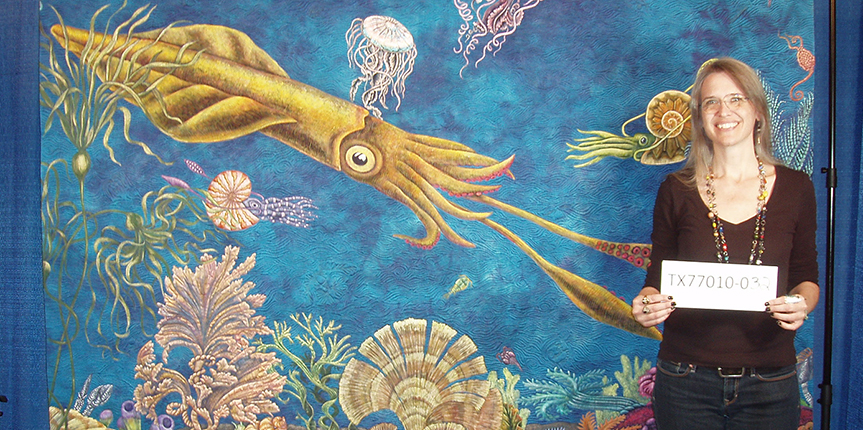
[addtoany] [space height=”10″] Clarissa Cox (CC): Judy, can you tell me a little bit about your quilt? Judy Coates Perez (JP): This quilt is ‘Primordial Sea’ and I made it in 2005 after living in Texas. We lived in Austin, Texas for seven years and while we were there my son became obsessed with fossils. We spent a lot of time looking around in the creek beds of Austin [Texas.] collecting fossils and it led to many discussions about the geological history of Texas and how it used to be underwater and why there were seashells in the middle of Texas. I would think about, ‘wow I wonder what that was like? What was a primordial sea like?’ After thinking about that I decided to make a quilt. I made this in Los Angeles [California.] after we had left Texas. This quilt is about five feet by seven feet and its hand dyed silk. Then painted with textile paints and machine quilted. CC: How long had you been quilting when you made this? JP: It’s kind of like one of those things where it’s a soft fuzzy line of when I started. I started sort of in high school. I always loved sewing and stitchery class and stuff like that. I think I made some sort of fledgling patchwork kind of pieces when I was in high school. They never really got very far. Maybe it was about 20 years? I never made really truly traditional quilts. When I made quilts, they were always more art focused and more illustrative in their nature as opposed to pieced, traditional work. CC: Have you ever made traditional quilts? JP: I’ve made one [laughing.] I hand quilted it and that was the last hand quilting that I ever did. That was probably my last traditional quilt. It’s nice and everything and I totally appreciate traditional quilting, but I have to create imagery because that’s just what I’m drawn to. CC: How did you come to realize that you could create images like this using quilts? Was it just that you saw other quilts that inspired you? JP: When I started, I wasn’t seeing any quilts that were like what I wanted to make. One of my best friends whose sister made traditional quilts, amazed me by the work she did, and I thought, ‘Oh I would love to do that’. I think that inspired me to play with fabric and sew more. I went to art school and have a degree in graphic design. My working background is more in graphics. I think I got to the point where I wanted something to put on the wall, some artwork, and I wanted something big but I couldn’t really afford a big painting or anything so I thought that I would just made a big art quilt. I did some crazy stuff. On my first one, I took some muslin and appliquéd snakes and scorpions and cactus all over it. The fruits on the cactus were stuffed and dangling off. and it had wide rick rack along the binding. It had a Hispanic theme, it was a very crazy quilt. I didn’t technically quilt it because I didn’t really know how to do that. I just tied it with all different colors of yarn. It was a little crazy. I really had no idea what I was doing; I just wanted to do it. It had two layers of polyester batting. People looking at this quilt probably thought, ‘wow, this is really puffy and thick.’ [laughing.] But that was during the early 80’s, I don’t think we had too many choices besides polyester batting then in the stores. It was kind of like my first quilt and it took off from there. My second one had corduroy backing because that’s the fabric I had the biggest pieces of in the house. That quilt weighed a ton. It probably would keep somebody very warm if they used it for sleeping but it was made for the wall. CC: Are you completely self-taught? JP: Pretty much. I think my best education came when I moved to Texas. I used to live in Los Angeles, so that’s where I started making quilts. I never belonged to a guild or went to shows or anything; I just made quilts because I wanted to. When we moved to Austin [Texas.], I thought joining the quilt guild might be a good way to meet people, I looked on one of the tables and saw that a new group had formed for an art quilt bee and thought ‘hey, that’s for me’. I signed up and those women are still some of my best friends. We’ve been friends since 1996 I think. We still are in a Yahoo group, talk regularly, and provide each other with a lot of inspiration. We’ve done a lot of group quilts together. One of our group quilts is in the Lone Star Exhibit. I think we’ve done about seven quilts together, it even continued after some of us left Austin [Texas.] The group has continued on with new people making group quilts and entering them. It’s pretty cool how that’s gone on. Moving to Texas and joining the guild was also a huge education for me because I was exposed to so many award-winning quilters that are in the Austin [Texas.] guild. I would see their work and be amazed by it. I learned so much by seeing their quilts and seeing how they finish their quilts and how the backs of their quilts were clean, free of messy knots and threads. It fine-tuned my skills. It helped me to work harder to bring my technical skills up as opposed to just the art in making the quilts. It helped me be a little more meticulous in improving my quilting stitch, making sure things hang straight and hearing each other share our stories about the work and process. That’s how it was. I’ve never really taken any classes though, per se, in quilting. CC: Do you mostly just make graphic quilts or do you use them for other things? JP: They’re pretty much for the wall. CC: How many hours a week do you quilt? Is there any way to quantify that? JP: No. I tend to go through spurts. I’m not a real prolific quilter. I have friends who are constantly churning out work all the time and my work is in my head a lot. I’ll be thinking about ideas and concepts for quilts sometimes for a couple of years before I actually start. There’s a lot of thought process. When I have an idea I will think about how it should be technically created: the look I want, the imagery. I’ll start collecting images and ideas to use to design the quilt. Often, it’s just that I’m thinking about it for such a long time that by the time I start, then I am in it a full 24/7, focused and working intensely until it’s done and then I’ll need a break. So I’ll knit, draw, or do other things. I do a lot of textile work with other mediums as well, more mixed media textile works. I’ll incorporate paint, papers, and other kinds of imagery, and use quilting as the method for holding it all together. Then I’ll create three dimensional structures, using quilting as the technique in making it but they won’t technically be quilts of any kind. I’ll do a lot of smaller work and then make about one big quilt a year. If I have a good year, I might do two. But generally I’ll do one big piece and then small pieces. It’ll be sporadic with no rhyme or reason when they happen. CC: Do you sketch out the image before you make it or do you create what’s in your head? JP: With quilts like ‘Primordial Sea’ and the other quilts I’ve entered in the shows, it’s very planned out. I draw the imagery. Once I get it all pulled together, I scan it into my computer. I’ll enlarge it, then print it out. I’ll tape that all together and then work with a large cartoon that way. It’s very planned. But lately in the past couple of years, I’ve also been doing other work that is what I consider very cathartic work. It’s very emotional, and spontaneous, where I’m just painting on the fabric with no real plan. There might be some ideas of the direction I want to go in, but nothing really concrete. I just start putting paint down on fabric and layer the paint and imagery very spontaneously. The last two quilts I’ve made for the ‘Dinner at Eight’ special exhibits were done this way. One of them is here at the show this year, in the exhibit called ‘Between the Spaces’. It’s a lot of layers of paint, there’s writing, some paper imagery, images on tea bags glued onto it, stamped and stenciled imagery and lots of layers of paint. It’s all very spontaneous. I’m working on another piece for next year’s exhibit that is done the same way. Those are very emotional and personal. It’s kind of a new direction for me with some of my quilting. Most of my quilting in the past has been more analytical, about something conceptual, an idea that I have that I want to communicate. These other ones are processed, in a real spontaneous way and have a very different look. CC: Aside from the quilting community that you’re in, is there any particular way that you think that where you have lived has influenced the way that you quilt? JP: It completely influences the imagery. I have so many pieces that are about where I’ve lived and that are about experiences that I’ve had. A lot of my work is very multi-cultural. When I was a kid, we moved out of our house when I was 13 and put everything in storage. I lived in Massachusetts at the time. We drove to Guatemala and spent a year traveling. We went all over the United States, Canada, Mexico, and Guatemala. We rented a house in Guatemala for six weeks and really got immersed in the culture. That has been a huge influence in a lot of my work: the colors, the imagery, that all comes into play. This quilt, ‘Primordial Sea’, is really about my life in Texas. I have another quilt that’s a big agave plant that’s about my time in Los Angeles when one of our homes that was up on a hill in a canyon. Often where I’ve lived has influenced my work in the imagery or colors or something about it. CC: Have you tried to get any of your family into quilting? JP: I haven’t really tried, but my sister had been having a really difficult time for several years and had become very depressed. She wasn’t even going out of the house much and I kept telling her that she needed to find a passion or something to inspire her to do something. She was becoming totally closed in. She came to see me in Austin [Texas.] She was saying how she always felt like since I always was an artist growing up and she was more of the writer, that art wasn’t really something she could do because it was my deal. She felt like she couldn’t really step into the artist territory. She said she’d really like to make an art quilt but thought that it was too hard. I told her ‘Don’t be silly, of course you can make an art quilt.’ We sat down and I pulled out all sorts of fabric and fusible web, scissors, and rotary cutters. I said, ‘just, go for it.’ It was crazy. She took to it like a duck to water. It completely changed her life. It pulled her out of the depression. She went back home and became obsessed with quilting. She was going to the quilt shop, buying fabric, and got a job at the quilt shop. She started to work on their website and then she got into mixed media stuff. She doesn’t do as much quilting as she used to, but she talks about wanting to make a quilt again. It’s been a while. She’s done several traditional quilts as well as art quilts. I’ve been trying to see if my daughter would get into quilting but she’s not super interested. She’s done some nice pieces though. She’s done a little bit of quilting, but she’s not totally into the quilting thing, she prefers designing clothing for her ball jointed dolls. I think that’s really common with daughters and mothers. Maybe later on it happens. CC: Could you describe where you create quilts and the type of space you create quilts in? JP: Right now, we live in a loft in Chicago. We always had houses before and they would always be a mess. When we moved to Chicago, we thought that maybe a house wasn’t the way to go. We got a loft and most of it is workspace. All of my neighbors have designer showroom- looking lofts that are all beautiful and everything. Our place is a workspace. Anything that would normally be designated as living room and dining room, is open work space. I have big tables, sewing machines and, shelves everywhere, computers, filing cabinets. It’s all just work space. We have a kitchen and library, which also has more supplies and books. The library is like our living room. All of our main living space is devoted to making art and sewing. CC: What kind of technology do you use to create these kinds of patterns? How do you do this? JP: I rely on computers a lot. I have a Mac and use a scanner, I draw my imagery on paper and then scan it into the computer. I use programs like Photoshop and Illustrator to either draw up some parts of the imagery or to scan all of the images in and then manipulate them in programs, size them up, rotate them, flip them, distort them, whatever way I want to change the imagery around until it’s the way I want it. Then I’ll blow it up in Illustrator to its full size. Then print it out on individual 8 and a half by 11 pages. Then I’ll tape all of the pages together to make a large pattern to work from. Then I tape my fabric to my paper and trace the design with pencil. When I paint my fabric I often leave the paper underneath. If I want to change things or add things, I can draw them on the paper and add it into the painting. After I finish with the painting, I always use wool batting. That’s my favorite. I made the switch probably eight years ago from cotton to wool. I just love wool. Wool is a little tricky because it’s a little slippery. The thing I love about wool is that it’s really lightweight. You can easily manipulate it underneath the sewing machine arm. I love the loft you get when you quilt. If you quilt it really densely it’s really flat. If you leave more space in your quilting it gets very puffy. You get a lot more dimension and definition to your quilting. I really like that. I use a regular sewing machine. I have several older machines. I love my old Bernina. I have a Pfaff that’s well over 20 years old that I bought used. That’s the machine I sew on the most these days. I love it. I bought a newer machine a few years ago with a bigger space under the arm, but it’s fussy with threads, so it just ends up sitting on the floor because the tension becomes more problematic than the old work horse. I could talk about the quilting. I always like the quilting to reference the imagery in the quilt. In primordial sea, there are plankton hidden in the quilting lines of the ocean background. I like to create little surprises in the quilting that you don’t necessarily see unless you stop and look. My quilt Moon Garden, which is black and white with a little red bird, has a huge white background but it’s all free motion quilted in white with flowers, leaves, and butterflies, that you don’t really see if you’re just looking at the front of the quilt. But if you look at the back, which has black fabric, there’s stitched imagery all over the whole thing. I like those surprises that you might not see at first, but if you look really closely they become apparent. CC: Do you keep this quilt in your apartment? JP: This quilt (Primordial Sea) goes with me most often when I’m giving lectures because it’s one of the ones that people always get excited about. It’s kind of a show stopper, one that people really like to see. It usually travels with me, if I’m giving a lecture somewhere. CC: How did you get started teaching? JP: I kept getting asked and I responded, ‘what should I teach? What do you want to know?’ I kept thinking that I didn’t have a special technique like those who do special piecing methods or appliqué. Having a blog was very helpful for getting to know what to teach. People would ask me questions ‘How did you do this?’ or “What paintbrushes did you use?’ and I thought to myself ‘Oh, that’s what I should teach.” The more people would ask me, I would ask them what they’d like to learn. After getting feedback from people, one thing led to another. I did a little workshop here, a little workshop there. Next thing I know, I was getting more requests. That’s how it grew. CC: Why did you decide to start a blog? JP: I originally started a blog because I thought that it would be really good to have a website to put my work on to direct people to if they wanted to see it. At the time, it was very costly to do a website. You always had to hire somebody. You couldn’t really design it yourself. I couldn’t’ afford to do that. My sister had a blog at the time. I realized it was free and easy. I set it up kind of like having a website to begin with. Initially I just used it to upload pictures of my pieces. Each time I made another piece, I’d upload it onto the blog before long I began blogging regularly. I’ve never had a website. I’ve always made the blog work for me in a way that was dual duty; I have pages on the blog that are static where people can go for information like where I’m teaching or to see my work but then there’s the ongoing blog that talks about technique or what I’m working on. I have many tutorials about my whole process of making a quilt from start to finish with photos and the techniques that I’ve used. I’ve had my main blog for about nine years so when someone wants to find information, it can be a lot to go through. Over the years, I’ve redesigned it several times as technology improved allowing me to organize information in a better way. It’s really fun and people leave comments from all over the world. I’ve made friends from all over. CC: Do you currently belong to any quilting groups? JP: Yes. I currently belong to SAQA and PAQA, Professional Art Quilt Associates, which is out in the suburbs of Chicago. Now that I’m teaching so much, it’s really hard for me to get to as many meetings as I’d like to. I only get to a few meetings a year now. But that was a really great way to meet people and share my work with others. In the past, I’ve belonged to guilds. But when I moved to Chicago, I was so busy with other things. Honestly, I’m a little embarrassed because I don’t even know where the guild is in Chicago. I don’t belong to a regular guild anymore. CC: What do you enjoy about quilting? JP: I love working with fabric. I love painting and sewing, so it’s the best of both worlds. CC: What do you find frustrating about quilting? JP: when things don’t work quite the way I want them to, that’s frustrating. I feel like I learn so much. Every quilt that I make has a technological challenge. I always find that I learn so much from each piece that I often come up with new techniques or new ways to do things, that’s always very informative in the end. It probably comes down to sewing machine issues mostly, wanting your machine to be more than it can. Wanting a machine with a really big space under the arm, that has perfect tension every time and would thread itself and tie itself off. It’s more of stuff like that. CC: Have you made quilts for friends and family? JP: No. Sorry [laughing.] I don’t know. I’m not going to say anything about that. CC: Do you think there are ways in which quilts have special meanings about women’s histories in America? JP: Yeah. This is how we tell our stories. It’s got such history. When women weren’t necessarily accepted as artists, in all cases they were able to make interesting quilts. I love the way that in the past quilts have been used in untraditional ways, like death quilts. Those always fascinate me, grieving their loved ones. Like the quilts with coffins on them from the 1800s. I think those are so interesting. Quilts are our ways to express ourselves. CC: Are there any particular artists who have influenced you? JP: That’s a tough one. I find inspiration all around so it’s really hard to say any artist that has impacted me the most. I look everywhere for my influences. CC: What do you think makes a quilt powerful? JP: Strong image. The one thing that I always tell my students is contrast. You have to have good darks and lights to make it powerful and strong. I always see quilts that are good but could be fantastic, yet they fall short because they look washed out or the contrast in value is too low across the board. A quilt that has really great contrast and strong imagery, technical stuff is good too, but it’s really the imagery that comes across most to me. CC: You said that you’re sister worked through her depression through quilting. Have you ever used quilting to work through a difficult time in your life? JP: Absolutely. During the past three years, all the quilts that I’ve made have been very cathartic. Recently I went through a rough spot and was feeling pretty overwhelmed with things. My way of dealing with it was to pull out fabric and paint and just start painting to get my feelings out. It’s a very cathartic process. I just try to stay away from the alcohol, drink a lot of water, try to sleep, try to be healthy and eat because I have a hard time with that one when I’m stressed. Through painting and working on that next potential quilt helps me pull out of that difficult time. For the last several years I’ve worked through some difficult things, and the quilts have been such an important part of working through stuff. CC: Do you have any tips on what it takes to be a great quilt maker? JP: I think the one thing is focusing and putting in the hours. I think we all want everything yesterday. We are used to things going so fast, we want everything so quick. Being willing to put in the time it takes to hone a skill. That’s about it. CC: Is there anything you’d like to add? Anything else you’d like to say? JP: I can’t think of anything else to say. CC: I’d like to thank Judy to allow me to interview her for the Quilter’s SOS. Our interview concluded at…
by Amy Milne | Dec 12, 2017
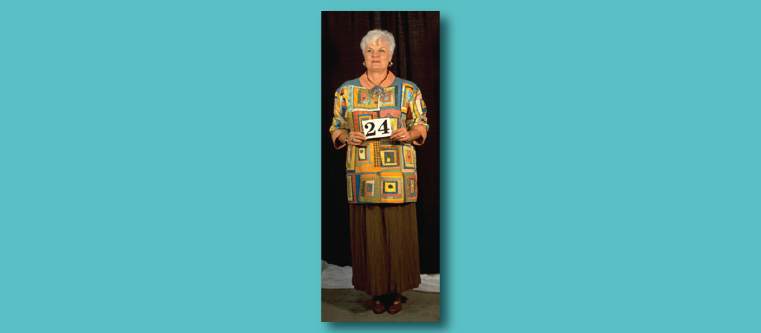
Jo Ann Pospisil (JP): This is Jo Ann Pospisil at the Quilters’ S.O.S. – Save Our Stories project in Houston, at the International Quilt Festival interviewing Judy Murrah on October 22, 1999. Judy, tell us how you became involved in quilting. Judy Murrah (JM): Something in general. I started sewing when I was six years old. I don’t know how far back you want me to go with this. JP: That’s fine. You started at six? JM: At Six years old my mom allowed me to sew on her Singer sewing machine. At the time I had to stand to sew because it had the knee press so I couldn’t sit and do my knee to make the machine go and touch the machine so, I stood. And the only thing my mom ever said was, ‘Slow down, Judy, slow down.’ So I played with her fabric scraps from what mom sewed, forever. I made doll clothes. I sewed little bits and pieces together. The first quilt I made was the first year I was out of college and that was in 1965. I made it out of taffetas and satins from formals that mother had made over the years for myself and sisters and neighbor across the street. I just sewed squares together–nine patches–but I did not know they were nine patches. I just sewed squares. My mom did not quilt but, my grandmother did. And so we had a few quilts in our house. I made the top the year before I got married. Then I got married the next year and the second year we were married my husband was stationed in Illinois. I’m from San Antonio JP: Texas? JM: He was stationed in Illinois and there were no quilt shops and very few articles in magazines about quilting so I was really doing this on my own. And from the Sears catalog bought big fat batting and a piece of cheap taffeta for the back and tied it with polyester yarns you buy in the dime store and bound it with wide blanket binding. That was my first quilt and it was in the sixties, probably ’67. JP: What happened to it? JM: I still have it. But I put it on the bed and you know, it goes, swoosh, right on off you know taffeta. But I still have it. JP: You just use the regular taffeta for the back too, the whole thing? JM: Yes. JP: So the whole thing is just taffeta, taffeta? JM: Taffeta and satins. JP: Sounds pretty what color was it? JM: Greens and pink and I think there’s a lavender in there. JP: Did it have a special meaning? JM: I guess it has a special meaning because it was my first one. And then the next one I made was probably two years later and I made it for my sister-in-law’s baby. And at that time I still had not taken any classes or known anything about popping your knots through, you know. I would just start stitching and I don’t even know if I used quilting thread. But I used cotton fabric then and maybe there was a poly blend from the dime store. He was born in 1968. That was my second quilt and then Jewel Patterson, Karey’s mother was my first quilt teacher. I learned about her teaching quilting classes in Karey’s antique store. She had taught one class and I saw somebody in a consignment store stitching on a Dutch Doll. And I said, ‘Oh, I’m interested, I’m doing some quilting.’ And then she said, ‘I took a class.’ So then I took the second class Jewel taught. And she went on to teach hundreds of classes. And then I ended up being Karey’s first teacher besides her mother in Karey’s quilt store. JP: And just for the record on tape–Karey? JM: Bresenhan. JP: Bresenhan? JM: Yes, she’s the owner of this show. JP: Oh, okay. So you actually don’t use the first quilt you did anymore, it’ just– JM: It’s put in a cedar chest. JP: Right. JM: I never did use it. JP: Yes, it wouldn’t stay on the bed. [laughs.] JM: Right, so I never did use it. But then I took Jewel’s beginning class and we just made four little blocks. But I was hooked from the minute I took that class. And then I went on to take her sampler class. So that is really my first quilt that was used. I actually decorated a bedroom around it. It was navy and it faded, but I kept using it. It’s tattered and torn, because we used it a lot. JP: The quilt you made for the child’s quilt–was it actually a baby quilt? JM: Yes, it was a small baby quilt. JP: Okay. JM: But, it became his “blankie” that he carried around and tickled his nose with it and so I felt really good about that. JP: When did you evolve into clothing? I’m assuming the jacket you have on you… JM: Yes. I started in 1977, ’76 is when I took the first class from Karey’s mom. And in 1977 I entered a little quilt show that she had in the shop. It was just a 3 block wall hanging and it won a prize. Then I started teaching classes for Karey. Karey is just a brain-child with ideas that never end. She said that we had some border fabric from Concord in the store. By then she had started carrying fabric. And she said, ‘Why don’t you do a jacket with a border around it.’ So, I did and I designed it and hand quilted it. And I found out that I really liked the wearables and started making wearables then. Then it was in 1989 that the editor-in-chief of That Patchwork Place, the book publishing company that is now Martindale and Co., saw me at a market and she said, ‘I love those jackets, I haven’t seen anybody doing them like that.’ This is actually the second type of series of jackets I’m doing, the others had a bunch of manipulations and I still wear those, and people are still buying the books. I still see people out here wearing them and I say, ‘I love your jacket,’ and they say, ‘Oh, you’re the one–‘ [laughter.] So, anyway, that’s when it really took off. Barbara said, ‘Will you do a book for us?’ And I said, ‘Oh, there’s just no time to do a book.’ And there just wasn’t because I was working full time for Quilts Inc. and teaching a bunch. I did write the book eventually and it was the number one best seller for quite some time. I have gone on to do a total of five books since that first. JP: What was the title of your first book? JM: Jacket Jazz. JP: And you mentioned manipulations, the first jackets, explain that? JM: Techniques, just patchwork techniques and folding and tucks and ribbon embellishment. Probably on each jacket, the least number of manipulations or techniques was six. I did a series of fifteen jackets and they were all different. Some of them had as many as twelve different techniques in them. But you know you just do a little piece of Bargello and then do another piece of patchwork by sewing strips together and then using a special ruler to cut them apart and rearranging them on your sleeve, back, or fronts. And it’s really just a fun way to try out a lot of different techniques without making a whole quilt. JP: So your basic focus now is wearables? JM: It was wearables whether I wanted it to be or not because before it was out at the fall quilt market. We were already in production on the second book Jacket Jazz Encore. Their marketing department already knew it would be a big seller. Are you familiar with the book? You were nodding. JP: I have it because the first classes I took was from that book. JM: So, then we went on to a third book that was More Jazz, a fourth book which is Dress Days, and then a fifth book that is still out that is one hundred and one patchwork embellishment techniques, it’s called Jazz It Up. But, we did that because people were saying – we have your other wearable books and the pattern line, but then I’ll go back and think well I’d like to do ‘Prissy puffing.’ Where is prissy puffing? And so, that was one reason we did the book so you could find all the different techniques in one book and quilters were saying, ‘I love the techniques but I don’t do wearables. I wish you would do a book on just techniques.’ So, that book is still in print and is out here. Well, actually the other books are out here for sale with some vendors who have older books. I don’t know if that is the question you asked me. [laughter.] JP: Yes, just an explanation on the wearables and how you got involved. JM: But, now I’m working on a book that will come out early next fall that’s called In the Studio with Judy Murrah, because the company wanted me to do some quilts. People were saying that they loved the techniques but they would love to see how I would put them in a quilt, now that they had seen how they were put in a jacket. Now, I have a book that will be out next year that has six small quilts, and some decorative pillows, and some little quilts that are called “Love Notes.” They’re little greeting quilts, to give away. JP: Would you consider the jacket you have on as sort of typical of the kinds of patterns you generally use? JM: No, because this is a new series. I’m working on a series of jackets that are dusters, or swing jackets, or smocks, whatever you want to call them. They are one patch techniques. You know there is just one block and these crazy logs. Where as the other ones had multiple techniques in them. I should have brought one of the other ones today, so you would know what I am known for right now. JP: That’s a beautiful jacket. JM: Thank you. JP: Can you describe for us exactly how you put it together–well not exactly? JM: It just has four different color ways in it. The turquoise, the orange, the green, and then the yellow. You just start out with a rectangle or a square that you’ve cut nicely and then the rest of the pieces are put on like a log cabin in a series. I do an orange all the way around and then I do a green row, and then a yellow, and then a turquoise. They are just scraps rather than nicely cut 1 and ½ inch strips or whatever. Then you square them up, so that you can sew them all together. I put them on the back first. There are four on the back first row and then stitch and flip another row and then another until all four rows are complete. Adding the cuff, the yoke and the collar makes it look like it is a garment, rather than a quilt. JP: Do you do other garments rather than the jackets? JM: Vests. JP: Okay. JM: A lot of vests, but I really don’t do regular clothes. I buy garments and put the jackets on top. They’re always loose fitting so it’s not like I have to make a fitted jacket. Some are more fitted than others, but I don’t do tailoring and all that. JP: How do feel about how the quilt industry has evolved? What have you seen? JM: I feel wonderful about it. It’s just so exciting. It’s evident by the number of people who have signed up for classes and pre registration. Last year we had right at 200 or 220 who signed up for pre-registration, by the end of the week and we already have 200 signed up and still have two full days left, plus today left to go. JP: How has the attendance increased over time? JM: The attendance increases every single year–51,000 was last year’s number. I know we’ll break that. You can just tell by the number of bodies on the floor. And our attendance was up for registration too. JP: How has entries increased over time? JM: The increases have always been steady, but that is not my department so I couldn’t tell you. The increase of the quilts, right? JP: Yes. JM: No, that’s someone else’s department. I’m director of education so– JP: So, you actually arrange the classes that are taught here? JM: I schedule all the classes and the curriculum and have a volunteer staff here that works. There are 10 women who come and keep everything moving smoothly and I have a full time assistant who works at the office every day. I live in Victoria, Texas, rather than here in Houston, but we communicate by phone and fax and e-mail daily. And I come in for meetings and all our shows. JP: Well, since you’re director of education, how do you feel about this project, Save Our Stories? JM: Oh, I think that it is a great project. It’ll be interesting to see it all compiled and how it will be used. I would like to know more about the quilters of the 100 best quilts we have here. It would be wonderful to read a lot about them. So, I think it’s great and maybe in 100 years they’ll read what we were doing. We won’t be here to know what it’s like. JP: Exactly. When you talked about your jackets a minute ago and you said you did a series of fifteen–so you do all of these yourself? Or, do you have others help you with putting the pieces together? JM: No, I do it all myself. I’ve never mass produced to sell. Early on I sold my jackets because people would see them and say, ‘Oh, I want to buy that.’ And then I sold them. But, I’ve never sold anything that I’ve published and I don’t ever do commission work anymore because I just can’t. I have a lot of students who do. I can always refer people to one of them. JP: Do you view quilting as an art or a craft? JM: Well, it’s both. JP: Absolutely. What is your inspiration for a new line? How did you decide to change to apparently you have gone through 3 different series. JM: Well, actually I felt like I had exhausted what I was doing–I still have many ideas and have 15 garments that haven’t been published, but have pretty much exhausted that. I’m on the teaching circuit where I travel throughout the U.S. And I want to continue doing that. I like that. So, that was kind of my inspiration–I have to come up with a new book. And of course, the publishing company wants you to have a new book, so that they have a new publication out there. That is probably the inspiration to change to something else to keep it alive so that I can stay. JP: Sort of market driven. JM: Yes, and it’s kind of sad in a way because, I like the freedom to just get in my studio and just sew a bunch of stuff and just play with it–it doesn’t make any difference if anybody likes it other than myself. It is really not the income as much as I just like being out in the community and seeing more people and the travel. I love to travel. JP: What is your least favorite part about the whole quilting situation? JM: Least favorite part professionally would be when I have so many deadlines and I have to ignore my family. I don’t have any children at home anymore but, I’m very involved with them. I have two married children and a son that just graduated as an art student from the University of Texas. I have one grandchild and another on the way and I like to be involved in their lives. But it’s good that I don’t have to depend on them for my life enjoyment. Sometimes that gets in the way and that’s hard, sometimes work gets in the way of family. JP: Has your family been supportive over time? JM: Extremely. My husband is very good about women doing a job that they are suited for. He has been an executive, he has been a bank president, he owns a company now that’s an investment company and if a woman can do the job as well as, or better than a man, he puts her in that position. So, he’s been very supportive of me. JP: Do you have any children–I suppose your grandchildren is too young–that actually do quilting also? JM: Holly, my daughter, buys children’s shoes for all the Foley’s store so she’s here in Houston and she comes to the show every night that she can. She loves looking at it and she likes the ideas. She loves marketing, so she loves what I’m doing, but she herself does not pick up needle and thread and stitch. I think she will sometime. She’s twenty-seven. She’s just newly married but I think she will one day. My daughter-in-law is interested in sewing. I got her a sewing machine and my younger son is very artistic and has moved to L.A. to make a life out of his art. JP: What do you think is the best use a quilt can be put to–what are some of the ways you think quilts can be used? JM: Ah, to snuggle up in. To hang on the wall. You mean once it’s made the use of it? JP: Yes. JM: As a piece of artwork, a way to decorate your home, quilts on the bed, a gift for a baby, a love token to somebody. JP: Do you have any inclination to do regular quilts as opposed to wearables? JM: I started out that way. JP: But to return to that? JM: Well, the quilts that I’m doing right now you would not call regular quilts, because they’re not a Grandmother’s Flower Garden or– JP: Not traditional necessarily, but just quilt as opposed to a wearable? JM: Yes, because that’s what my new book is going to be. They’re little quilts–.they could be made into big quilts, a couple of patterns. Actually one of the quilts in the book is these crazy logs. But, it’s small and you could make it big by adding more blocks. So, yes I do like to make quilts, but not the traditional where you have to spend a year or two on one quilt. I like to just get all those fabrics out and just mess with them and cut and stitch and iron and have fun with it. JP: See results– JM: Yes. And decorate them with buttons and beads. Some of the hand quilting I do, every time I pull my needle up I put a bead on or a trinket of some kind and then stitch again. I add buttons and special threads and couch the threads down, so they’re heavily embellished. So you really wouldn’t think of them as quilts to put on the bed. JP: Do you have favorite color schemes that you like to put together? JM: Bright. I like bright colors. JP: Is there anything in particular you would like to add as far as the project or your participation in quilting? JM: It’s really been a way of life. It is a huge part of my life. And it is not something I sought out to happen it just evolved and actually it evolved because of my relationship with Karey, Karey Bresenhan, the owner of this show, part of this project you’re working on. And it’s been a wonderful part of my life. My degree is in Elementary Education. I taught elementary school and I taught art in junior high school for a very short time before I had my own family. I thought someday that I would go back into the classroom, but this evolved and it’s much greater than anything I could have imagined. It’s a wonderful, inspirational, keep going livelihood. I don’t ever tire of it. I sometimes get tired but I don’t tire of the process. I love it and it’s a passion. JP: It shows you just glow when you talk about it. [laughs.] Does anybody have any questions? Unidentified Person: Tell us more about the relationship; you said that your entry into this world was because of your relationship with Karey. Tell us a little more about that. JM: Well, it was because I took a class from Jewel Patterson, her mom. It was the second class she had taught in her store at the time. She has a quilt shop and has for a long time, but it was an antique shop at the time. After I took that first class, I just ate it up. I didn’t do just the little project we were working on, but I went on to use every little scrap I had. I had sewn for my children, so I had lots of scraps. I would dig that stuff out and cut multiple blocks of what we were learning. Then I guess Karey saw how much I was doing. She never misses an opportunity to plug someone in somewhere, if she sees potential. And so Jewel, her mom, was the only one teaching – she was doing the traditional quilt teaching. Karey just ask me, ‘Would you like to come teach in my shop and do the decorative type things–not the traditional because Mama has that?’ And I said, ‘Sure.’ So, I came along and you don’t do anything for Karey half-heartedly or participate a little bit. You just really get into it. And there is something about her that drives you to do the very best you can. So, I guess she saw the passion I had and she continued to give me a little more work and a little more. Then I started doing samples for her store. When she became a quilt shop I started teaching much more than I expected to teach. When she was doing the quilt shows I would just come to the quilt show and help Lynn Young who was the director of education at the time, who is now the Art Quilt Magazine editor. I assisted her and then after a few years Lynn wanted to go on and do other things. I had by then moved to Victoria and Karey called and said, ‘I think you can do Lynn’s job long distance, what do you think?’ I still had little kids at the time. But, there’s something about Karey–you just don’t tell her no–because she makes you feel so sure that you can do it. She makes you believe that you are the best person for the job, even if she didn’t believe it, you believe it. [laughter.] So, I got involved and I have just grown with the show and it’s been a fantastic opportunity. I’ve had wonderful travel opportunities. I have had every opportunity to meet any vendor or anybody out in the quilt world. We’ve done our shows in Europe. I have actually been handed something really wonderful. And I think Karey is one of my very best friends. Matter of fact she did the decorating for both of our children’s weddings, the receptions. We had beautiful Victorian receptions for my son and our daughter. My association with Karey is very, very deep. JP: Does your family appreciate and recognize what you do and have been involved in? Do they understand the bigness of it? JM: Yes, they do. As a matter of fact, my daughter met me here and we went through the tour of the 100 best last night when Karey was doing it for a special group and I told her that this would be a wonderful opportunity to hear it with a small crowd. She was very interested in it. But, my son, who is thirty-one, says to his wife, ‘You know you really should get into quilting like mom. And sometime you can make an income.’ She’s a stay-at-home mom and he wants her to be. They think that you can just pick up a needle and thread and you can do this too. Then my son-in-law has said the same thing to my daughter, ‘Learn this from your mom, so you can do it too.’ I am extremely generous with what I earn with them, so they know. The income is not as important for me as it is for what I can do for them, which is really fun. That is the other way I am driven, because I just love the joy it brings them when I can do for my kids–not that my husband couldn’t, but it’s just sort of the icing on the cake. JP: How do you think quilting has changed over the years, since you’ve become involved? JM: It’s huge, it’s just huge. When I first started, as I said, there was maybe Jean Ray Laury; there may be an article once in a while in Family Circle or something like that. Once in a while yours truly may have a pattern in a magazine that you could buy. Then I heard about Jeff and Beth Gutchen, which I don’t know that we hear too much about them anymore, but they had a book or part of a series of books by Time/Life. Then I heard about Virginia Avery and Roberta Horton–some of these big names are still around – and then those people started publishing and those were the first books. You would just buy every book you could find. Our Houston quilt guild was good in bringing those teachers to Houston. I don’t even know what the numbers are for the growth of quilting. And just looking through the 100 best, some of the quilts that were much earlier than what we’re looking at today. Those were magnificent quilts in their time and now they’re just so much more magnificent. People have learned so much more and they play with color so much more and our fabrics are so much more wonderful. We have so many options with the type of batting we want to use and we have so many cottons and threads. There is so much knowledge out there. It is such an art form. Ricky Tims is from St. Louis and actually he’s from Texas originally but he lives in St. Louis now. He taught for us last year and again this year and yesterday he was part of a luncheon program. He’s a musician before he was a quilter, but he’s an astounding quilter now too. Both his color and design is phenomenal and he’s a wonderful teacher. But, yesterday he did our luncheon program and he played on a baby grand piano and would play a few notes and he compared composing a piece of music to composing a quilt. It was fantastic. He would play his few little notes and then he would show on the slide projector a block. And then he did the same notes over again, over again, over again, and you would see this block over and over again. But then he added the melody and then he’d add to the quilt and it was wonderful. Then it lets you see what an art form you’re working with too. It has opened so many doors for so many people. I think it’s so different. Even the women and some men who were making art quilts way back when–there are so many more people doing that and considering these pieces of art in convention centers and businesses spending 30 and 40 thousand for an art quilt. JP: Do you see any signs of it sort of reaching a plateau or leveling off? JM: I don’t see any plateau or leveling, especially after being here this week. It’s just growing and growing and working in the education, I see more and more people coming up with more and more ideas. Even the teachers, who have been teaching a long time, still come up with new things and they’re doing something different or have a different twist to it. Young women coming to take classes and older women coming to take classes. People who stop you in the hall and say, ‘I’ve just had a wonderful class. Thank you for bringing so and so here. This is my first quilt show.’ ‘This is the first class I ever took.’ So you know you’re getting new people and we recognize our oldies that we’ve had just about every year. I don’t see any decline. JP: This is a change of focus, but I thought of it as you were talking. What do you consider the qualities necessary for museum quality quilts? JM: For museum quality quilts? Design – but execution too. It does not have to be a hand pieced, hand quilted quilt. It can be machine pieced, appliquéd and machine quilted. But design and color that I could stand here and look at it over there and say, ‘Isn’t that gorgeous,’ and then you are drawn into it, but the execution is nice too. It’s not something made sloppy. Now, that’s just me, now somebody else might think that stuff hanging off and half finished and whatnot may be museum quality. I really haven’t seen it be anything like that but, I think museum quality is art. JP: We are getting close to the end of our time and we always like to let people know that and then was there anything that you would like to add that we didn’t touch on today? JM: I can’t think of anything. JP: Well, we very much appreciate your time and apologize for not knowing the person’s name that runs this entire show. JM: That’s okay and now you know. JP: Yes, now I know. JM: And you may meet her. JP: I am very happy to meet you, the Director of Education, as a very important cog in the organization because it is what I think keeps it vibrant and moving forward. JM: We think that too. JP: I really appreciate you taking the time to interview here JM: I was pleased to do it. JP: Here in Houston at the quilt show and helping us out with the Save Our Stories Project. That will end the interview now. Thank…

by Amy Milne | Feb 16, 2019
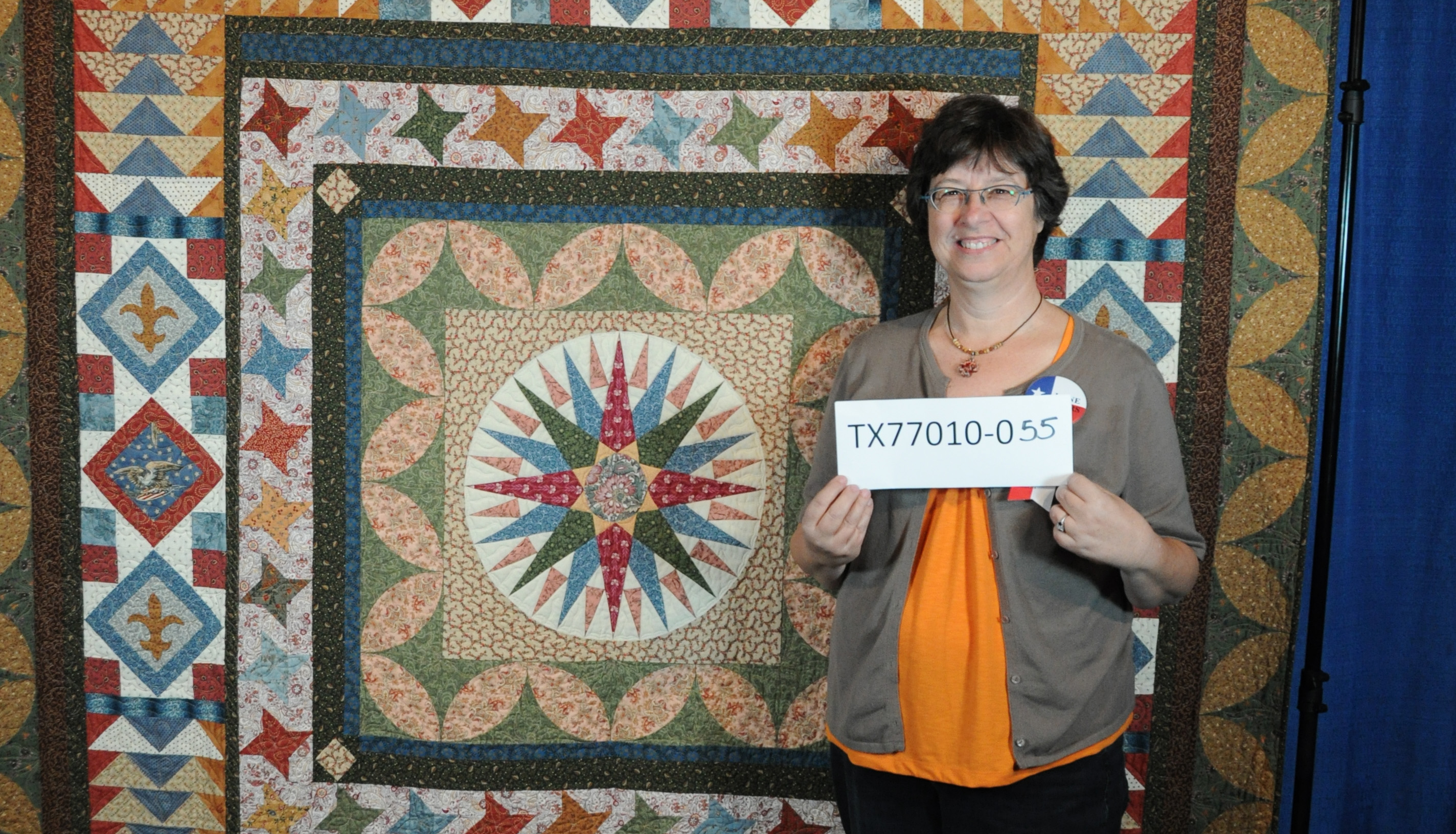
Amy Henderson (AH): My name is Amy Henderson and I’m conducting an interview with Karen Alexander at the American Quilt Study Group Conference at Colonial Williamsburg for the Quilters’ [S.O.S.-] Save Our Stories project on Saturday, October 13, 2001 at 3:40 p.m. Why don’t we start? Please tell me where you’re from. Karen Alexander (KA): Well, I currently live in Reston, Virginia, which is in Fairfax County, about 30 minutes south of and west of D.C. AH: Is this where you grew up? KA: No, I grew up in northern Ohio. My father taught at Kent State University, but his roots are in the Shenandoah Valley of Virginia. That’s where the focus of my research is–the Shenandoah Valley. I’ve been privileged to–he’s given me four or five tied comforters from my great-grandfather’s home, which he inherited in 1974 in Page County. I’ve made the three counties where my ancestors settled Page, Shenandoah County and Rockingham County the focus of my research. Our earliest Mennonite ancestors arrived about 1740. AH: Wow, so you’re both an historian and a quilter. KA: Yes, mainly an historian now. I haven’t made a quilt in a long time. AH: But you did bring an object for us to talk about today. KA: Ah, yes. AH: Tell me about it in terms of age and you made this quilt? KA: No, this is one in my collection from Page County. AH: Okay. KA: I subscribe to the newspaper from Page County, so that I can follow the estate auctions. I try to get in at the ground level, since my budget is limited. I have been to maybe four or five auctions over the ten years I have lived in Virginia. When I walked up from the road, up the gravel driveway, to this particular auction, they had a double clothesline of quilts hanging. This one was in the second line, so it was sort of hidden. The wind was blowing the quilts in front of it. The first row of quilts were much more subdued, but I could see this color flashing through as the wind blew the other quilts. My heart just started thumping. As I approached the quilts, I made myself walk real slow and come around the end of the clothesline. When I saw the ‘bold one’ I just thought, ‘Of all these estate auctions I’ve been to, this one is the most unusual. Please, I want this one.’ I decided I would go for broke on this. AH: Describe for us the pattern and the colors. KA: It’s a Feathered Star. It’s a variation of the Feathered Star; I’ll put it that way. I found three similar patterns to it in Barbara Brackman’s book. But this one has a very unusual center. In the center of each block is square of navy blue with a small white design in it. Right in the middle of each of those squares is an almond-shaped, double-pink, as we call it, piece of fabric–which comes totally out of the blue, you might say. One of the reasons I was attracted to this quilt is that I like the unusual. This quilt is unusual but traditional at the same time. Maybe that’s it. So it was a traditional pattern, piecing and all, yet it’s unusual too. This woman must have been a real ‘individual,’ I thought. That’s reflected in her choice of colors, as well as this almond shape in the middle of each block–she just came up with something that had nothing to do with the traditional pattern. I’m very drawn to the traditional Swiss-German Pennsylvania colors. Those same Swiss-German people migrated down into Virginia along the Great Valley Road, down into the Shenandoah Valley, and my ancestors on my father’s side were among them. So first the colors drew me then when I got up close and saw it–I felt this was an unusual person who’d made this. And I liked that. AH: What do you feel is unique about the color combination? KA: It’s just very bold. To me, it says something about a person who’s not afraid of boldness. There were a lot of subdued colors available at that time. She didn’t choose subdued colors. Apparently she didn’t feel like she had to be this little subdued person. It’s just lively and it makes you want to dance–well, it makes me want to dance. So that’s what I like about it. I like the cheddar orange here; I’ve always liked that color in a quilt. I like the cheddar in conjunction with the greens and the double-pinks. Then it’s got enough blue and brown to tone it down just a little bit. AH: What did you learn about the fabrics? When were they manufactured? KA: My guess is the quilt is ca. 1880’s – 1890’s. I am fairly certainly most of the fabrics are from that era. It’s possible that there are a few fabrics that might be a little bit earlier. The maker has little tiny points in those feathered stars, and some of those fabrics are possibly earlier. She must have really dug deep into someone’s scrap bag to come up with those little tiny pieces. So I think there are a few that might be a bit earlier. But I haven’t taken it to my fabric dating club yet to see if they agree with my opinion. Could these be earlier, maybe 1870’s? Possibly but probably not as early as 1860’s. Another reason I love the quilt is, again, because my family roots are in the Shenandoah Valley. This quilt actually comes from a family quite close to my great-grandfather’s home. So it gives me a sense of the fabrics my great-grandmother and great aunts in the Valley could have been using. AH: Now you’re also a quilter, even though you didn’t make this one. KA: Yes. I started quilting in 1980. My mother-in-law, Wini Alexander of Seattle, Washington, really is the one who got me interested in actually making quilts. She started making quilts for my children in 1976 and my children are her only grandchildren. She surprised us one year by presenting a quilt to my daughter on her birthday. I had sent my oldest daughter’s artwork off to her, and lo and behold she made a quilt out of my daughter’s artwork, interpreting each piece of art in a different form of needlework. She had always done many kinds of needlework and only took up quilting in the mid-seventies. So she used her other forms of needlework to create each block, and then embroidered a huge 1976 in the center bottom block of the quilt. I was just so enthralled at this on many levels. It so honored my daughter, showing my daughter how much her grandmother valued her artwork, not to mention the amount of time and effort that went into that quilt. Now we have forever a treasured memory of my daughter’s artwork in fabric. Wini kept all the original artwork for me, too, in a folder, so I have that to go with it. So she got me into other forms of needlework first. When we moved to Virginia from California for the first time, in 1979, and lived in the Richmond area, that put me within an hour and a half of the Shenandoah Valley. My father had just inherited my great-grandfather’s home from his cousin a couple years earlier. I went back to that house for the first time since a child–I think ’58 was the last time I had been in the house. There were all the thick tied comforters on the beds, and all of a sudden the memories started coming back. I only remember two, maybe three visits as a child, but I loved visiting the Valley as a child. My father started giving me some of these comforters from my great-grandfather’s house. That’s when I decided to sign up for a quilting class in Richmond, joined a guild, and took a series of classes from the extension service, I believe. The woman who was teaching–Vicki Arnett was also one of the founders of the Richmond Guild, which was only about two or three years old at that point. I made a Sampler Quilt, did it quilt-as-you-go and did fairly well until I quilted it. With quilt-as-you-go you piece and then quilt one block at a time and you put all the blocks together at the end. Well, I discovered when I went to put the blocks together with the sashing, that some of my blocks had shrunk. I didn’t know that as you quilt, the block shrinks if you don’t keep your tension correct. Of course, this being my first quilt, the blocks had shrunk in size. [laughs.] So I had to add tiny little slivers of fabric to get the block big enough. I did finally get all of that together and got the sashing in and got the borders on, but never got the batting added to the borders, so the quilt is still unfinished. AH: Do you think you’ll ever finish it? KA: Yeah, I think I will someday. But then I moved on to making smaller things then, like wall hangings, and did a series of quilted hoops and began to sell my stuff through Rocky Road Kansas in Alexandria, Virginia. I even taught a beginner’s class at a local quilt shop – a beginner teaching beginners. I began doing a lot of white-on-white work, small things. But then I finally started another bed-size quilt. I had seen a beautiful folk-art quilt at the Abby Rockefeller Museum while here in Williamsburg on a visit. It was what I call a Snowflake design, where you fold paper, and fold paper, and then you cut out the design, and then open the paper to see what you have. If you like your design, you translate it to fabric. It’s a form of appliqué. I liked that quilt so much that I sketched a couple of their ideas. Then I just went home and folded paper and started cutting out my own ideas until I had twelve patterns that I really liked. I had a piece of dark forest green fabric from the family home in Page County, and I used that as the fabric for the appliqué, and I had a beautiful dark red, blood red, I’ll call it, not a bright red, in my stash for the sashing. To those two I added muslin for the back. I call this quilt “Valley Christmas Memories.” I started the appliqué in ’82 and had about three-quarters appliquéd and moved to New Orleans in ’83 and finished the appliqué. But then I went to work full-time in convention planning. That was an extremely fascinating job and very time consuming, plus I got into genealogy, so I didn’t spend the time quilting while in New Orleans that I had done in Richmond. However, I made one more quilt during those years, a baby quilt for a cousin. Meanwhile, I got Valley Christmas Memories half-quilted, put it away and I didn’t quilt on it again until September 11, 2001. When all that happened, I had to have something to do. I got that quilt out and started quilting on it again. AH: How did it help you that day? KA: Well, I don’t normally watch much television, but I sat in front of that television for ten days straight watching the news. Having the needlework to do always was, when I was quilting back in the ’80s in Virginia–very therapeutic, very meditative, very calming to me. Those events of 9-11, of course, were very, very upsetting for all of us. They happened to come on the tail end of a lot of other sadness and crises that happened in my life that summer. So I really needed to have something in my hands–something to do that was meditative and calming. So I turned once again to quilting. AH: Do you feel that the meaning of that quilt has changed over the seventeen years that you’ve been working on it? KA: Yes, I think in particular because of the event that triggered me to go back to it. Getting a threaded needle in my hand once again got me in touch with what I always had loved about quilting. It’s so tactile. And the actual doing of it is comforting as well as challenging. But the other thing I love about quilting is the history attached to quilts; the history attached to quilting, especially women’s history and family history so now that quilt begun 17 years ago encompasses so much more. There’s the fact that the fabric came from my great-grandfather’s home and there are all my Valley memories. There are my Richmond memories. There’s my New Orleans memories and then I pick it up again at this time of great crisis in our own American history. So it definitely will have far more memories than if I had finished it seventeen years ago. AH: As an historian and a quiltmaker, are you interested in documenting in any way your change in mood and feeling and need while working on that quilt so that twenty years down the line your daughters or your grandchildren will understand what you went through when you were quilting on it? KA: Yes. I have kept a journal since 1976. All my quilt work, whether it’s actually the making of the quilts or whether it’s my research, I keep quite a journal going of what I’m up to. But it’s interesting. What has changed the most, however, in all these years of journaling is e-mail. I find that I correspond a lot by email now. I save all my emails and have them backed-up on Zip disks. In fact, I even made a note in my journal, my hand-written journal that is, the other day–that it is very difficult to hand-write, with all this emotion, but I could get online and type and then send emails to my friends and talk about what I was feeling and the experience of quilting this quilt at this time. But I could not write, because my handwriting was–it just took so much more emotional effort to hand-write. Plus it was too slow. My thoughts and feelings were racing and I wanted my fingers to be able to keep up so I typed emails instead of handwriting in my journal. AH: What is your first quilt memory? KA: Probably sleeping under the quilts down in my great-grandfather’s home in the Shenandoah Valley. They were very heavy, big, thick comforters. The beds were – oh my, the mattresses on the beds, ugh. They were four-poster beds; some of them rope beds, and two beds to a room. The floor slanted badly in one particular bedroom. The mattresses were not modern mattresses. I’m not sure what they are but they’re not real comfortable. The quilts were so heavy, and I think there were maybe two of them to the bed. The combination of the spooky house and my great-aunts–they had skirts almost down to their ankles – and of course I thought they were really old and didn’t know anything about the modern era. This was the late 40s and early ’50s, but they seemed like from another century to me. So, actually my first memories of quilts were kind of like, ‘Wow, these are heavy, dark things.’ It wasn’t until my mother-in-law made that quilt in 1976 and gave it to my daughter where I really associated a different kind of feeling with quilts. But I always had this sense of family history associated with quilts, especially Valley history. AH: How does quilting impact your daily life? KA: Well, since 1985 until very recently, the actual making of quilts, not much. But since I do a lot of research, and I do a lot of genealogy associated with quilts, I’d say at least four days out of seven I’m either into quilt history research or the actual genealogy of a quilt maker. So, quilts are very much on my mind–this is my life. I quit work as a convention planner about ten years ago. My research and writing is really my life now. Plus I have now started to lecture as well. AH: What do you think makes a quilt particularly powerful? KA: To me, color. I would say color first then design. But how do you separate the two? I love art quilts. I like traditional and art quilts. I probably like funky traditional more than real spit-and-polish traditional. I like art quilts because they go outside the box. I like that sense of–like I said in the beginning about this quilt–that this says something about a woman who, to me, must have thought outside the box in her own little neighborhood. I know the maker of this quilt beside me grew up in a very traditional, high-expectation traditional-era, and so I look at this and I just think, ‘This surely is a woman who thought outside the box a little bit.’ AH: Have any quilters greatly influenced your work, or even influenced the way you look at quilts? Historic quilts or contemporary quilts? KA: I would say the members of AQSG [American Quilt Study Group.] have personally been the greatest influence in my life. When I started quilting in 1980 a friend in Richmond told me that there was a new research organization starting. I don’t know if she called it “research” she may have referred to it as “history.” Anyway, she said they’re going to start groups where they’re just going to get together and talk about history of quilts. I go, ‘Yes! Where is the local chapter? Where can I join this organization?’ I joined in ’81 but I didn’t attend a meeting until ’85 for they were only meeting in California. Between ’81 and ’95 the person who probably most impacted me was Erma Kilpatrick, who is a member of AQSG. She had come up from North Carolina in 1981 to speak at our guild and I was really drawn to her. She made quilts as well as did research, and that appealed to me, the combination of the two. She invited me to come down to Chapel Hill and stay with her and bring my friend and attend the North Carolina Quilt Symposium, which I did. I stayed with her a couple of nights. She and I became good friends and we started corresponding. She encouraged my interest in the history and writing, in fact, she encouraged my writing very much. When I moved to New Orleans, I drove my kids and the cat and everything else down to New Orleans. We spent the night on the road with her. I called her up and said, ‘Erma, I’m coming through. Can we all park at your house?’ I knew I could always do that with Erma. Eventually I joined a guild in Louisiana but did not actively participate very often. Very seldom in fact–occasionally volunteered time for this or that. But I did not actively participate. I was too busy and satisfied with my new job as convention planner, plus three kids and volunteer work at that point in my life to continue with the quilt making, other than the one baby quilt I mentioned earlier but I did continue to read and study. Then when I moved back to Virginia in 1989, I got into genealogy, big time, started a newsletter and started writing. Erma continued to be an encouragement to my writing. Then in March ’95 when the Smithsonian had their first quilt research conference, I went to that and, of course, saw Erma there. That’s when she introduced me to Hazel Carter, who is also a member of AQSG and the founder of the Quilters Hall of Fame [Marion, Indiana.]. I had never met her before, yet we only lived about six miles apart. Then when Erma told Hazel about my writing, she said, ‘Come get involved with us because we need some good writers.’ Hazel and I subsequently became very good friends. So my natural bent for writing and research then got channeled in a new direction, which was great fun. I shifted from majoring in genealogy to doing stuff for the Hall of Fame. AH: How would you differentiate the time you spend quilting versus the time researching? Do you gain similar benefits from both activities or different? KA: Interesting question. Quilting–when I quilt, my mind wanders and drifts to many other things. Lots of times, when I used to quilt a lot, I found myself thinking about my children or other scattered family members; what trials and tribulations they might be going through; reliving memories; thinking about my mythology studies–my other hobby is the study comparative mythology. Anyway, I would wander down those trails, thinking about some of the ideas I had been reading about. So I get into a very meditative mode when I do needlework. When I’m doing research, I’m very focused on just what it is I’m up to at that moment. You can’t let your mind wander when you’re doing research like you can when you’re quilting. The only time I go off on tangents when I am studying is if something I’m reading in this particular book jogs a memory of something else I’ve read that would help this research, then I might jump up and go into another file or book or something like that. There’s not the conscious meditation, but there’s definitely the deep satisfaction. It’s just different way to get to that satisfaction. AH: What do you think you’ve gained from the fellowship of the AQSG? KA: Soul sisters, just wonderful soul sisters who appreciate the quilt from so many different dimensions, which is what quilts mean to me. They are not one-dimensional at all to me. There’s the making of them, the tactile process and the meditative journey. Then there’s the family history. It’s such a touchstone for family history. Then there’s women’s history, because I feel like through quilts–one of the most important things for me about quilts is that they have become such a wonderful vehicle of our culture finally honoring women’s history. They’re so tangible and so graphic and people seem drawn to them effortlessly. Quilts have now broken all kinds of museum attendance records, in museums that are not even quilt museums. There is something unique about quilts that draws people in–I suspect most of the time they’re not even conscious of what it is. Quilts capture women’s lives, women who would never have been remembered for anything, and now there’s this whole group of people researching women’s lives, trying to track down who made this quilt, that quilt. Get her name; where was she from; what can you find out about her. Write it down; attach it to this quilt; put it in a book, put it somewhere! So a dimension of women’s history is finally getting documented. I just think it’s incredible that quilts are that vehicle. There were far fewer women painters than women quilters in the 18th and 19th centuries, and it’s certainly easier to trace a woman’s personal history through the quilts she made than the food she cooked. The food gets eaten and it’s gone. What else do women do that can become a tangible vehicle of their history but write or stitch? Early cross-stitched samplers have always been very popular but I don’t think anything holds a candle to quilts though. So quilts are a vehicle for women’s history; I think that is incredibly powerful. Since I got involved in 1980, I feel like rings from that pebble dropped in the pond since the mid-seventies has just spread out and out and out. There is so much more we know now about women’s history because of the research this group [AQSG.] has done–like the quilts that were sent to Europe during World Wars I & II. I wonder how many were aware of that until someone in this group did that research. This particular seminar paper blew me away because it opened a whole new area of quilt history I had never been aware of before. Women made quilts for the Civil War. They made them during World War I. They’ve made quilts and given them away by the thousands and hundreds of thousands in time of war. I’m not sure about any “war quilts” prior to the Civil War. But since the Civil War, the quilts have been made en masse and shipped off to soldiers and refugees alike. In my quilting lifetime, the last twenty years, American quilters in particular have sent quilts all over the world in time of crisis. I’m hoping we’re going to give bundles of quilts to Afghanistan and Pakistan, for people in that area of the world. Make sure they’re warm this winter. That’s just one small aspect of what quilters do. I think that’s a wonderful way for people to communicate and to show that we care about other people. AH: What are some of the other stories that you feel quilts communicate? KA: Well, I definitely think that for some people, the quilt may be more important to them as simply an artistic vehicle, as artistic expression. I’m very excited to see what’s happened to the art quilt in the last 20 years, what we call the art quilt now. Art quilters are not just women, but are predominantly women. I am pleased to see that quilts have become a greater vehicle for art. I think that’s one of the big changes. We may talk more about traditional quilting and traditional uses of quilting, which I kind of focused on in my life – but the art quilt’s a wonderful shift that I have loved ever since I first saw my first Quilt National, and Michael James, Nancy Crow and Susan Shie’s work. AH: What questions do you think we should be asking quilts and quiltmakers today? KA: I always like to ask the question, ‘Why are you making this quilt? What influenced you to make this quilt?’ If I just start with those two questions the story that evolves takes you down all kinds of roads. So, ‘Why are you making this quilt and what influenced its design and where is it going next; are you going to sell it; are you going to give it away; is it going to become a family keepsake?’ When I lecture, I encourage them to document while they’re making, or at the least, document the back of the quilt. I think that is pretty standard procedure now for most quilters. Document the quilt’s history right on the quilt itself. But I do like to encourage quilters to keep a written quilt journal and document their thoughts as they are working. Such journals are going to be wonderful sources for future historians to plumb. AH: Can you elaborate at all on what ways quilts have special meanings for women’s history and experience in America? You talked a little bit about as their–an area they could express themselves artistically. KA: Well, let’s look at it chronologically. I think we have always assumed women made quilts for warmth, first. But I think many did it consciously for artistic reasons as well – and then eventually they started making some for political reasons as well. That’s another whole strain of quilt history–the political use of quilts. I can’t recall right off the top of my head what was the first documented political quilt. The first thing that comes to mind of course is the anti-slavery quilts. I can’t remember if there were any prior to that, though I think the Temperance Quilts may have come earlier. Those are probably the most well known early political uses of quilts. Then starting in the late 1960s / ’70s quilts once again became a very popular political vehicle for saying all kinds of things about the women’s movement and women’s lives. I’d say its political use really exploded then. It’s an old use for quilts; it’s not a brand new use. I just think it’s been more out there, more in your face – especially some of the designs that came out in what many label the radical ’60s and ’70s. I remember one particular quilt made in Northern California in the ’70s, though I can’t remember the name of the women’s group out there that made it. But they made some of the first posters and calendars out of their political quilts that I, personally, ever saw. I break this type of quilt down into two groups: political quilts and political action quilts. The political action quilts expressed everything from the burning of the bra to domestic violence and everything in between–graphically depicting women’s issues through symbols in ways not thought of as feminine, or traditionally proper to discuss, whatever, before the radical ’60s. This Northern California group portrayed in this quilt via appliqué blocks all kinds of stories, and it was just really outrageous and wonderful. AH: Is there anything else you’d like to say about quilting that I haven’t already asked you? It could also be about this quilt, in particular, if you wanted to add more of your thoughts about it. KA: I guess one of the questions that keeps coming to my mind is the need for research overseas in the individual countries where quilting has spread or been reawakened. So I’m really excited and curious to see what the future will be for the research in all these other countries as well. Just look what’s happened in Japan alone in the last fifteen years–think of the documentation that needs to done there. The research on Korean quilting presented today at the seminar; and research on the quilts that have been shipped overseas, given away during times of crisis in the past twenty years, and so forth. I’m really hoping someday to see someone do that research as well. I know there’s somebody working on the quilts that were shipped to England during World War II. Some documentation is coming out on that now. But what about–I think the earthquake in Armenia – that just comes to mind, that big earthquake several years ago. Wherever crises have occurred, Americans have shipped quilts. Ever since the launch of the Internet, every time there’s a crisis somewhere, eventually up pops someone on one of my quilts list saying, ‘Okay, we’re making a bunch of quilts to ship to wherever overseas to meet these needs.’ Remember the huge mudslides down there in Central America a couple of years ago, and Mexico with the earthquakes there? American quilts have gone overseas. I want to see those stories documented someday. I don’t know, maybe it’s too bold to say but I wonder if someday we’ll look back and say that the American quilt was as indigenous to American culture as jazz. I just wonder if any other culture has taken the quilt and done with it what we have done with it in our culture. Just like we did with music via jazz, I think the American quilter in the 20th century mastered a convergence of styles and added their own unique improvisation on a theme. The European and black strains, the Creole strains came together for jazz and made it an American music that has spread all over the world. American quilters have now been doing that with the quilt for more–well over 15 decades, with an enormous resurgence of interest and artistic excellence in the later half of the 20th century. AH: Why do you think women choose to make quilts as a donation or a gift to these areas in crisis? What do you think that those women, quilt makers, gain from the experience of making those quilts? KA: I think it gives us the opportunity to express our awareness of being a part of a larger human community and let’s others know that we want to participate in their crisis. We can’t go there; we can’t be there, but we can give a very tangible part of ourselves, because our personal creative energy has gone into it. Quilts warm others and they can bring a bit of beauty to their fractured lives as well. AH: I’d like to thank you, Karen, for talking with me today for the Quilters’ [S.O.S.-] Save Our Stories project. This interview concluded at 3:17 [probably 4:17.] p.m. KA: Thank you. Thank you for the…
by Janneken Smucker | May 24, 2016
[addtoany] [space height=”10″] Explore and listen to Kathi Babcock’s interview by clicking open a segment title, or by searching either the index or…
by Quilt Alliance | Feb 29, 2016
[addtoany] [space height=”10″] Jeanne Wright (JW). Today is October 13, 2011. It’s 2:35 in the afternoon and I’m conducting an interview with Kathy Kenny at her home in Cumberland Foreside, Maine. This is the Alliance for American Quilts’ Quilter’s S.O.S. — Save Our Stories project. Kathy, thank you for having me in here for this interview. Kathy Kenny (KK): You’re welcome. I’m delighted you are here. JW: This is going to be fun. Tell me about the quilt that you have hanging here today. KK: It’s a genealogy quilt of my side of the family, also my husband’s side. We were military for a number of years until he retired. Just before he retired I decided that it was time to record all the history of the family. So I started on this quilt. As you can see, it kind of grew and grew and grew. But I’m very pleased with the end result and everything on there has a meaning. It was a joy to make and it is also a good reference, hopefully, for future generations. JW: You have different types of things on the quilt. What do you have there? KK: I have photographs of the ancestors, photographs of my husband and myself, our children. Then I have appliquéd pieces that refer to the occupations or interests of all of the ancestors. JW: That’s a fascinating part of it, the appliqué around there. Tell me about some of the little pieces on there such as the apples. KK: When I was doing research of my side of the family, I discovered that all the way back to the 1700’s my family was involved in planting apple orchards and grafting apples for new species and introducing apples in the 1800’s to different New England towns. So when I heard that, I mean I’ve always had an affection for apples and apple orchards anyway, when I discovered that then I figured that’s really got to be a main part of the quilt. That was the idea behind the appliqué part of it. I wanted to include the apples and then as I got the apples on there I started to think, well other members of our families were involved in other things so that I would start thinking of what would emphasize their interests or their employment and would put something on there like a train or maybe a bundle of money or the chairs. I have a wicker chair on there that growing up my grandmother and grandfather had given to them on their wedding day, two wicker chairs. They had a beautiful closed in glass porch where these chairs spent their lives. Every time anybody went to visit, that’s where they congregated was on the porch with the wicker chairs. JW: Where was that? KK: In Woodland, Baileyville, Maine. That has a strong memory now because every time I see those chairs, of course I think of my grandparents and all the other family visiting and friends visiting. JW: So that’s one of your first memories maybe of your grandparents then, because you can remember through the chairs? KK: First memory how? JW: Of your grandparents, your earliest memory. KK: No, the first memory was food. [both laugh.] So they, of course back then everybody always cooked from scratch. That was one of the things if you went to visit or you stayed there they made sure you had a snack or meals or family gatherings that included certain things, mostly which was certain foods. JW: The work that you have around this, the border, is that any particular name or is that something you came up with? KK: That pattern is called Maine Woods. JW: M-A-I-N-E? [spelling it.] KK: M-A-I-N-E Woods. And where I’m from in Washington Country [large area of rural Maine.] is a lot of woods because it’s known for their hunting and their fishing. When I saw the pattern, it was shown in the book with different parts of the block shaded differently. So when I looked at it I thought that’s not quite how I want it so I changed the colors as light, mediums and darks around to portray what’s on this quilt. It’s still the pattern; it’s just the light, medium and darks are positioned differently. JW: There are a couple of other things that are inside the outer border. There are newspaper clippings, but there is a map up there. What’s the map about? KK: The map is a reproduction of an area of where the United States and Canada and the [Atlantic.] ocean meet. It shows Deer Isle in New Brunswick and then part of St. Andrews in New Brunswick and then part of Maine. Some of my ancestors came from Scotland and settled in that area during the [American.] Revolution. JW: During the revolution. KK: They came before the revolution but then it was very interesting because the family had eight sons. Four of the sons stayed in the United States and the other four decided they were going to be loyal to England so they moved to Canada but wanted to stay in touch with the family so that’s why they settled on Deer Isle. JW: There is a picture of a gentleman down on the right side and it looks like there is a book mentioned beside there. Who was he now? KK: His name is George W. Boutwell. He, at one time, was the Governor of Massachusetts. But he also was the Secretary of Treasury under Grant, President Grant. He’s, I have a book that was published, an autobiography, and it was just fascinating. I was so excited when I found the book because it’s so right-on about what was happening during his lifetime. He touches on everything from slavery to the Civil War to monument dedications and all sorts of everything, including his childhood and how he learned to become a lawyer. JW: His childhood was where? KK: It was in Massachusetts, Lunenburg, Massachusetts. JW: Are there any other, you have family trees on that, are there any other things you’d like to mention right now? KK: I think that it’s absolutely wonderful that in today’s world we can use photos and print them on fabrics because before, if I was doing this quilt in the fifties or even in the early sixties that method would not have been available to me at all. I think because it is available now and you can print actual photos and put them on fabric that it’s going to be a wonderful thing for future generations to be able to see what people actually looked like. JW: What method do you use? KK: For photocopying them? When it first came out it was very hard to do it. You had to treat the fabric and let it dry and then wash it and everything else. Now they have perfected it so you just go to the store and buy your little sheet, put it in the computer and away you go. So that’s what I use now is the store-bought. JW: Now why did you choose this quilt today? KK: I guess because with Save Our Stories, it’s, to me, that’s my story. I think it is extremely important for people to record their history, their family history, what stories they have, because history repeats itself, I think, and also I think when people are looking at things like this quilt they are noticing and learning about things they are not really conscious of and didn’t realize happened. So it was kind of a way to solidify my ancestry but to also have something that would carry on beyond me. I mean, women were for a long time doing things that were not permanent or concrete. They cooked meals and once the meal was done that was it; it vanished. They cleaned the house and once it was clean, that’s it, it would vanish. But if you make a quilt, a lot of quilts survive. So I’m hoping that someday this will survive and somebody will be glad of it. JW: Do you have anyone in your family who helped with this? Did they do little parts and pieces? KK: Different relatives supplied photos and information. JW: What do you think that someone looking at this quilt might conclude about you, the quilter? KK: Oh heavens. I don’t know. [laughs.] I don’t how to answer that. Well, when I show this quilt, people usually comment a lot on the color scheme. Usually, when I do quilts, I’ve always not followed a pattern totally. I usually have to twist it a little bit. So when people see that, it usually makes an impression on them because they always say, oh I wouldn’t think of doing that with it, or, I didn’t realize that you could do that. JW: What are your plans for this quilt? KK: I’m going to keep it, put it on my bed and eventually it’ll go to my son. JW: So this is a quilt you are going to use. KK: Mm-mm. JW: Tell me about your interest in quiltmaking. When did that start? KK: Well I’ve been sewing all of my life. My mother and my grandmothers taught me how to sew at a really early age but I didn’t start quilting until the seventies [during the Bi-Centennial of the American Revolution. I used to belong to a re-enacting group called the Bedford Minutemen in Bedford, Massachusetts.] Everybody was doing things by hand then. I decided that I would like to do a quilt. I had a friend and neighbor that was a Mormon and she said, ‘Oh I can show you how to do that. It’s easy.’ So one afternoon we got together and that was it. She created a quilter. JW: That was in the seventies. KK: In the seventies, yeah. JW: Do you think that the things you like to do, the methods that you like to do have changed a lot? KK: For me personally? JW: Yes, for you. KK: I don’t think so. Everything I do, even today, is all by hand. I used to even quilt by hand but I have arthritis now so I can’t quilt by hand, but I still piece by hand and appliqué by hand. I know how to use a sewing machine. I’ve used a sewing machine. I used to make my own clothes and things like that. But when my children were little I started going, like everybody else does, to ball games and things like that. I would sit there at the ball games and my hands felt not busy and I had to do something, so I started doing it by hand and enjoyed it so much that I just continued through to today. I can probably sew, maybe not as fast as a machine, but pretty quickly. JW: So you always hand sew? KK: Mm-mm. Yup, yup. JW: What’s your first quilt memory? KK: My first quilt memory is a picture that is on this quilt. In the upper right hand corner is a picture of me as a child, small, small, probably four or five years old, sitting in my bed with a quilt on it of Sunbonnet Sue that my grandmother had made. So that’s my first quilt memory. JW: Are there other quiltmakers in your family? KK: I have found that my grandmother made quilts, my maternal grandmother. But other than that I don’t know anybody that had. JW: Did you ever see her quilting? KK: I remember her sewing and crocheting, but, because I was so young, I don’t know what she was sewing, if she was sewing on a quilt or not. So not clearly, no. JW: How has quiltmaking impacted your family, your immediate family? What do they think of all this? KK: First of all, they are very, very patient with me. They don’t mind cooking their own meals once in a while when they need to. They don’t mind if the dining room table has become a layout table [laughs.] for a while. And I think they enjoy the fact that people recognize the quilting and quilts because if you mention to anybody and they ask what you do and you say, ‘Oh, I’m a quilter,’ it almost causes complete silence because they have no concept of quilting except, ‘Oh, my grandmother made a quilt for me,’ or ‘My mother has a quilt that she made when she was small.’ Then when you start talking to them about the creation of quilting, about what you have to go through to create that quilt and then talk about the history of the quilt, why this pattern came into being, or why this quilt looks like it does with these color fabrics or this size, people become fascinated. [Added: My son also helps by creating and maintaining a website for me and is conscious of the work and beauty he sees in quilts all around the country when he travels and always gives me a report with photos to inspire me.] JW: How many hours a week do you quilt? KK: I don’t know. That’s hard to say. I kind of get bored easy so I work on something for a while. I have not done as much quilting lately as I normally do because I’ve been giving my historic quilt lectures. So that’s taken up a lot of time because I’m always repairing or researching quilts to use for those specific lectures. JW: What type of lectures do you do? KK: I do lectures now on historic quilts. I try to make the public aware of the history behind certain types of quilts. When I give my lectures, I have six or seven different kinds and each one pertains to a certain quilt era in history. I’ll talk about things like with the feed sacks. Everybody talks about feed sacks and fancy work from the thirties and forties. Everybody only thinks of Sunbonnet Sue. So I try to show them and tell them about other aspects of that timeframe. Everything from the Nebraska prairies to Monopoly games so they get a different concept of history. What has been surprising is every time I have given a lecture there has been a least a couple of men in the audience who have been dragged there by their wives and don’t think they are going to enjoy it at all. To a person they come up afterwards and say how much they enjoyed it. They didn’t realize that quilting involved so much. So I think that’s a great thing to know, that the public is becoming aware of the richness of quilts and the purpose of them. JW: You’re also a teacher? KK: Quilt teacher. I’ve taught quilting, yes. Don’t do so much of that now but I used to probably six or seven years ago. Every once in a while I’ll still teach a class or a workshop. And now I do the challenge for my local quilt guild every year, so that’s always fun to show how to do something JW: And your local quilt guild is who? KK: Calico Quilters of Yarmouth, Maine. JW: Now, you’ve been a curator? KK: I have in Massachusetts. I worked with a gal who had an antique quilt and fabric business. It was such a wonderful experience because I learned so much. Through that business, I was her assistant for a number of years, and through that business we would curate shows, quilts shows, in different places in areas in Massachusetts. One of the most delightful ones was in the town of Townsend, Massachusetts. They have the Reed Homestead that is part of the historical society there. It’s right by the river and every fall they open it up for tours and a heritage day. One of the things that we did all the time was have a quilt show there. Of course it would draw from all over Massachusetts and New Hampshire. It was so much fun to do that. We would also help people, friends, that were giving exhibits at the American Textile Museum. [when it was located in Andover, Massachusetts.] JW: Do you collect quilts? KK: I do collect quilts. JW: What kind and how many? [both laugh.] KK: I guess I favor 1800’s quilts. I’ve lately, because one of my lectures is on the twenties to forties quilts, I’ve lately been collecting a few of those that have been special but mostly my favorites are the1800’s and through the 1800’s, either the 1850’s to the 1860’s for the red and green appliqués or the Crazy Quilts. I love the Crazy Quilts because I appreciate the stitching so much and the stories they have to tell are fascinating. As to how many I have, I don’t want to know. [laughs.] I don’t count them. JW: I see bookcases full of them here. KK: Well when I give my lectures I usually have between twenty-five and thirty vintage quilts and like I said, I give six or seven lectures, so, and then I have my own quilts that I haven’t counted either. Somebody can do that later when I’m gone. [both laugh.] JW: Now you were a quilt shop owner? KK: I was. I was. JW: What was the best part about that? KK: The customers. I enjoyed that most. The quilt shop was in North Pole, Alaska and the clientele was a little bit different because you had the towns where people lived, quilters lived, but you also had the bush where people lived, which meant that these quilters were out in the bush for months at a time and might only get into town once a year. When they came into town it was like Christmas to them because they hadn’t seen all of these and would be very receptive to the newest thing in the quilt world or the new fabrics or tools or gadgets. But I think the customers were the best because I thoroughly enjoyed quilting and the quilting world and to share that with other people was great. JW: You have vintage quilts here and I understand you repair them? KK: Again, I don’t do that so much now because of my arthritis but I used to do that a lot. JW: Have you ever used quilts to get through a difficult time? KK: I have. Yup. JW: Do you want to share that? KK: [comments later rephrased to the following by Interviewee: Most traumatic events or difficult times take a long time to deal with and stress is almost always involved and quilting helps you get through all of that. It is something you can do and not have to think about until you are ready to deal with it. And, of course, being able to create something positive, instead of having something negative happen, is a wonderful thing.] JW: Well how about an amusing experience that has occurred while you were making a quilt or been out on your lectures or what have you? KK: Amusing? Well, I’ll tell you a story about my quilting shop I had in Alaska. It was a very small shop. I had a friend who was a local beautician and was a quilt fanatic, had just discovered it because she took my classes and was just in awe of quilting and wanted to quilt everything. The minute she got out of work she would come over to my quilt store and hand me over her paycheck and say, ‘Okay, I’m going [laughs.] to pick some things up.’ And I helped her and she also helped me with different quilts we were making. We would lay it out in the store on like a design wall and before we knew it we would twenty or thirty people there looking at the quilt and wanting to know, ‘Oh can I get this kind of fabric?’ or ‘Can you show me how to do this?’ It was so much fun because it brought the social life into it, so much so that one of the customers, one evening while we were looking at, I mean the store was still open, and we were looking at the quilt and talking about it and one of the customers wanted to purchase something so I said, ‘Sure, go ahead and put it on the counter and then I’ll come and ring it up.’ So she did that and she said, ‘How much do I owe you?’ I told her and she wrote out a check. Then we got to talking again about stuff and I didn’t think anything more about it. She finally said, ‘Well, I’m going home. I’ll see you tomorrow.’ So I said, ‘Okay.’ So she left and all the other women are still there looking at all the quilts. Then I get a phone call and I answer the phone call and it’s Susie and she said, ‘Um, I think I have something that belongs to you.’ I said, ‘What’s that?’ and she said, ‘The check I paid you. You put it in my bag and I’ve got it [laughs.] here in my bag and I’ve got it here at home.’ [laughs.] I thought, ‘Oh no.’ But she was so sweet about it. She dropped it off the next day. JW: Now you mentioned a design wall. Do you use a design wall now? KK: I do. I think it’s critical to quilting. When you use a design wall you get a whole total perspective on what you are working on, rather than looking at it on a table. If you are on a table you are too close to it. You can’t see how the colors are blending. You can’t see how the pattern itself is looking. You can’t see if there’s any mistakes. But if you put it on a design wall all of that will stand right out, so I think design walls are critical. I encourage everybody to use one. JW: What do you use for a design wall? KK: I have, in the past, had an actual wall where I could put a flannel sheet up or something. Now I have a portable, it’s like a portable wall that folds up and it’s flannel covered. It’s made actually from foam insulation panels that you get at the home repair shops. It works wonderful because it’s lightweight. It folds. Also you can pin to it and it won’t break down. JW: What kind of room do you have? Can you tell me about your studio, the place you create your quilts? KK: I’ve had, because we were military we moved around a lot so I’ve had all different kinds of areas to quilt. The majority of the time it was on my dining room table. Other times I’ve had a huge basement, finished room, that I quilted in. Right now we are living in a condo and I have what would be a closed-in glass porch that I use for my quilt room. It’s probably fifteen [feet.] by twenty [feet.] maybe, twelve by twenty. JW: It’s very pleasant. KK: So, it’s very pleasant but it’s also very crowded, so I use that plus I still use my dining room table. JW: Do you have any UFO’s? [unfinished objects.] KK: I do have a few and someday I hope they will get finished. Some of them probably won’t ever get finished because there is something about a couple of them that I haven’t cared for and I couldn’t pinpoint what it was. Now it’s to the stage that I don’t care for the color of the fabric and the kinds of fabrics that I used, so I will probably donate it as a raffle quilt or a Linus [donation.] quilt or something. JW: So you will finish them but they just won’t be yours anymore? KK: Some of them I will finish and they will be mine but the majority of them will not, just because my tastes have changed. JW: What do you think makes a great quilt? KK: I think a great quilt is probably, because of the impact when somebody first looks at it. So it could be the design but I think the majority of the time it is the color theme because people react very strongly to color. When you are looking at a great quilt, I think it has to say something to you personally. JW: What about a quiltmaker? What makes a great quiltmaker? KK: I would say that a great quiltmaker is probably a person who can look at what’s in their head and convey it to fabric. That’s a hard thing for some people to do. I think a great quiltmaker also needs to know the all the basics in order to understand what the fabric will do, how it reacts, what she can do with it. I think a great quiltmaker also has to be able to reach her audience by having them realize what she is trying to convey to them in that quilt. JW: Do you think this is a learned thing, or is it just natural? KK: I think there is some natural ability to it but I think it most definitely can be learned by anybody, provided they have the right beginning quilt teachers. I think that’s a very important thing that at lot of beginning quilters don’t look into enough. JW: So you are saying everybody should have some classes to start with? Is that it? KK: Well I don’t think they necessarily have to have classes but they need to have somebody that they can talk to or ask about how to do it this way and if they have classes I think they shouldn’t just sign up for a class. They should make sure that the way that teacher who teaches has produced good results from other students. My philosophy is that if you are teaching somebody how to quilt, or teaching anything, you need to teach them well enough that they can go and teach somebody else how to do it. If all you’re teaching them is to say, sew this triangle to this square, they can go home and do that but they don’t understand why they are doing that or what will happen if they do it this way rather than that way or if they used this fabric instead of that fabric. So I think the teacher needs to convey that to them so they understand the basics of quilting. Once they have the basics, I think they can do anything. JW: What, to you, makes a quilt artistically powerful? KK: Color, is the most, is the biggest impact I think. JW: Do you have any problem picking out your colors? I know some do. KK: Well, first of all, I guess the whole world will now know I am colorblind. JW: Oh? KK: But I don’t have any problem picking out colors because I know what I like together and what I don’t like together. I can, I think because I’m colorblind that the values and the shading stand out more so I can see the contrast a little bit better. JW: Do you have anyone help to pick colors? KK: Once in a while I’ll have my husband come to the store with me because I’m looking for a certain color to match a certain thing or to enhance a certain area. I’ll say, okay, I want an orangey, pumpkin with a little bit of red in it. So he’ll come and help me do that part. JW: Okay. Now to get back to your lectures, what type of lectures do you really like to do? What do you think is the most helpful for people? KK: Well, in my lectures, first of all, they are all historic quilt lectures and I try and relate it to what happened to history in the United States so people can discern that this particular pattern or this particular quilt didn’t just happen. There was a reason that this was made out of silk or there was a reason this was all red, green and white color. Or there’s a reason that this is all embroidered. When I give those lectures and tell people about the history during that timeframe, I always try to have a quilt that will emphasize what I am talking about. For instance, in the thirties and the forties talk, I talk about why the state fairs were so important to people because it was during the depression and they could enter their quilt and win prize money. So the money was very important during the depression. Plus the exposure to seeing other quilt patterns, because at the time they didn’t have a lot of quilt books. So when I show that, I always show a couple of quilts that were state fair winners so they can see an actual piece of history rather than just hearing about it. JW: So it’s important, the history of American life, is an important thing that comes out of quilting. KK: I think it is. In today’s world if you ask a man on the street who the President of the United State is or who the vice president is and they don’t know, I think that’s a shame. I think that’s a disgrace. I think people should know their history and should realize what a great country we have today. My little part of combining the quilts and the history, every time I give a lecture I get note cards and emails and stuff saying how I have made history fun and how they’ve understood now why this happened and why their grandmother made Sunbonnet Sue quilts. So for me that’s a pleasure for me to help people understand the history of our country, in a fun way. And quilts do that, I think. JW: Now, is that why quiltmaking is important in your life? KK: I think quiltmaking is important in my life because I am quite creative and that’s a perfect outlet because I can take whatever pictures are in my head and convey it to cloth. If I can do that, then I think I have succeeded. It’s not always easy to take that picture and make it into cloth and make it look like what you are seeing in your head. But I like color. I love working with the fabrics. I like trying and experimenting with different fabrics so in addition to my antique quilts that I like, I also do art quilts which involves using everything from yarn, to beads to all sorts of things. By doing both of them I think you get a taste of what quilting was like and what quilting can be in the future. JW: You’ve talked about history and how this can help through history. What about specifically for women’s history? Where do you note where it intersects with women’s history? KK: Well, it’s like I mentioned earlier, there’s a lot of things that women have done through history that are not concrete. Once they complete this task it’s over with and nobody realizes it. I mean, you could have said, ‘Oh, well my aunt was a nurse during World War I and she worked for the Red Cross.’ But you don’t really understand what that entails until you hear a little bit about what the Red Cross did during World War I and then see a quilt that was made during World War I using the Red Cross pattern. JW: How do you think quilts should be used? You’ve mentioned history. How else? KK: I think as a learning tool. I think as a creative expression. They should be used for that. I think they should be used to provide love and comfort to people. I think they should provide an education to people because most people, when they think quilts they think, ‘Oh, yeah, that’s what’s on the back of my sofa and I cover up with it.’ But when they start to learn how that quilt on the back of the sofa was created, then they have a deeper appreciation. So then when they cover up while they are watching a football game, it kind of goes through their head, ‘Oh my grandmother made this,’ because she was sitting on the front porch listening to my grandfather talk about football or something. JW: So how do you think that quilts reflect your community or your region? Do you think they are specific to communities sometimes? KK: Well, from studying antique quilts and, again, looking at the historic end of it, there are different quilt styles in different regions. For instance, in Maine, or in New England, they are noted for four-poster quilts. If you find them anywhere outside of New England and trace that quilt back, chances are it was made by somebody from New England who moved to the Midwest. For instance, the Pennsylvania Dutch are noted for their strong colors and their very, very simple abstract patterns, but they are absolutely gorgeous quilts and their stitching is wonderful. So I think regions reflect what was available for fabrics at the time, what styles were happening during that timeframe when that quilt was made. [deleted small portion by Interviewee.] JW: One thing I found interesting was about the Mill Girls. Tell me how that affects quilting. KK: I was going through genealogy and discovered that one my ancestors was the physician for the Amoskeag Textile Mill in Manchester, Massachusetts, I mean Manchester, New Hampshire. At the time I was living in Lowell, Massachusetts, which was also the start of the textile museums and mills. When I learned that, I started researching more about the mill girls and to me it was just fascinating because in the 1830’s these girls came off the New England farms, went to the cities and started working fourteen-hour days and eight hours on Saturdays in the mills. It was a wonderful thing for them because they got their own paycheck. They could better their life. They could help their family better their life. They were exposed to all kinds of cultural things. But they also were instrumental in producing all those prints and fabrics. Those, by having the industrial revolution in the textile mills, those prints and fabrics became affordable to everybody so they could make quilts and their own dresses and still afford to do that. So I think the mill girls had a huge, tremendous impact on the quilting world. If it wasn’t for those mill girls enduring all the hardships in their work world, we wouldn’t have that, those fabrics, available at the prices they wanted. They would not have been available to the common, everyday person. JW: Do you have any tips or advice for beginners? KK: Get a good teacher. Make sure your teacher knows the basics and will teach you how fabric reacts, what you can do with a needle and also is not just somebody that will teach you how to sew this piece to that piece, that will help you think outside the box a little. JW: What do you particularly like about quilting? What is the best part? KK: The color and the creation. JW: What is the part you don’t like? KK: The borders. [laughs.] Well not the borders so much as the bindings. I hate to put the binding on the quilt. For me the joy of it is getting the idea out of my head into the fabric. Once that top is completed, my interest is gone. The rest of it is a chore to do. I used to, I appreciate and love the quilting process of it, but, and I think that makes the quilt come alive when it is quilted, but that’s not my main interest. My main interest is the creation of what’s in my head and using those colors that I am seeing in my head. So once the top’s done, my interest goes. I am onto the next quilt. JW: What do you think is the biggest challenge confronting quiltmakers today? KK: Age. I think that quiltmakers today need, and I think there is a movement that’s starting a little bit to engage the younger generation. If you go to a quilt meeting or a quilt show and you look at the people that are attending, they are all middle-age or older. You very, very seldom see the younger people there. I can understand that because they have a life and they’re busy. So they don’t want to spend as much time as we did or our grandmothers did creating a quilt. But they need to be educated to let them know that there are methods today to create quilts that won’t be time-consuming. They still can produce quilts, whether it’s using fusibles or, you know, huge, simple patterns, quick, fast on the machine. Something. But I think the education of the younger generation needs to be a priority in the quilting world today. JW: Is there anything else that you would like to add to this interview? KK: I think this is a marvelous thing to have happen because, again, it saves all these stories and all these quilts and hopefully future generations are going to enjoy it. I know the present generation is going to enjoy it when they read all those. Thank you very much for interviewing me. JW: Oh, you’re welcome. It’s my pleasure, most certainly. Kathy, I’d like to thank you for allowing me to interview you today as part of the Quilter’s S.O.S. – Save our Stories project. This is October 13th and we’ve concluded at about 3:20 [p.m.]. Thank you very much. KK: You’re welcome. End of…